Kazakhstan is betting on a new city to redefine how it attracts investment. Alatau City, located near Almaty, is being built as a digital finance and investment hub, with a focus on tokenised assets, a low-altitude economy, and a legal framework designed to reassure foreign investors. The project is a presidential initiative, backed by constitutional law, and is part of a broader strategy to diversify the Central Asian nation's economy beyond traditional sectors.
Over the past seven years, Kazakhstan has drawn more than €140 billion in foreign investment. Now, the government wants to integrate tokenisation into its financial system, allowing investors to trade digital tokens that represent ownership in property, infrastructure, or businesses. This could lower the barrier to entry for retail investors, who might otherwise be priced out of high-value assets.
A digital finance ecosystem
The vision, articulated by President Kassym-Jomart Tokayev, is to create a unified digital finance ecosystem. Alatau City will work closely with KASE, the national stock exchange, and the Astana International Financial Centre (AIFC). The Ministry of Artificial Intelligence and Digital Development sees tokenisation as a tool to attract investment quickly and conveniently.
“When we create a platform for tokenisation, anyone from any country will be able to register, complete the onboarding process, undergo KYC checks and so on,” said Nodirbek Nozirkulov, Deputy Chairman of the Committee for Digital Assets and Breakthrough Technologies.
Tokenisation works by dividing high-value assets into smaller digital units, which can then be traded on blockchain-based platforms. This could reduce the role of traditional intermediaries and open up cross-border investment opportunities. However, the practical impact will depend on regulation, costs, and liquidity.
Legal guarantees and investor confidence
Alatau City is not just a business park; it is a project of national strategic importance. In May 2026, Kazakhstan adopted a constitutional law establishing a Special Legal Regime for the city, offering stable tax conditions for ten years, investment incentives, and legal protections for capital. President Tokayev has also called for an Investment Court based on English common law to handle commercial disputes, with amendments to the constitutional law expected by the end of January 2027.
“The investment interests of all reputable and honest entrepreneurs are guaranteed the strongest and most reliable legal protection: the Constitution,” Tokayev said in his October state-of-the-nation address.
Positioning on the Middle Corridor
Alatau is strategically located along the Middle Corridor, the trade route linking Europe and China. Transit volumes on this corridor increased by 22% in the first eight months of the year. By 2040, the city plans to have three million square metres of high-grade warehouses, plus duty-free storage facilities. Tokayev has urged companies to “set up their engineering and service units, find local partners and implement their investment projects in Alatau”.
Designed for air taxis and robots
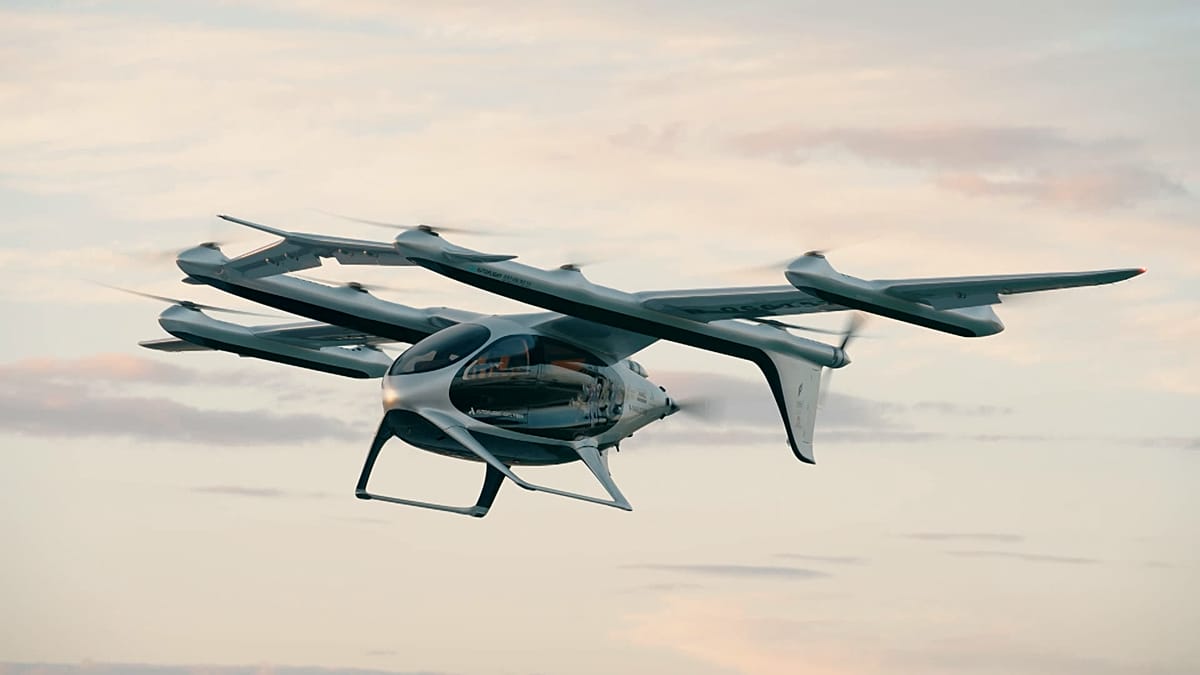
The city is being designed from the ground up to accommodate drones and robots, making it a testing ground for the low-altitude economy. The master plan includes red lines for air corridors, vertiports, and drone ports, so the infrastructure is built in from day one. In May 2026, Alatau hosted demonstration flights of a passenger air taxi, an electric aircraft developed by a private group with local and international participation. Delivery drones have also been showcased. According to a multinational investment bank, the global urban air mobility market could be worth up to €1.3 trillion by 2040.
“Our goal is not merely to import technology, but to build a fully-fledged industry: infrastructure, engineering expertise and new jobs for Kazakhstan professionals,” said Sergey Khegay, founder and CEO of the air taxi project.
Building on existing foundations
Alatau is not being built on a blank slate. Established by presidential decree in January 2024, the city incorporates existing settlements about 47 kilometres north of Almaty. Several industrial zones are already operating, and by July 2027, businesses there will join the new economic and regulatory system. Twenty-six infrastructure projects worth around €70 million are underway this year, and construction has begun on a multifunctional complex in the business district, featuring two towers with offices, a hotel, and retail space.
The city's investment portfolio includes 67 projects across energy, pharmaceuticals, logistics, and digital infrastructure, with a target of €6.2 billion. Plans also include a Korean university campus. By 2050, Alatau aims to have a population of two million, with infrastructure investment potentially reaching €90 billion, including €4 billion over the next three years.
To attract investors, Alatau is conducting international roadshows. During a European tour covering Berlin, Frankfurt, and London, 27 documents were signed with a combined investment potential. This push comes as Europe itself is grappling with how to finance its digital and green transitions, as seen in debates over the EU budget and digital taxation proposals. While Alatau's model is distinct, it reflects a broader global trend of using special economic zones and digital assets to lure capital, a trend that European policymakers are also watching closely.