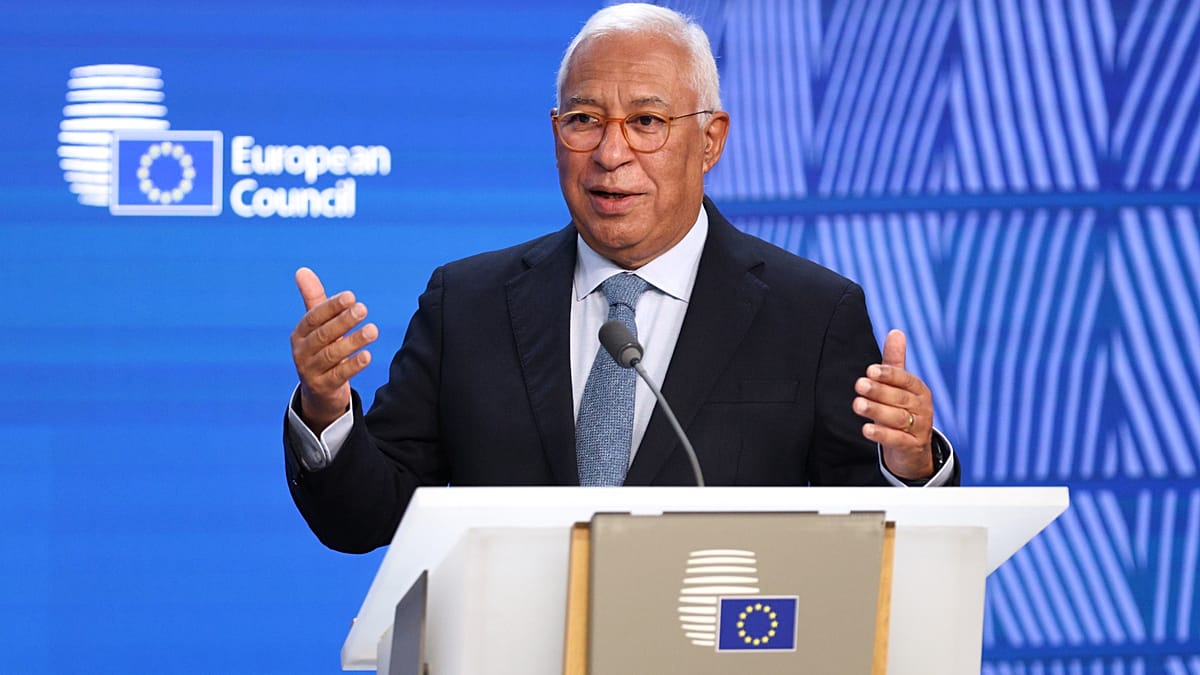
European Council President António Costa has tabled a revised proposal for the EU's 2028-2034 budget, hoping to secure unanimous backing by year-end. The plan, which trims another €49bn from an earlier Irish compromise, brings the total budget down to €1.78 trillion—a 10% cut from the European Commission's original ask. But with a key summit starting Thursday in Brussels, opposition is already mounting.
The so-called frugal countries—led by Germany, the Netherlands, and Sweden—have long pushed for a leaner budget. Costa's latest offer is designed to meet their demand for reductions of "several hundred billion euros." Yet the cuts are less dramatic when measured in 2025 prices, and the proposal also stretches out repayment of the EU's joint debt, a move frugals may not count as genuine savings.
"I am confident that this proposal is a good basis for moving towards a final agreement," Costa said, citing three pillars: ambition, reasonable national contributions, and a balanced set of new own resources. But the Élysée was quick to push back. "The new negotiating framework is very disappointing," a French source told reporters. "As it stands, this proposal does not constitute a basis for an agreement."
Cohesion and agriculture face first-ever cuts
The battle is not just about size but priorities. The frugals—who prefer the label "modernisers"—want more money for competitiveness and defence. On the other side, the "Friends of Cohesion" group, comprising 17 southern and eastern member states, is fighting to protect funding for poorer regions.
Costa's plan breaks new ground by cutting cohesion, agriculture, and fisheries funding by €54bn—about 5% below the Commission's proposal. Competitiveness and defence take a deeper hit, losing €95.5bn (16%), while the "Global Europe" heading is slashed by €45bn (21%). Administrative costs are trimmed by nearly 8%, slightly less than the Irish plan's 9%.
Despite these reductions, most programmes would still see increases compared with the current 2021-2027 budget, since the Commission's baseline was already higher. But the political stakes are high: any delay could push negotiations into 2028, complicating the launch of new programmes and colliding with elections in France, Italy, and Poland.
A digital levy to replace the corporate tax
A central element of Costa's package is a new mix of EU-wide taxes designed to raise €64bn a year. The headline innovation is a 3% digital services tax on annual net turnover from online advertising, digital intermediation, and monetisation of user data. It would apply to companies with EU turnover above €50 million and global turnover above €750 million—a threshold that captures most American tech giants.
The levy, already in place in France, Spain, and Italy, replaces the controversial Corporate Resource for Europe (CORE), which member states rejected as contrary to the EU's competitiveness agenda. Fears of US retaliation persist, though some officials calculate that a weakened Trump administration—after midterm losses—may be less inclined to strike back.
MEP Danuše Nerudová (Czechia/EPP) welcomed the move: "These measures would also help create a level playing field in the single market, where American digital giants often face lower taxes than European firms." The European Parliament had estimated the levy could raise up to €25bn a year with a wider scope, but Costa's version stays closer to the Commission's more conservative €5bn estimate.
Other new resources and the road ahead
With CORE abandoned, the most contentious remaining proposal is channelling 30% of Emissions Trading System (ETS) revenues to the EU budget. Poland remains a vocal opponent, though Costa has softened the blow by phasing it in gradually—from 0% in 2028 to the full rate by 2034.
The plan also includes a minimum 15% tax on tobacco products, phased in from 5% in 2028, and raises the call rate on non-recycled plastic packaging waste from €0.80 to €1.25 per kilogram. A levy on uncollected electronic waste rises from €2 to €2.25 per kilogram. The Carbon Border Adjustment Mechanism (CBAM) remains the least controversial new resource.
German Chancellor Friedrich Merz has added another layer of complexity by insisting that no budget deal is possible without unanimous financial support for Ukraine—a stance that has drawn backlash from several member states. Meanwhile, the EU's broader fiscal challenges are compounded by warnings from Europe's AI leaders that the budget must close the gap with the US and China.
As leaders gather in Brussels, Costa's proposal will form the basis of discussions. But with France unhappy, frugals unconvinced, and Ukraine funding unresolved, a final agreement before year-end remains far from certain. The stakes are high: failure would not only delay programmes but also undermine the EU's credibility as a global actor, especially as it grapples with a proposed €45bn loan for Ukraine and other pressing challenges.