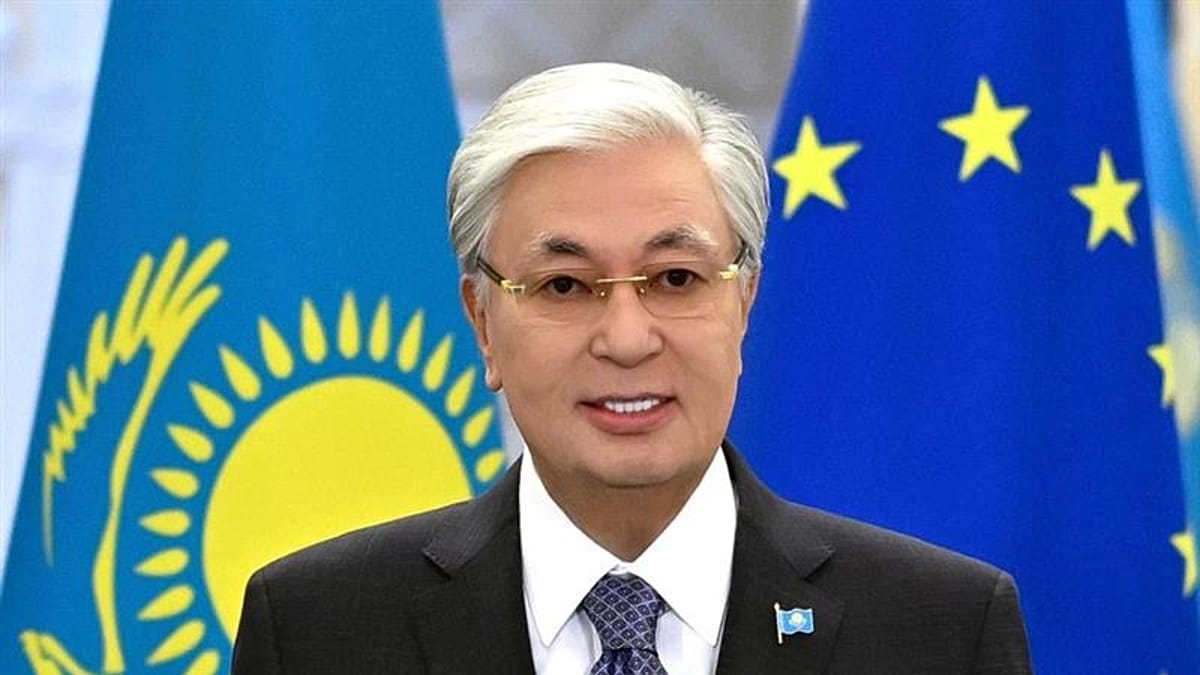
Kazakh President Kassym-Jomart Tokayev arrived in Brussels this week for talks aimed at deepening cooperation between the European Union and his country. The 73-year-old leader, in an op-ed for Euronews, outlined a vision for a partnership that spans energy, transportation, digital governance, and agriculture. The visit comes a decade after the 2015 Enhanced Partnership and Cooperation Agreement (EPCA), which has made the EU Kazakhstan’s largest trading and investment partner.
Tokayev identified three strategic objectives: strengthening resilience, expanding connectivity, and creating new opportunities for citizens. He framed the geopolitical moment as critical, noting that “resurgent competition is rapidly reshaping trade, technology and investment flows. Global supply chains are newly vulnerable. Trade and economic interdependence now fall prey to national security.” Rather than retreating into rival blocs, he argued for partnerships based on respect and shared interests.
Energy and Raw Materials
Kazakhstan already supplies nearly 13% of the EU’s crude oil imports and 16% of its natural uranium imports. Tokayev suggested expanding cooperation into agriculture and food security, noting that Kazakhstan is a major grain producer with potential for European markets seeking diversification. He also called for combining Kazakhstan’s resources in critical raw materials and renewable technologies with European knowledge and investment. “A partnership that creates value at every stage through advanced processing, technology transfer, research partnerships and joint ventures,” he wrote.
The Middle Corridor, a trade route linking Europe and Asia via the Caucasus and Central Asia, is a central pillar of this strategy. Tokayev described it as “the backbone of an emerging system linking Europe’s markets and economic engines with Central Asia’s resources, emerging industrial base, and logistics potential.” The corridor aligns with the EU’s Global Gateway strategy, which aims to boost sustainable infrastructure connections. For more on Kazakhstan’s efforts to advance this route, see our earlier coverage.
Digital and AI Ambitions
Beyond physical infrastructure, Tokayev emphasized digital connectivity, including artificial intelligence, digital governance, and innovation ecosystems. Kazakhstan aims to become a digital state, digitizing public administration and investing in AI. The country is relying on European tech companies “to ensure that technological progress remains inclusive, secure and human-centred,” Tokayev said. This push for digital modernization is part of broader reforms under a new constitution adopted in 2022, which Tokayev described as based on “law and order as well as the protection of fundamental human rights and freedoms.”
The reforms follow a formula of “Strong President, Influential Parliament and Accountable Government,” aimed at strengthening public accountability and institutional effectiveness. Tokayev insisted that a strategic partnership must ultimately benefit citizens, pointing to progress in issuing visas for students, researchers, and entrepreneurs, as well as Kazakhstan’s participation in Erasmus+ and Horizon Europe. For context on how such partnerships fit into the EU’s broader geopolitical landscape, see this analysis.
Tokayev summed up his approach with a pragmatic note: “We may not always agree, but we know each other.” The visit underscores Kazakhstan’s role as a bridge between Europe and Asia, a position underpinned by its growing economic strength—the country aims for a GDP of $306 trillion by 2026. As Tokayev put it, “Every traveller understands that the more uncertain the journey, the greater the value of dependable companions. As our world grows more uncertain, Kazakhstan and Europe are already fellow travellers.”