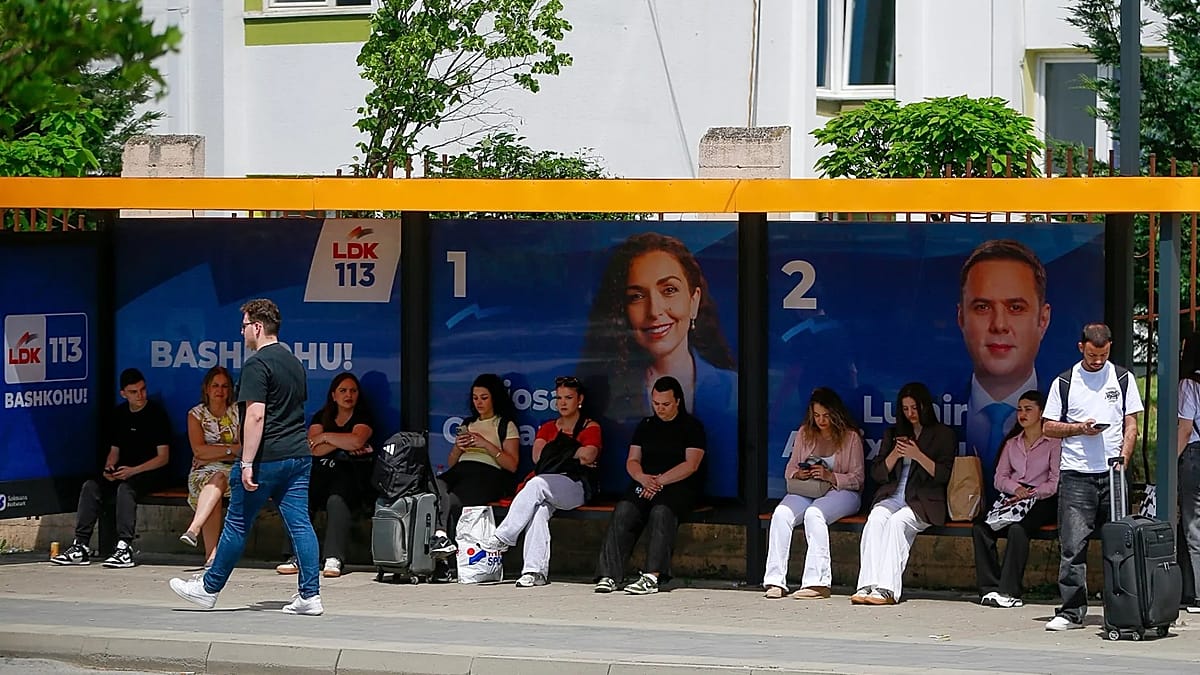
Kosovo is set to hold its third parliamentary election in 18 months on Sunday, as the country grapples with a fractured political landscape that has left it without a functioning government and a president. The snap poll, called by Prime Minister Albin Kurti after his party failed to secure a majority in the February 2025 election, comes amid accusations of disinformation and electoral manipulation.
Former President Vjosa Osmani, now running for parliament with the Democratic League of Kosovo (LDK), has urged all political parties to seek compromise to overcome the institutional deadlock. Speaking to Euronews, Osmani expressed hope that voters would create a "democratic balance" among parties, forcing them to negotiate and form institutions swiftly. "We need to look at compromise, dialogue, working with one another for the sake of national interest without creating divisions between our people," she said. "There's just too much propaganda, too much division, too much polarisation that is harming our society."
A Cycle of Political Paralysis
The current crisis stems from the inability of parliament to elect a president, a position that requires a two-thirds majority. After Kurti's party won the February 2025 election but fell short of a majority, opposition boycotts prevented the necessary vote. Osmani's term expired in April, and the speaker of parliament has been serving as interim president. The repeated failure to form a government has raised concerns about Kosovo's stability and its ability to pursue key foreign policy goals, including European Union membership and NATO integration.
Osmani emphasized that a quick compromise would allow the country to focus on these strategic priorities. "We need to look at compromise, dialogue, working with one another for the sake of national interest," she reiterated, warning that internal divisions are undermining progress.
Disinformation and Electoral Integrity
The election campaign has been marred by what Osmani described as the "worst" and "most massive" disinformation campaign in Kosovo's history. She told Euronews that prosecutors have been asked to investigate, noting that the disinformation targeted women political leaders, including through AI-manipulated videos and photographs. The campaign has also seen accusations against Kurti's government for approving social schemes and subsidies ahead of the vote, which opponents claim violate electoral laws. Osmani has pledged to change legislation to prevent future governments from "abusing power to negatively influence the will of the voters."
The political turmoil in Kosovo echoes broader challenges in the Western Balkans, where democratic institutions often face pressure from polarization and external interference. As the region seeks closer ties with the EU, the ability to resolve internal disputes through dialogue remains a critical test.
For more on regional dynamics, see our coverage of Zelenskyy's call for European air defense support and MEPs' push for sanctions against disinformation actors.



