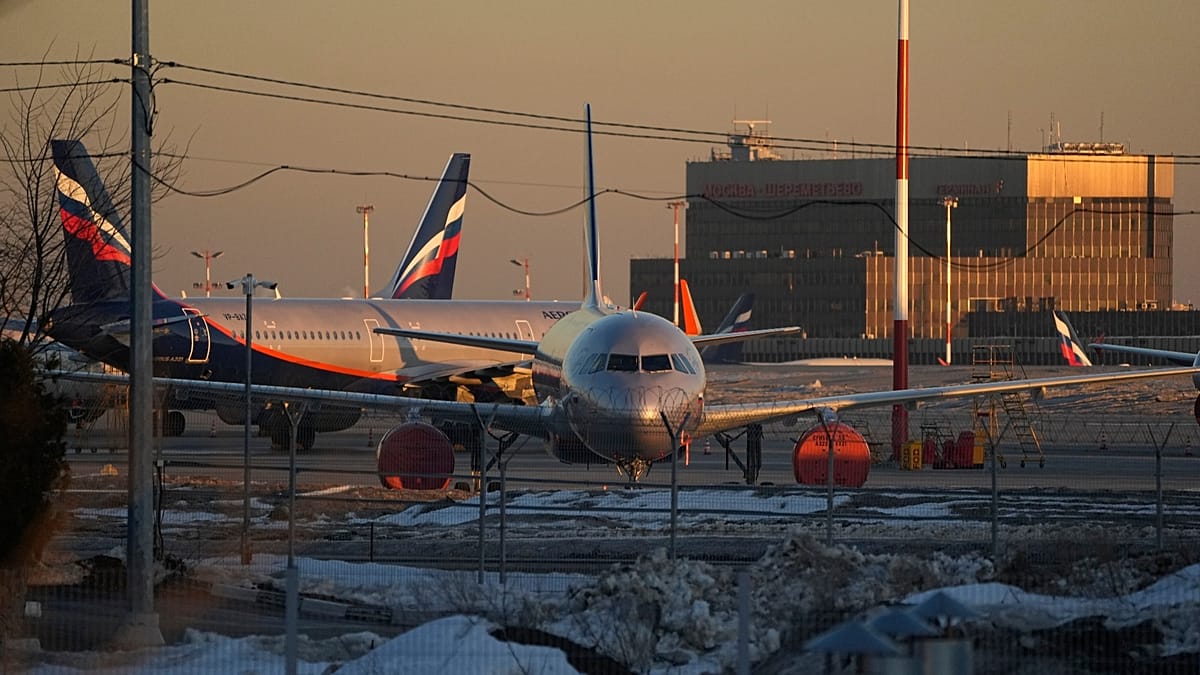
Ukraine has taken the formal step of notifying the International Civil Aviation Organisation (ICAO) that Russian airspace is no longer safe for civilian flights, citing heightened military activity linked to Moscow's full-scale invasion. Foreign Minister Andrii Sybiha announced the move on Wednesday, urging airlines and governments to treat the warning with the seriousness it deserves.
"Ukraine has officially notified ICAO that the Russian airspace is not safe for civilian aviation because of increased military activity. We urge everyone to avoid it," Sybiha wrote on X. He accused Russia of "deliberately ignoring the existing threats" created by its war against Ukraine, noting that several aviation incidents have already occurred in recent years.
The formal notification came a day after President Volodymyr Zelenskyy issued a stark public warning to airlines, insurers, and businesses that continue to use major Russian airports. "Russian skies are becoming completely dangerous," he said on Tuesday, pointing to the expanding scale of Ukrainian long-range drone operations inside Russian territory.
Zelenskyy was careful to stress that Ukraine does not threaten civilian aviation. Instead, he argued that the growing frequency and reach of Ukrainian drone strikes mean the risks can no longer be ignored. "Russian airspace will effectively be closing," he said, as the consequences of Moscow's war increasingly return to its own soil.
Disruptions on routes to Moscow
The warnings were quickly followed by tangible disruptions. Turkish low-cost carrier Pegasus Airlines cancelled a dozen flights to and from Moscow's Vnukovo Airport overnight, according to airport data. One Pegasus flight from Antalya to Moscow was diverted due to security concerns in Russian airspace, Turkish media reported.
Turkish Airlines, the country's flagship carrier, largely kept its Moscow services running but cancelled two departures and two arrivals at Istanbul. The incidents highlight the delicate balance airlines face as they weigh commercial interests against an increasingly volatile operating environment.
Ukraine's own airspace has been closed to civilian aviation since 24 February 2022, when Russia launched its full-scale invasion. Russian civilian aviation, by contrast, has continued operating throughout the war, despite frequent disruptions and temporary airport closures during Ukrainian drone attacks.
European and US carriers stopped flying over Russia shortly after the invasion began, but Russian airspace still carries significant international passenger traffic, particularly from airlines in the Middle East, Asia, and Turkey. The new formal warning from Kyiv adds pressure on those carriers to reassess their routes.
The move also fits into a broader pattern of European concern about Russian behaviour. As Germany blames the Kremlin for a drone incident in Leipzig, and Ursula von der Leyen calls Russian drone sabotage the new normal, the security implications for the continent are becoming harder to dismiss.
For now, Kyiv's formal notification to ICAO is a diplomatic and legal step aimed at preventing unintended incidents. As Sybiha put it: "This is our responsible decision to notify ICAO and all airlines, and governments to take caution — even if Russia refuses to fulfill its responsibility to inform them. We want to prevent unintended incidents."
The coming weeks will show whether airlines heed the warning or continue to operate as if the skies above Russia remain as safe as they were before the war. For Ukraine, the message is clear: the risk is real, and the responsibility now lies with those who choose to ignore it.