For Ukrainians, the war has long been fought not only in the trenches of the east but also in the skies above their cities. In Kyiv, the daily rhythm is set by air-raid sirens, the crack of interceptors, and the thud of impacts. As winter approaches, the capital is again bracing for a campaign that targets both its infrastructure and its morale.
An evolving threat in the air
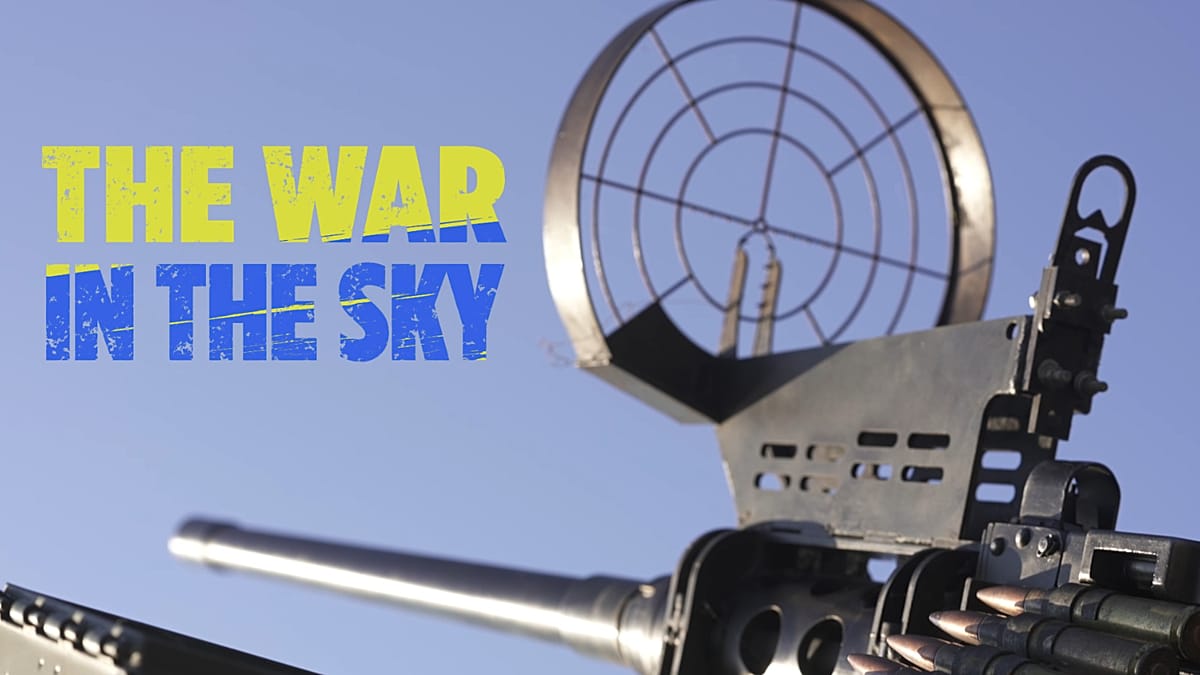
At a battery protecting the capital, soldiers begin their work long before any threat appears on radar. They scan for a mix of weapons that arrive at different speeds and from unpredictable directions. The Russian arsenal now includes waves of Shahed-type drones, ballistic missiles that give defenders only minutes of warning, and newer, faster drones that add yet another layer of complexity.
Routes shift. Timing changes. The goal is to find gaps in the layered defences that shield the city. For the crews on the ground, it has become a technological race: whenever Ukraine finds a cheaper or more effective way to down a drone, Russia adjusts its flight paths, speeds, or approach angles. Ukraine adapts, Russia adapts, and the cycle repeats.
Pavlo Tsugunov, an anti-aircraft battery commander, has watched this evolution up close. “The past few weeks have seen constant attacks on Kyiv, its suburbs, the city centre, the Kyiv region and the Chernihiv region,” he said. “In other words, on the homes where our loved ones live.”
Tsugunov believes the pressure on civilians is itself a deliberate strategy. “This tactic is most likely intended to intimidate the civilian population,” he said. “As they are currently failing to make any headway in direct combat operations on the front line, they are attempting to intimidate the population so that it stops supporting the army. And, consequently, so that the army will agree to surrender.”
The limits of air defence are visible across the capital. Outside a kindergarten damaged in an attack, a young boy pointed at the building and told reporters he watched the drone strike it. “The drone flew right above our heads and hit it here,” he said.
When weapons get through
When a missile or drone slips past the defences, a second race begins on the ground. Russia’s primary targets remain Ukraine’s energy system. At a damaged electricity facility in the Kyiv region, repair crews from DTEK Kyiv Regional Grids work to restore power while the threat of another strike looms. They can only begin work once the military and emergency services declare the site safe.
Serhii, a repair technician, said residents were waiting for electricity to return, but repeated air-raid alerts were slowing the work. “People are asking us to turn the lights on, but we can’t do that because the alarms are going off constantly, every day, all day long,” he said. As he spoke, explosions echoed nearby—another drone was heading toward the area. “Let’s move a bit further away from the site, because you can hear what’s going on,” he added.
This is the dilemma familiar to Ukraine’s energy workers: the same attacks that knock out the grid also prevent crews from safely repairing it. Often, the attackers deliberately target the people fixing the damage. DTEK says its teams have restored electricity to more than 700,000 homes in the region after Russian attacks, sometimes returning to the same households multiple times.
Oleksii, head of high-voltage network operations at DTEK Kyiv Regional Grids, described the relationship between those who stop weapons in the air and those who repair the damage on the ground. “I very much hope that our air defence systems will help us by shooting down the vast majority of the weapons currently being used,” he said. “And after that, it’s up to us. We will repair whatever has been damaged.” He noted that crews have already endured the most severe test in recent years, when Moscow deliberately tried to freeze the population by cutting off electricity, heating, and even water.
Preparing for another winter
For Ukraine’s energy workers, winter preparation never stops. DTEK says it has repaired more than 1,200 kilometres of power lines and upgraded over 400 energy facilities across the Kyiv region since the start of the year. It has also stockpiled replacement equipment, reinforced physical protections around key sites, and trained emergency crews to respond quickly when something is hit.
But there is a limit to what preparation can achieve. No electricity network can be completely protected from missiles and drones. The ability to restore power quickly after a strike is now as important as the defensive measures taken beforehand. As recent strikes have shown, the cost in lives and infrastructure is high.
The broader European context adds urgency. EU energy officials warn of a harsh winter despite adequate supply, and Belgium’s Francken has urged Europe to speed up defence amid what he calls a “dark winter” warning. For Kyiv, the immediate challenge is simpler: keep the lights on and the air defences ready as the temperature drops.