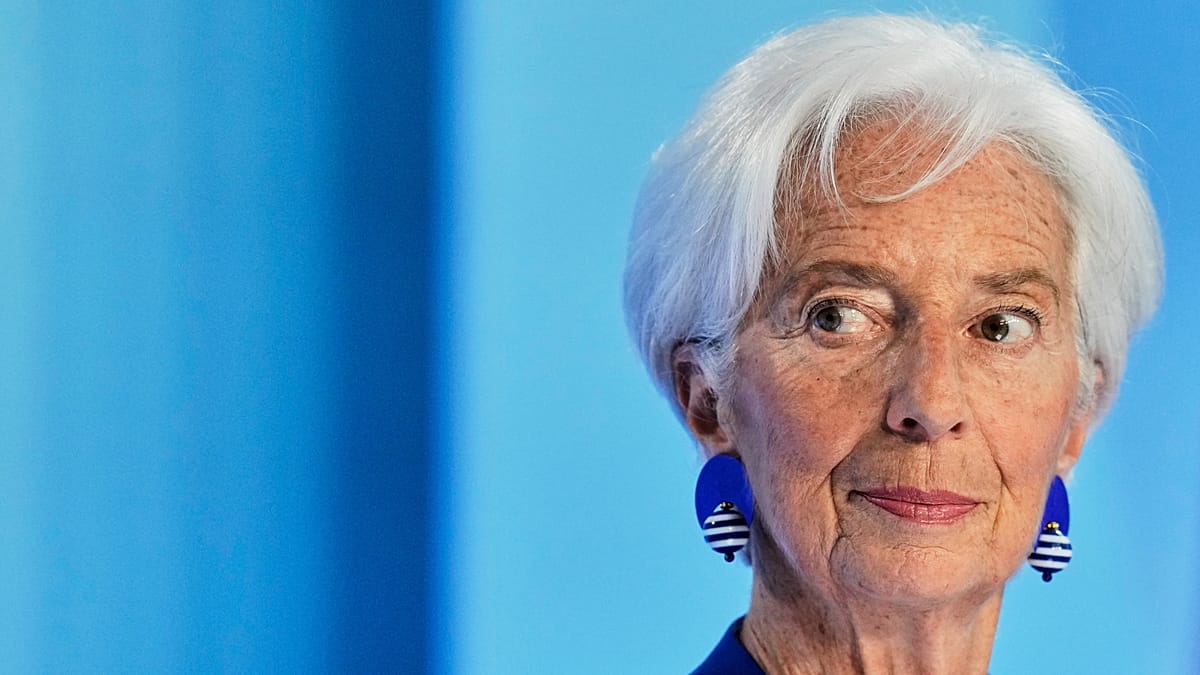
European Central Bank President Christine Lagarde made clear on Monday in Brussels that the euro's path to becoming a global reserve currency hinges on a single, crucial reform: the completion of the capital markets union. Speaking at a panel, she urged EU lawmakers to move decisively, warning that the bloc cannot afford to delay in an increasingly unstable geopolitical landscape.
Three Pillars for a Stronger Euro
Lagarde outlined three main challenges Europe must address to expand the euro's global role: reducing dependence on US-dominated payment infrastructure, finishing the EU's reform agenda, and making the euro a competitive currency in a world where the dollar's supremacy is no longer guaranteed. "It doesn't happen overnight," she said, noting that historically, no currency has become an international reserve without the capacity to defend itself and the military might to resist counterparts.
The urgency of this push has been accelerated by US President Donald Trump's confrontational approach to foreign policy and trade, which has prompted European leaders to reconsider their reliance on American financial systems. According to ECB data from 2025, US giants Visa and Mastercard account for 61% of card payments in the eurozone and nearly all cross-border transactions.
Digital Euro and New Payment Infrastructures
To address this vulnerability, the EU has been advancing the digital euro—a public digital currency backed by the ECB designed to complement banknotes. Legislation is expected by the end of 2026, with a crucial vote in the European Parliament scheduled for Tuesday. Alongside this, the ECB unveiled a new payments strategy at the end of March, including two network infrastructures called "Pontes" and "Appia" that adapt to emerging technologies like tokenisation and distributed ledger technology (DLT).
Lagarde emphasised that developing these infrastructures, approving the digital euro, and reforming European capital markets are pressing priorities. The ECB's strategy is partly a response to the rise of privately issued stablecoins—crypto assets designed to be less volatile—which have gained ground in payments and operate on these new technologies.
While countries like Russia and China have adopted their own public digital currencies, the US is moving in a different direction. Trump abandoned plans for a Federal Reserve digital dollar in favour of stablecoins, with the GENIUS Act providing a regulatory framework for these assets. As 95% of stablecoins worldwide are backed by the US dollar, Trump aims to strengthen the US currency through this technology, positioning stablecoins as a key means of payment for international transactions.
For Europe, the stakes are high. A fully integrated capital market would allow savings to flow more freely across the twenty-seven member states, reducing the bloc's dependence on external financing and bolstering the euro's attractiveness. The Rome Summit earlier this year saw global investors urging Europe to cut red tape for capital, echoing Lagarde's call for reform.
The ECB's push also aligns with broader efforts to strengthen European sovereignty. As the continent faces pressure from both the US and China, completing the capital markets union is seen as a necessary step to ensure the euro can compete on the global stage. Without it, Lagarde warned, the euro risks remaining a secondary currency in a world where the dollar's dominance is being challenged by new technologies and geopolitical shifts.