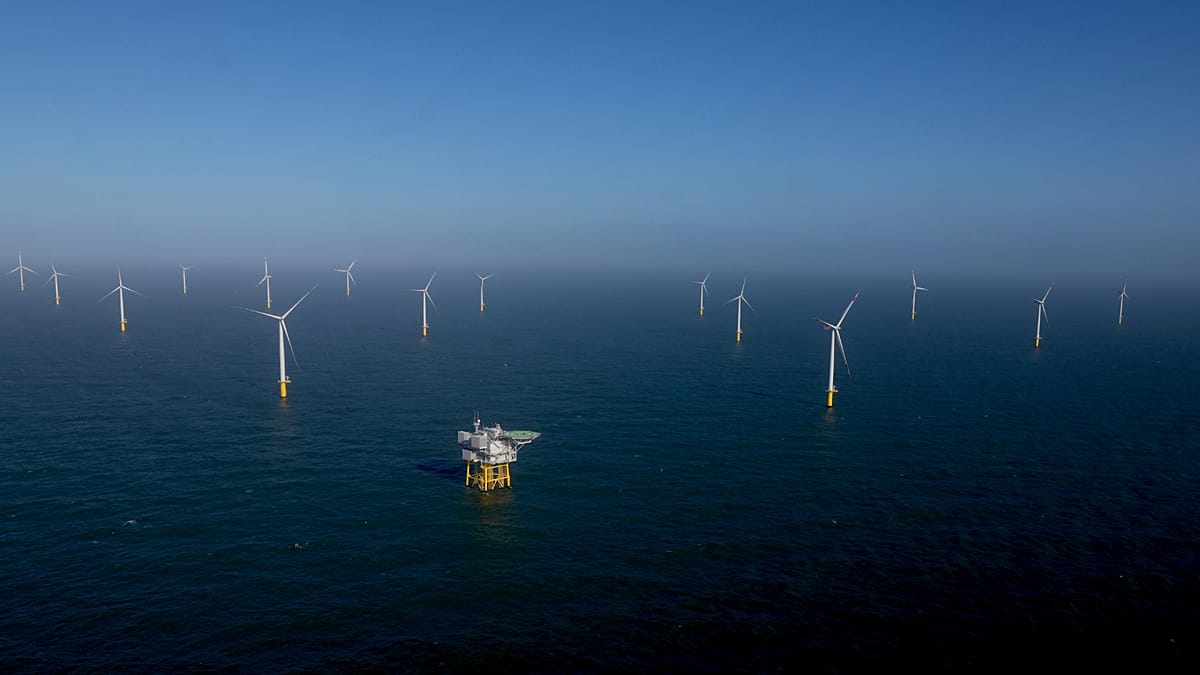
The Trump administration has agreed to pay German energy giant RWE $1.22 billion (€1.06 billion) to cancel its offshore wind leases in US waters, marking the latest step in Washington's push against wind power. RWE confirmed on Thursday that it had reached a settlement with the US Department of the Interior (DOI) to give up its lease areas off the coasts of New York, California, and Louisiana.
In a statement, the Essen-based company said that after careful consideration, it had determined there was no foreseeable path to permit these projects in the United States. The decision reflects the hostile regulatory environment for offshore wind under President Donald Trump, who has long dismissed turbines as unsightly and called wind energy an “economic and environmental disaster.”
A widening retreat from US offshore wind
RWE's exit follows a similar move by French energy major TotalEnergies, which in March agreed to surrender its leases at Carolina Long Bay and New York Bight in exchange for roughly $1 billion from the DOI. As part of that deal, TotalEnergies committed to investing in natural gas projects instead.
RWE will follow a similar path. The company said it would invest in US gas infrastructure to meet what it calls “rapidly growing energy demand,” including a $900 million acquisition of a 16% stake in a Louisiana liquefied natural gas project. RWE Americas also announced plans to invest approximately €17 billion in the US over the next six years, aiming to expand its generation capacity from about 13 GW across 27 states today to 22 GW by 2031.
US Interior Secretary Doug Burgum welcomed the agreement, writing on X: “We welcome RWE’s agreement and voluntary investment in projects that strengthen our nation's energy security, provide dependable baseload power and help keep electricity affordable for hardworking Americans today while supporting our country's long-term energy future.”
The settlement is a significant blow to the offshore wind industry, which had viewed the US East Coast as a major growth market. European developers, including RWE, Ørsted, and Equinor, had invested heavily in American projects, only to face permitting delays, cost inflation, and now political opposition from the highest level.
For RWE, the deal allows it to exit a market that had become increasingly untenable. The company's decision to pivot towards gas aligns with the Trump administration's fossil-fuel-friendly agenda, but it also raises questions about the long-term viability of renewable energy investments in the US.
The broader context is a transatlantic divergence on climate policy. While the European Union continues to push for ambitious renewable energy targets, as seen in its recent €1.4 billion transfer to Ukraine from frozen Russian assets, the US is moving in the opposite direction under Trump. This settlement is a stark reminder that European companies operating in the US must navigate a volatile political landscape.
RWE's exit also highlights the growing risks for European firms investing in American energy projects. The company's shift towards gas may provide short-term financial stability, but it could also expose it to criticism from environmental groups and investors who expect a commitment to decarbonisation.
As the US administration continues its crackdown on wind energy, other European developers with US offshore wind holdings may be forced to make similar choices. The coming months will reveal whether this settlement is an isolated case or the beginning of a broader European retreat from the American offshore wind market.