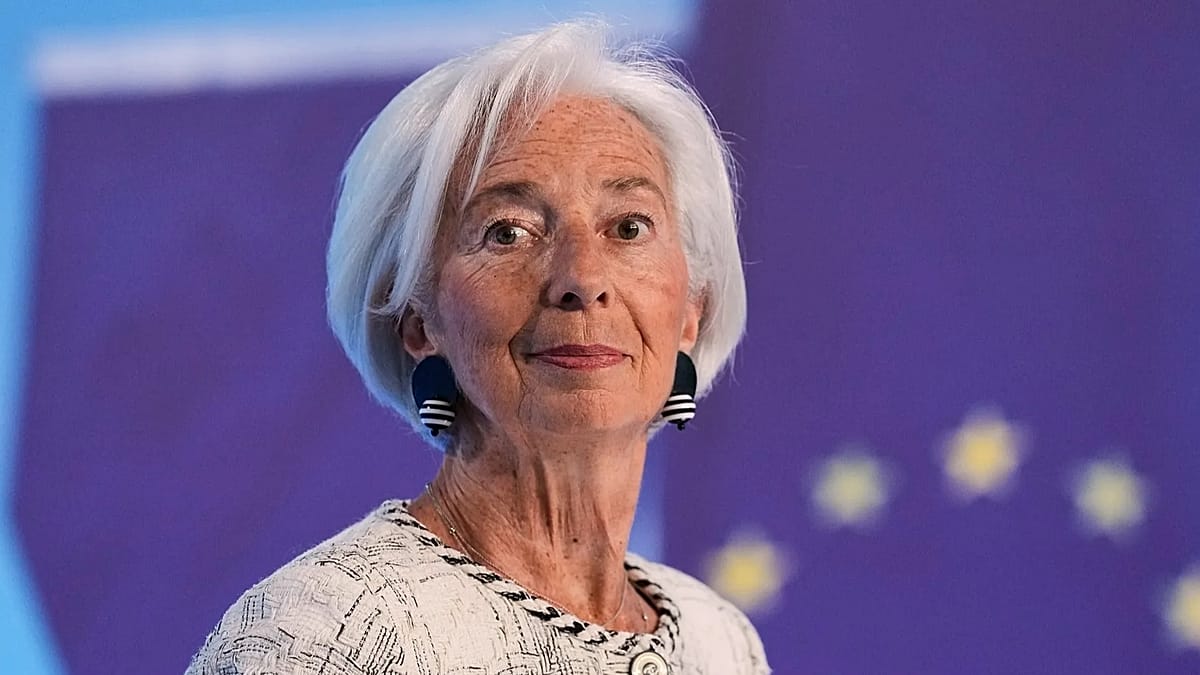
European Central Bank President Christine Lagarde has defended the institution's decision to raise interest rates by 0.25 percentage points, arguing that the move is "robust across three different scenarios" mapping the potential evolution of the Middle East conflict and its impact on the euro area's medium-term outlook.
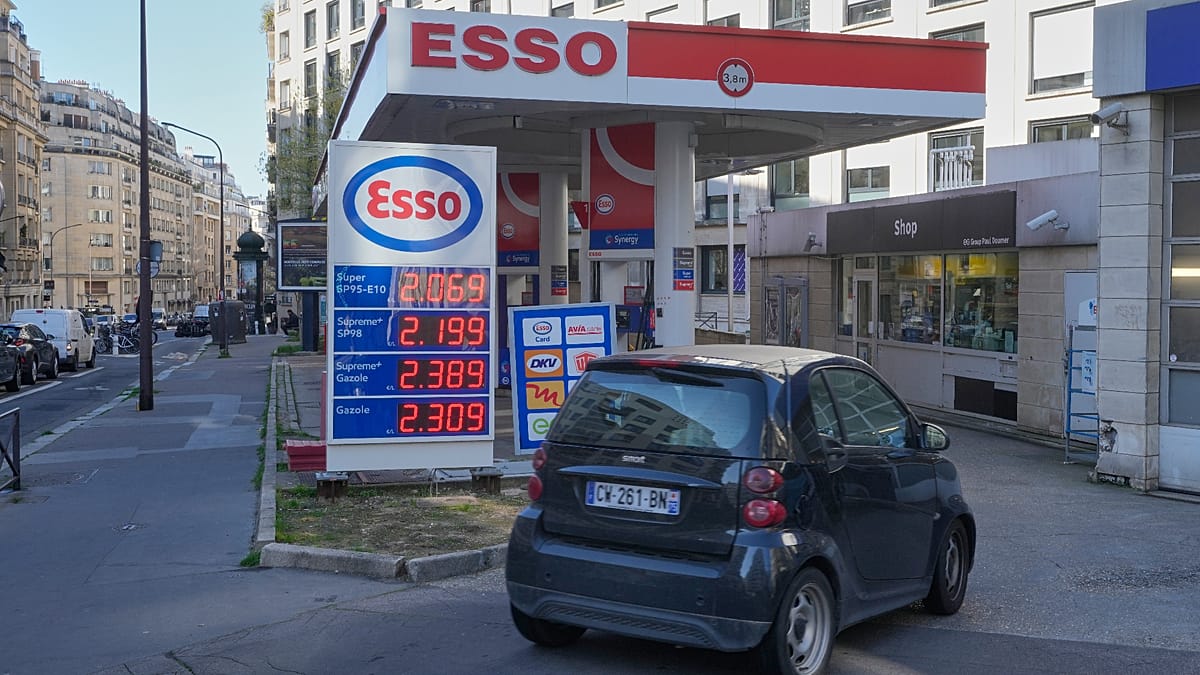
The rate hike, announced on Thursday, marks the ECB's first increase since 2023, when it responded to energy price spikes triggered by Russia's full-scale invasion of Ukraine. This time, the trigger is the ongoing war in the Middle East, which began in February and has disrupted global energy markets. The on-off closure of the Strait of Hormuz has sent oil and gas prices soaring, hitting European importers particularly hard.
Eurozone inflation reached 3.2 percent in May, its highest level since September 2023, driven by a 10.9 percent surge in energy prices. The European Union's economy contracted by 0.2 percent in the first quarter of 2026, fueling fears of stagflation—a toxic mix of weak growth, rising inflation, and deteriorating consumer confidence. According to the European Commission's latest forecasts, EU GDP growth is expected to slow from 1.1 percent in 2026 to 1.4 percent in 2027, while inflation is projected to rise from 3.1 percent to 2.4 percent over the same period.
Three Scenarios for the Eurozone
In her briefing, Lagarde stressed that the ECB is not following a predetermined rate path. "Our interest rate decisions will be based on our assessment of the inflation outlook and the risks surrounding it," she said, citing incoming economic and financial data, underlying inflation dynamics, and the strength of monetary policy transmission.
The ECB outlined three short-term scenarios for June 2026: mild, adverse, and severe. Under the mild scenario, oil prices normalize faster than the baseline, inflation falls below the 2 percent target in 2027 and 2028, and GDP growth recovers earlier and more robustly—from 0.8 percent in 2026 to 1.4 percent in 2027, with inflation dropping from 2.9 percent to 1.8 percent.
The adverse scenario assumes continued energy price rises, high uncertainty, international spillovers, and stronger second-round effects on inflation. In this case, GDP growth would reach 0.7 percent in 2026 and 0.9 percent in 2027, while inflation would hit 3.3 percent and 3.0 percent, respectively. The severe scenario envisions a stronger and more persistent energy price shock, with GDP growth slowing to 0.5 percent in 2026-27 before a slight rebound in 2028.
Lagarde emphasized that containing inflation remains the ECB's top priority. "If you let inflation start running out without control, then it becomes a much more difficult situation to bring it back to the level of price stability," she warned. She argued that raising rates was the right decision to "commit and deliver on price stability," enabling businesses and workers to make investment, employment, and wage decisions with confidence.
Critics Warn of Damage to Clean Energy and Competitiveness
Critics, however, contend that higher borrowing costs will disproportionately harm Europe's most productive and innovative sectors. Calvin Vella, a researcher at Positive Money Europe, a Brussels-based NGO, argued that the rate hike will not reduce energy prices but will make clean energy investments more expensive. "Renewables are not just a climate solution, they are a price stability solution," he said in a statement.
Vella also warned that the rise in borrowing costs puts Europe's competitiveness at risk by making cleaner industries more expensive to invest in, undermining energy security. "The interest rate rise also increases inequality by impacting wages and reducing the availability of jobs," he added.
Lagarde acknowledged the need for structural reforms, including accelerating the energy transition to reduce reliance on fossil fuels. "Reforms to enhance the euro area's growth potential and accelerate the energy transition to reduce reliance on fossil fuels are more vital than ever," she said. The ECB's decision comes as the EU grapples with the broader economic fallout from the Middle East crisis, which has also disrupted trade routes and heightened geopolitical uncertainty.
For now, the ECB's rate hike signals a clear reversal of the easing cycle that defined its approach through much of 2025. The bank's next moves will depend on how the conflict evolves and whether inflation pressures persist. As Lagarde put it, the ECB is prepared to adjust its policy as new data emerges, but the commitment to price stability remains unwavering.