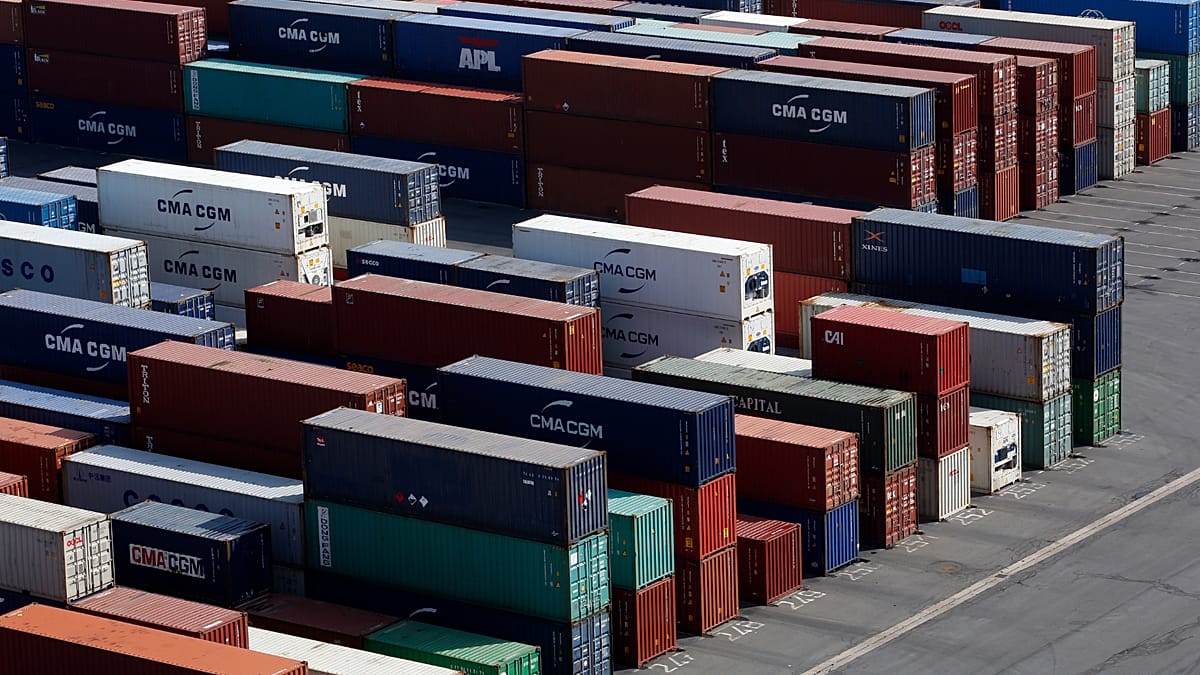
In a warehouse in Le Havre, France's busiest container port, nearly 38,000 pairs of counterfeit trainers sat in boxes for fifteen years. Seized in 2011 from containers arriving from China, they became the subject of one of the longest legal proceedings French customs officers have ever handled.
On 3 June 2025, the shoes finally met their end: crushed by mobile cranes, fed into an industrial shredder, and reduced to fragments destined for incineration or recycling. The destruction marks the conclusion of a case that dragged through French courts for over a decade.
A Landmark Sentence
In December 2025, the French importer was sentenced to a customs fine of €1.56 million, an additional €260,000 for customs-related money laundering, and three years in prison, two of which were suspended. The sentence reflects the seriousness with which French authorities treat counterfeiting, particularly when it involves large-scale shipments through major European ports.
Anthony, a customs officer at the Le Havre site, described counterfeiting as a real scourge. 'Any product can be counterfeited,' he said, noting that luxury goods from big French brands are common targets, but so are everyday consumer products like soaps, shampoos, and toys, which are hugely popular and can be copied almost instantly.
The scale of the problem is staggering. Last year, more than 20 million counterfeit products were seized across France, with nearly 1.2 million of those intercepted in Le Havre alone. The trade is highly lucrative and increasingly attracts organised criminal networks, according to customs officials.
The destruction of the trainers has reignited a recurring debate: is it wasteful to destroy thousands of pairs of shoes when they could be donated to those in need? Customs officials are unequivocal: the law forbids resale or redistribution of seized counterfeit goods. Once confiscated, they must be systematically destroyed to prevent them from re-entering commercial circuits. Moreover, many counterfeits fail to meet safety standards and may contain toxic or hazardous materials.
Stéphane Peterson, regional director at UNIFER Environnement, the company contracted to handle the destruction, explained the process. 'This pile of waste at the end of the process can have several destinations,' he said. 'In this particular case, it will be recovered through incineration, carried out in collaboration with a local partner. In other situations, we can also treat this type of residue to produce a solid fuel, an extremely high-calorific material that will mainly feed the boilers in cement works.'
The case also highlights the broader challenge of counterfeit goods entering Europe via major ports. Le Havre, as France's main container port, is a key entry point for goods from China, and customs officers there regularly seize counterfeit shoes, clothing, toys, tech products, and even car parts. The European Union has been grappling with how to address the influx of counterfeit goods, particularly from China, as part of broader trade and security concerns. EU Trade Chief Unveils Plan to Force Supplier Diversification Away from China is one such initiative aimed at reducing dependency on Chinese supply chains.
For the trainers from China, their final stop was neither a shop nor a wardrobe, but an industrial shredder. After fifteen years of waiting, they became part of a cautionary tale about the costs of counterfeiting—both for the criminals who attempt it and for the authorities tasked with stopping it.