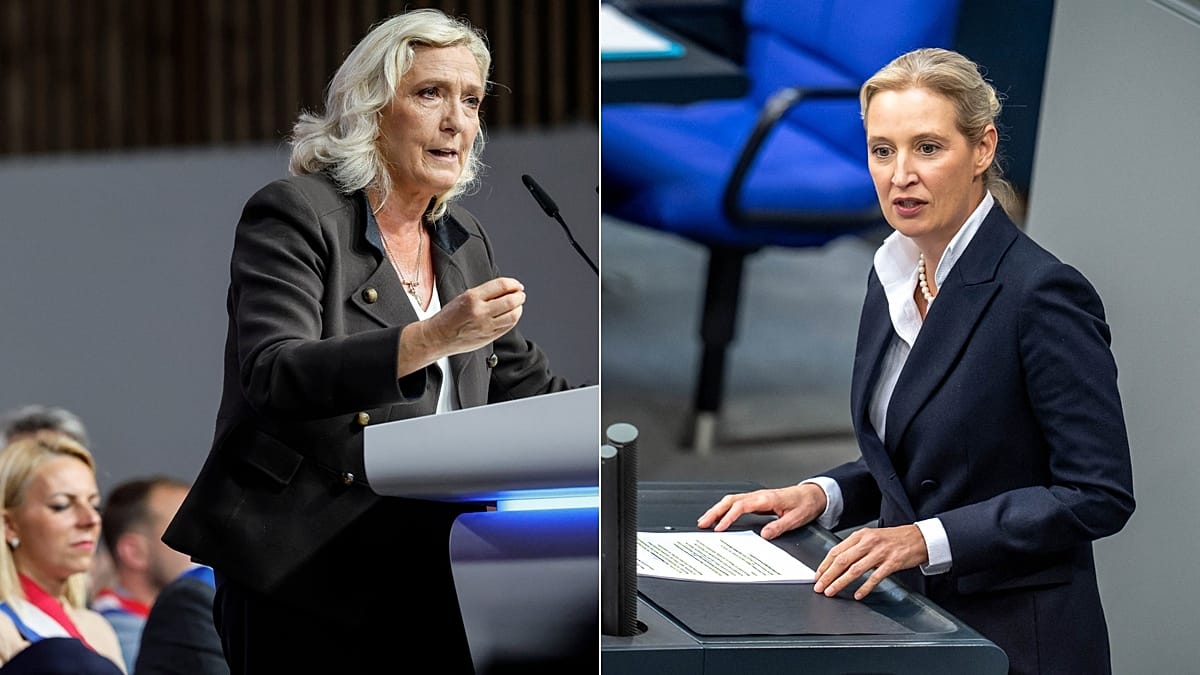
Two of Europe's most prominent far-right leaders have laid out competing visions for the future of the European Union, each seeking to transform the bloc into a looser confederation of sovereign states. Alice Weidel, co-leader of Germany's Alternative for Germany (AfD), presented her "New Deal for Europe" in Strasbourg on Wednesday, a week after France's Marine Le Pen outlined her own agenda at a Brussels hotel. Neither party now advocates leaving the EU; instead, both want to hollow out its institutions and return power to national capitals.
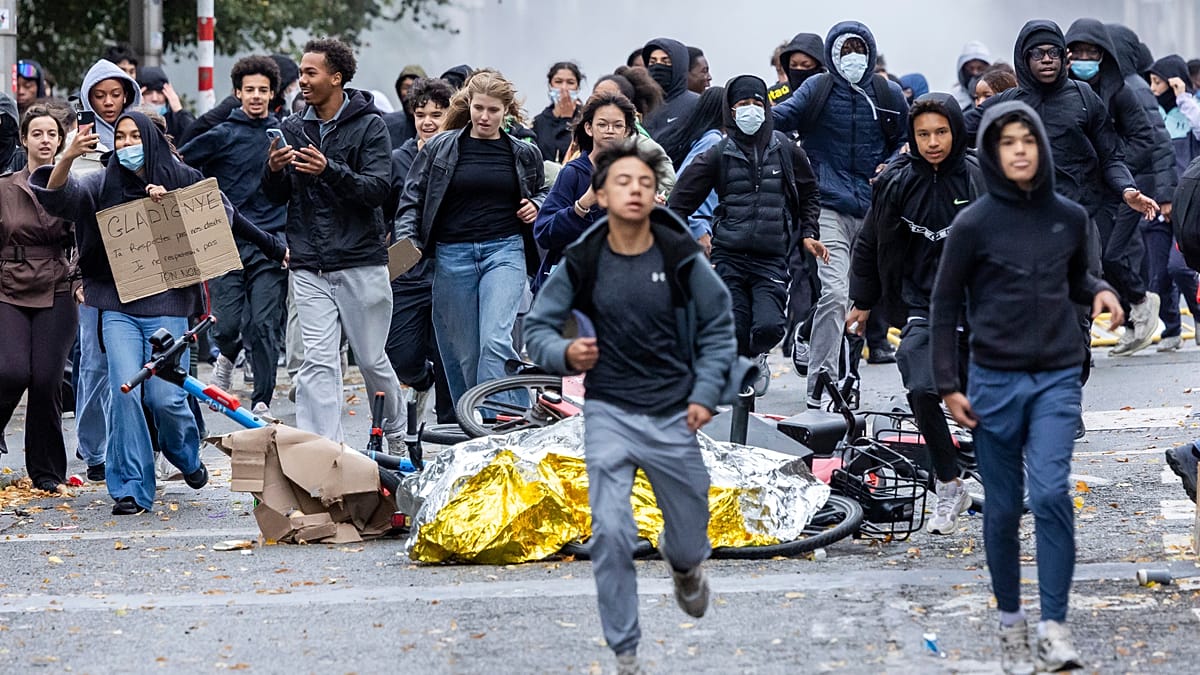
The timing is significant. Weidel's AfD is riding high after a historic victory in Saxony-Anhalt's regional election last September, and is currently leading national polls. "Our aim is to assume government responsibility after the next federal elections," Weidel told reporters in the European Parliament. In France, Le Pen's Rassemblement National is polling at 34–38% for the first round of the 2027 presidential election, according to Ifop, despite recent protests across the country.
Both leaders oppose continued funding for Ukraine, criticise the EU's regulatory burden, and want to strip the European Commission of its executive powers. But their plans diverge sharply on fiscal policy, energy, and how far their countries should break from common rules. The AfD goes further, proposing opt-outs that would allow Germany to bypass certain EU policies.
Ukraine: a rare point of agreement
On Ukraine, the two leaders are in lockstep. Le Pen argued that France's strained public finances can no longer sustain aid to Kyiv and called for lifting EU sanctions against Russia. "We obviously agreed to maintain a whole series of mechanisms to train their soldiers, to train their army, to provide them, including aid in terms of equipment, but we can no longer finance Ukraine, so this funding will stop," she said last week.
Weidel echoed that sentiment, calling for a "reasonable diplomatic approach" that takes into account the "security interests of Ukraine and Russia." In a recent interview with The Economist, she declared that Ukraine had already lost the war and pledged to end Germany's support for Kyiv. This stance puts both parties at odds with the current EU consensus, as EU leaders close ranks behind Zelenskyy amid deepening transatlantic tensions.
Fiscal policy: the sharpest divide
The most significant difference lies in their approach to fiscal policy. Le Pen wants to harmonise taxes on tobacco, alcohol, and large companies at EU level to prevent fiscal dumping across Europe. She also suggested that the European Central Bank (ECB) revise its mandate to give more weight to economic growth, rather than focusing solely on price stability.
"As I have always believed, the ECB must rethink its course of action. It is essential that it take into account employment, growth, and innovation, given that the monetary easing policies pursued between 2010 and 2022 were not targeted at future investments," she said.
The AfD, by contrast, opposes any transfer of fiscal sovereignty to supranational institutions and insists that the ECB must strictly confine itself to its original price-stability mandate. "There is a ban on the ECB, the European Central Bank, financing state debt. And what is the ECB doing? It's financing state debt," Weidel said.
Both parties firmly oppose common EU debt and want to cut their countries' contributions to the EU budget. Le Pen aims to cap France's net contribution at €5 billion a year. The AfD's paper does not specify a figure but emphasises the need to "end Germany's role as paymaster."
Energy: carbon border tax vs coal freedom
On energy and climate policy, both parties criticise the EU Green Deal and support nuclear power, but their approaches diverge. Le Pen rejected the "climate-sceptic" label for her party, backed an EU carbon border tax, and proposed tying member states' contributions to the EU budget to their carbon emissions, thereby incentivising the transition to clean energy. "The further a country deviates from the [Paris agreement] targets, the more it should have to contribute," she said.
The AfD paper instead stresses total freedom to choose the national energy mix, meaning Germany must be free to use nuclear power, coal, gas, and renewables according to the needs of its economy. "Now we rely completely on an ideological energy transition of wind and solar power. We see this development also throughout Europe, through the implementation of the Green Deal, the building energy law, and above all the ban on combustion engines. This is a blatant disruption of the free market economy," Weidel said.
Institutional overhaul: from Commission to Parliament
Both parties want the European Commission to be stripped of powers and reduced to a "secretariat at the service of countries," as Le Pen put it. "The Commission wants to be a State, we don't want it," she said, rejecting any EU executive ambitions on security, diplomacy, and intelligence. She also wants to abolish the European Committee of the Regions and the European Economic and Social Committee, two advisory bodies representing local authorities and social interests.
Weidel has a similar position. "We don't want a Commission that is not elected to intrude and disturb your private life and [Member States] decision making [process]," she said. But the AfD goes a step further, questioning the legitimacy of the European Parliament itself. One of the most far-reaching proposals in the New Deal for Europe states: "The EP should no longer be elected directly, but instead be composed of delegates appointed by national parliaments."
Such a move would fundamentally alter the EU's democratic fabric, a prospect that has already raised concerns among centrist lawmakers. As centrist blocs struggle to maintain control of the Parliament, the far-right's push for institutional change is gaining traction.
If either party were to come to power, their plans could undermine the Franco-German partnership that has long driven European integration. Le Pen's vision, detailed in her EU agenda, would cap France's budget contributions and cut Ukraine aid, while Weidel's would allow Germany to opt out of EU policies. The result could be a Europe of nation-states, with Brussels reduced to a mere administrative hub.
Yet the two leaders are not natural allies. Their differences on fiscal policy and energy reflect deeper ideological divides within the European far right. While Le Pen seeks to reform the EU from within, using its tools to protect French interests, Weidel's AfD is more radical, questioning the very basis of EU governance. As both parties gain momentum, the future of the EU may hinge on which vision—if either—prevails.