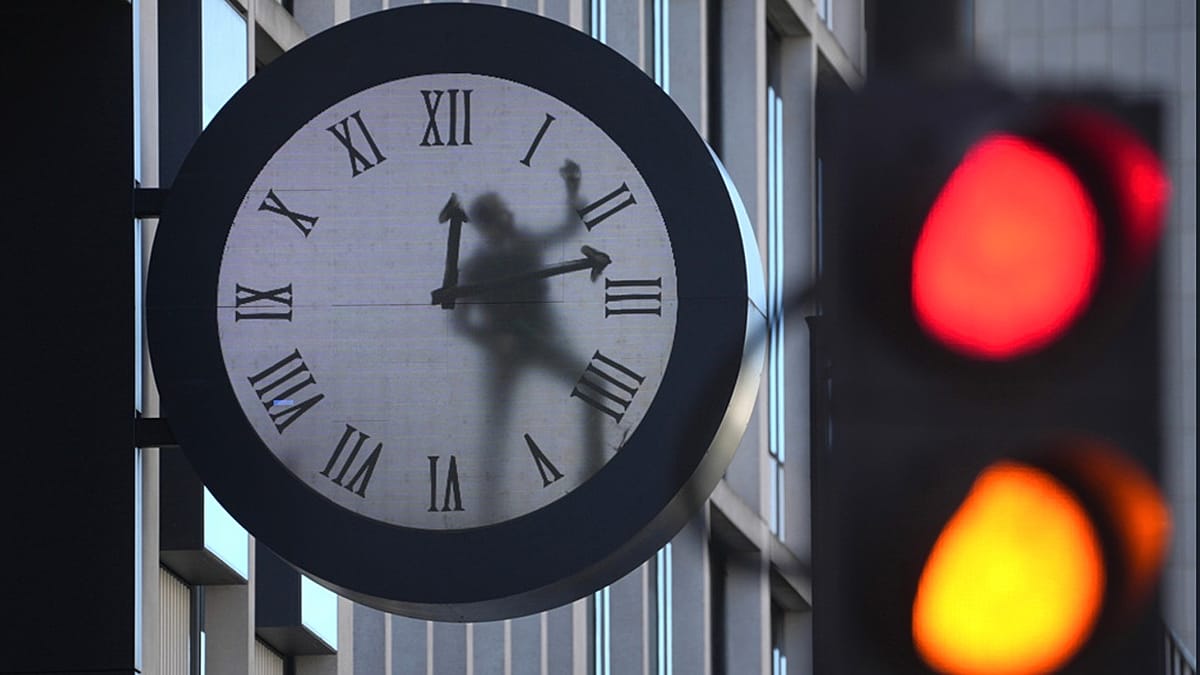
On the last Sunday of October, most Europeans will once again set their clocks back one hour, marking the end of Central European Summer Time (CEST) and the return to Central European Time (CET). The ritual, which has been a fixture of life across the continent for decades, persists despite a clear signal from the European Parliament in 2019 that it should end.
In a 2018 EU-wide consultation, 84% of respondents said they wanted to stop changing the clocks. The following year, the European Parliament voted overwhelmingly – 410 to 192 – in favour of a European Commission proposal to abolish the seasonal time change, with the aim of implementing it by 2021. Yet the proposal has never become law. The reason: EU member states cannot agree on what should replace the current system.
Why the plan stalled
The European Parliament's vote was a clear signal, but under the EU's legislative process, the final decision requires the approval of the Council of the EU, where national governments sit. Since 2019, the Council has been unable to reach a common position. The core disagreement is whether to keep permanent summer time or permanent winter time. Countries in the north, such as Finland and the Baltic states, tend to favour permanent summer time to preserve daylight in the evenings, while southern countries often prefer permanent winter time to maintain brighter mornings. The fear is that a patchwork of different time zones across the EU would disrupt the single market, transport schedules, and cross-border business.
The COVID-19 pandemic and Russia's full-scale invasion of Ukraine pushed the issue down the political agenda. As a result, the proposal remains in limbo, and the twice-yearly change continues.
A brief history of European time
The practice of changing clocks in Europe dates back to the oil crisis of the 1970s. France introduced summer time in 1976 as an energy-saving measure, and West Germany and other EU states followed in 1980 to harmonise timekeeping across the bloc. The energy-saving rationale is now widely considered outdated, and even the leap second – a separate timekeeping quirk – was scrapped in 2023.
This year, the clocks go back on the night of 24–25 October 2026, from 3 a.m. to 2 a.m. in most of Europe. Portugal and the United Kingdom also change their clocks, but one hour earlier than continental Europe. The United States, by contrast, ends daylight saving time on 1 November, a week later. In many parts of the world – including Morocco, Thailand, Japan, Argentina, and South Africa – clocks are not changed at all.
What's next?
For now, the status quo remains. The European Commission has not withdrawn its proposal, but there is little political appetite to revive it. Some member states have expressed frustration, but no consensus is in sight. As long as the Council fails to agree, Europeans will keep adjusting their clocks twice a year.
The debate is unlikely to be resolved soon. The issue is a classic example of how EU decision-making can stall when national interests diverge. For those who hoped the 2019 vote would end the ritual, the wait continues.
For more on how timekeeping is evolving, see the latest on nuclear clocks.