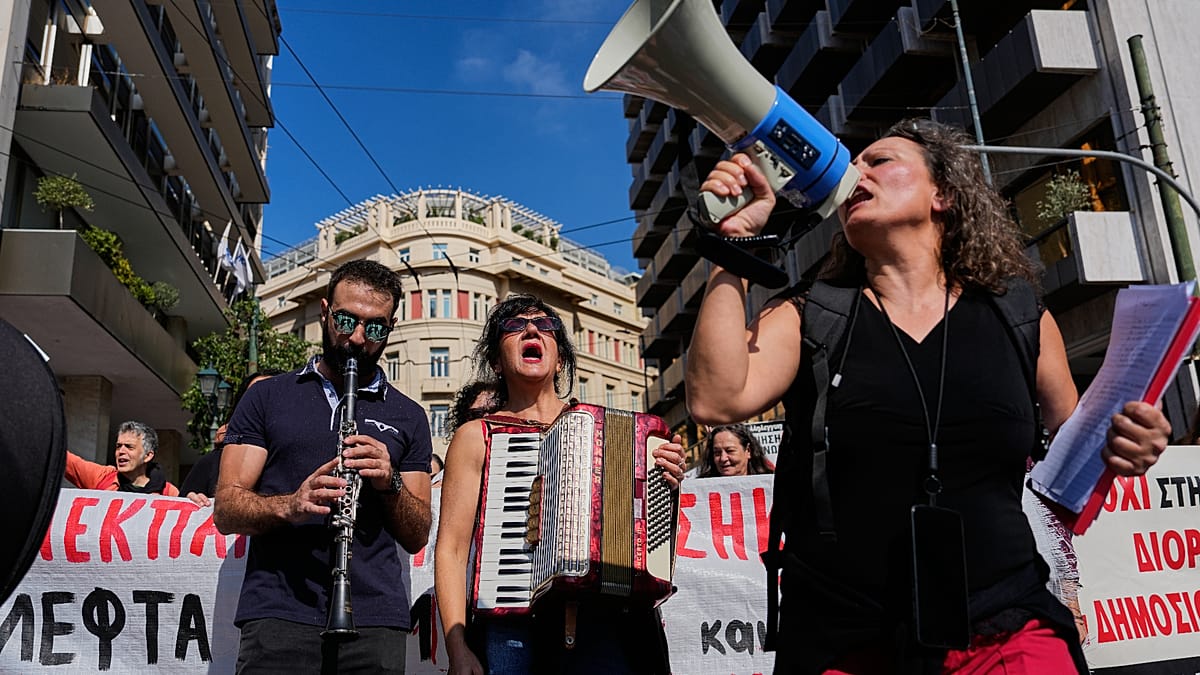
Thousands of protesters converged on central Athens on Wednesday, October 21, in a demonstration that underscored growing public frustration over chronic underfunding in Greece's education system. The march, which snaked past the Hellenic Parliament in Syntagma Square, was organized by student unions, teachers' associations, and parent groups, who accuse successive governments of neglecting schools, universities, and vocational training.
Waving banners and chanting slogans, demonstrators beat drums and carried placards demanding immediate increases in public spending on education. Many held signs reading "Fund our future" and "Education is a right, not a commodity." The protest was largely peaceful, though it brought traffic to a standstill in the city center for several hours.
A chronic crisis
Greece has one of the lowest levels of public expenditure on education in the European Union, a legacy of the debt crisis that forced deep austerity measures over the past decade. According to Eurostat, Greece spent about 3.9% of its GDP on education in 2022, compared with the EU average of 4.9%. Teachers' salaries remain among the lowest in the bloc, and many schools struggle with outdated infrastructure, shortages of supplies, and overcrowded classrooms.
"We are here because our children deserve better," said Maria Papadopoulou, a secondary school teacher from the Athens suburb of Peristeri. "We have been underfunded for years, and the pandemic made everything worse. The government talks about digital transformation, but many schools still lack basic internet access."
The protest comes at a time when eurozone debt levels remain elevated, with Greece's public debt still exceeding 160% of GDP. While Athens has made progress in recent years, the fiscal constraints imposed by its creditors continue to limit room for new spending. The conservative government of Prime Minister Kyriakos Mitsotakis has pledged to increase education funding, but critics argue that the proposed increases are insufficient to address the scale of the problem.
European echoes
Wednesday's rally is not an isolated event. Across Europe, education systems are facing similar pressures, from teacher shortages in France and Germany to underfunded universities in Italy and Spain. In recent weeks, Italy has deployed troops to Milan after violent protests linked to the cost-of-living crisis, while France has announced plans to deploy soldiers ahead of weekend demonstrations. These events highlight a broader European trend of social unrest driven by economic inequality and perceived government inaction.
In Greece, the education protest also carries political weight. With a general election expected within the next two years, opposition parties, including the left-wing Syriza and the socialist PASOK, have seized on the issue to criticize the government. "The government is failing our youth," said Alexis Tsipras, former prime minister and leader of Syriza, in a statement. "They are cutting funds for schools while giving tax breaks to the wealthy."
Protest organizers have vowed to continue their campaign, with plans for further demonstrations in Thessaloniki and other cities. They are also calling for a national dialogue on education reform, including curriculum changes, better teacher training, and increased investment in digital infrastructure.
The timing of the protest is significant, as Greece's tourism sector, a key driver of the economy, has shown signs of recovery. August tourism rose 2.6%, led by foreign visitors, providing some relief to the economy. However, many Greeks argue that the benefits of growth are not reaching the education system, which remains under-resourced.
As the sun set over the Acropolis, the marchers dispersed, but the underlying issues remain unresolved. The government has promised to respond to the protesters' demands, but for many, the proof will be in the budget. "We will be watching," said Papadopoulou. "We cannot afford to be ignored again."