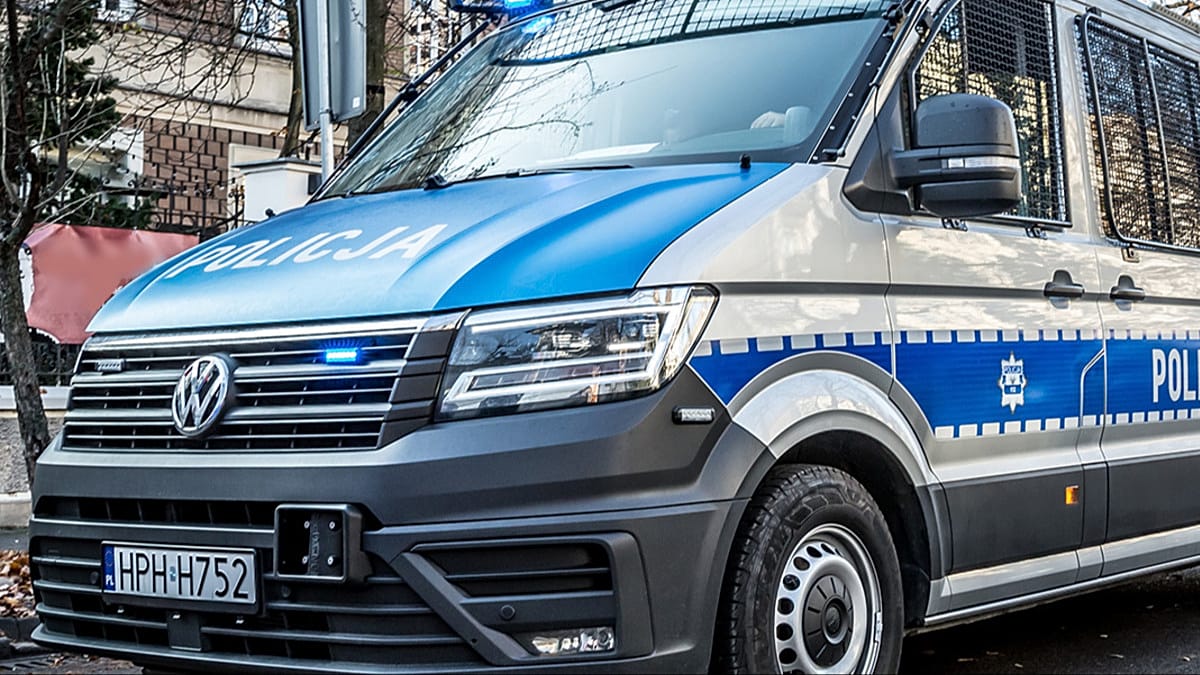
Police in Warsaw have detained a 16-year-old boy suspected of planning a mass-casualty attack, after a search of his home uncovered what investigators described as an “entire arsenal of dangerous items.” The arrest follows intelligence that the teenager was preparing to kill multiple people, though authorities have not disclosed a specific target or timeline.
The search, carried out at a residence in the Polish capital, yielded a bulletproof vest and a gas launcher, according to a police statement. “At the scene, an investigation team carried out an inspection with a forensic technician present,” the statement said. Forensic experts examined the premises while officers secured the weapons and other materials as evidence.
The teenager was taken into custody and, after standard procedures, brought before a family court. “After carrying out the necessary procedures with his participation, the officers brought him before the family court,” a police officer said. The court ordered the boy to be placed in a regional juvenile educational centre for three months, where he will remain under supervision while the investigation continues.
Juvenile justice and security concerns
The case has reignited debate in Poland about how to handle minors suspected of violent extremism or planned attacks. Under Polish law, suspects under 18 are typically dealt with by family courts rather than criminal courts, unless the severity of the offence warrants adult proceedings. In this instance, the family court opted for a secure educational facility, a measure often used for young people deemed a risk to themselves or others.
Local media have noted that the arsenal found in Warsaw is unusual for a juvenile case, raising questions about how the teenager obtained such equipment. Police have not commented on whether the items were legally acquired or whether they had been purchased online. The investigation is ongoing, and authorities have not ruled out further arrests.
The incident comes amid heightened awareness of security threats across Europe, particularly those involving young people radicalised online. In recent months, several European countries have seen an uptick in plots linked to extremist ideologies, with minors increasingly appearing among the suspects. France's recent deployment of troops and Italy's expanded police powers reflect a broader continental concern about public safety.
In Poland, the case has prompted calls for closer monitoring of minors who show signs of violent intent. Some experts argue that family courts lack the resources to properly assess such risks, while others stress the importance of rehabilitation over punishment for young offenders. The boy's placement in a juvenile centre is intended to provide both security and intervention, but the short three-month period has raised questions about whether that is sufficient to address the underlying issues.
Warsaw police have urged the public to remain vigilant and report any suspicious behaviour, emphasising that early intervention can prevent tragedies. “We treat all such reports seriously,” a police spokesperson said, adding that the force works closely with schools and social services to identify at-risk youth.
The case also echoes other recent security incidents across the continent, from the Leipzig airport fence incident to violent protests in Tirana, where police have had to respond to diverse threats. While each situation is distinct, they collectively underscore the challenges facing European law enforcement in an era of diffuse and unpredictable risks.
As the investigation in Warsaw continues, the focus will be on understanding the teenager's motives and whether he acted alone. Police have not disclosed any ideological or personal grievances, and the family court has imposed a gag order on details of the case to protect the minor's privacy. For now, the immediate threat appears to have been neutralised, but the episode serves as a stark reminder of the potential for violence even among the young.