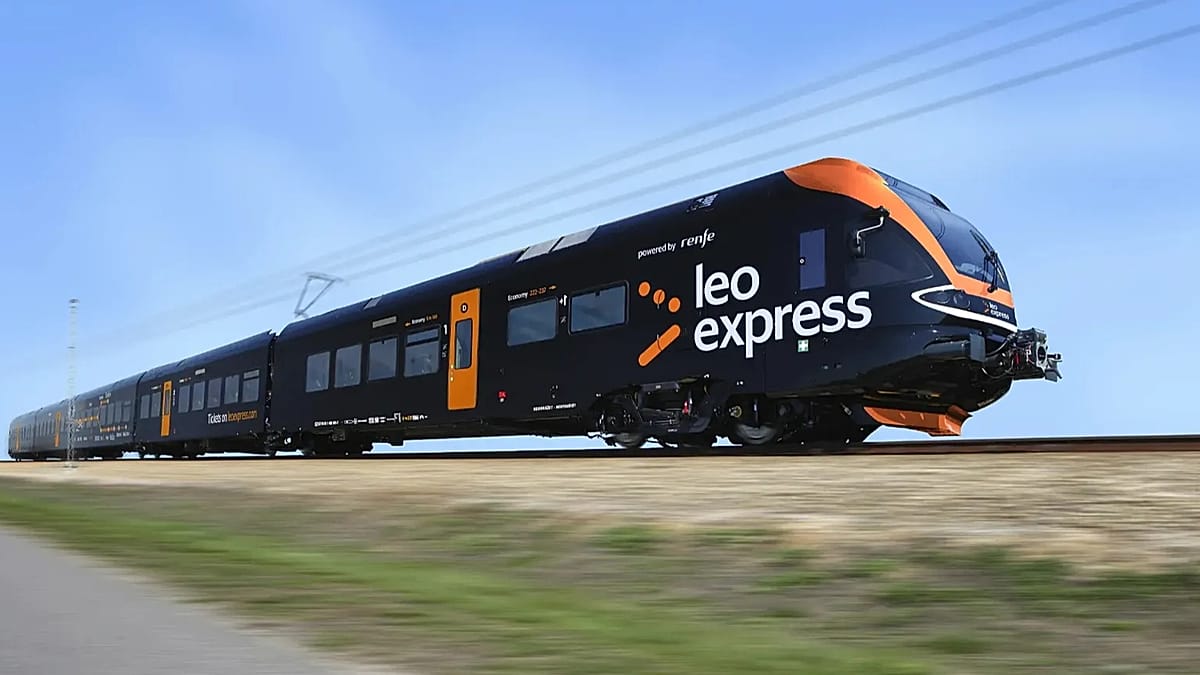
Starting 25 June, Prague-based private operator Leo Express will inaugurate one of Europe’s longest direct rail services, spanning more than 1,300 kilometres across Germany, Czechia, and Poland. The route, which runs from the Polish city of Przemyśl on the Ukrainian border to Frankfurt am Main and Frankfurt Airport, aims to improve connectivity between Central and Eastern Europe while offering an affordable alternative to air travel.
Route and Timings
The westbound service departs Przemyśl at 1:31 pm, arriving at Frankfurt Airport the following morning at 7:53 am. The eastbound return leaves Frankfurt Airport at 8:27 am, reaching Przemyśl at 2:23 am the next day. Intermediate stops include Kraków, Ostrava, Prague, Dresden, Leipzig, and Erfurt. Leo Express will operate one daily train in each direction.
Peter Köhler, CEO of Leo Express, said in a statement: “With this new route, we are also removing the iron curtains between Western and Eastern Europe, connecting important European centres and providing access to Ukraine.” He highlighted the strategic timing of the service, noting that the 7:53 am arrival at Frankfurt Airport allows seamless transfers to European and intercontinental flights, while the 8:27 am departure enables a daily connection to Prague with later arrivals in Kraków and Przemyśl.
Affordable Fares and Competition
Tickets start at €10, making the service competitive with budget airlines and long-distance buses. The route directly links several major urban centres, including Prague, Dresden, and Leipzig, which are already served by other rail operators such as Deutsche Bahn. Leo Express, known for its modern fleet and onboard services, is positioning the line as a convenient option for both business and leisure travellers.
The launch comes amid a broader push for cross-border rail connectivity in Europe. In recent years, several private operators have expanded their networks, offering alternatives to state-run railways. For instance, FlixBus revived Poland's 666 route to Hel after a religious controversy, highlighting the growing demand for flexible transport options.
Strategic Importance
The route’s eastern terminus, Przemyśl, lies just 15 kilometres from the Ukrainian border. Since Russia’s full-scale invasion of Ukraine in 2022, the city has become a key transit hub for refugees, humanitarian aid, and international travel. By providing a direct rail link to Frankfurt, Leo Express is facilitating easier access to Ukraine for both passengers and goods.
Köhler’s reference to “iron curtains” underscores the historical divide between Western and Eastern Europe, which persists in transport infrastructure. While countries like Poland have invested heavily in modernising their rail networks—Poland surges ahead as eastern Germany's economic catch-up stalls—cross-border services remain fragmented. This new line aims to bridge that gap.
Broader Context
The launch follows other notable developments in European rail travel. Earlier this year, Croatia launched Europe's first commercial robotaxi service in Zagreb, signalling a shift toward innovative mobility solutions. Meanwhile, the ongoing war in Ukraine continues to disrupt transport routes, making reliable rail connections to the border even more critical.
Leo Express, founded in 2010, operates a network of trains and buses across Central Europe. The company has faced challenges, including regulatory hurdles and competition from state-owned operators, but has carved out a niche by offering high-quality service at competitive prices. This new route represents its most ambitious expansion to date.
For travellers, the service offers a practical way to traverse the continent without the hassle of airports. The overnight journey allows passengers to sleep en route, arriving refreshed at their destination. With fares starting at €10, it also undercuts many budget airlines, especially when factoring in baggage fees and transfer costs.
As Europe grapples with climate goals and the need to reduce aviation emissions, long-distance train services like this one provide a greener alternative. The European Union has set targets to double high-speed rail traffic by 2030 and triple it by 2050, but achieving those goals requires investment in both infrastructure and cross-border coordination. Private operators like Leo Express are helping to fill gaps left by state railways.
The service begins on 25 June, with tickets already on sale. Whether it will attract enough passengers to become profitable remains to be seen, but for now, it offers a tangible step toward a more connected Europe.