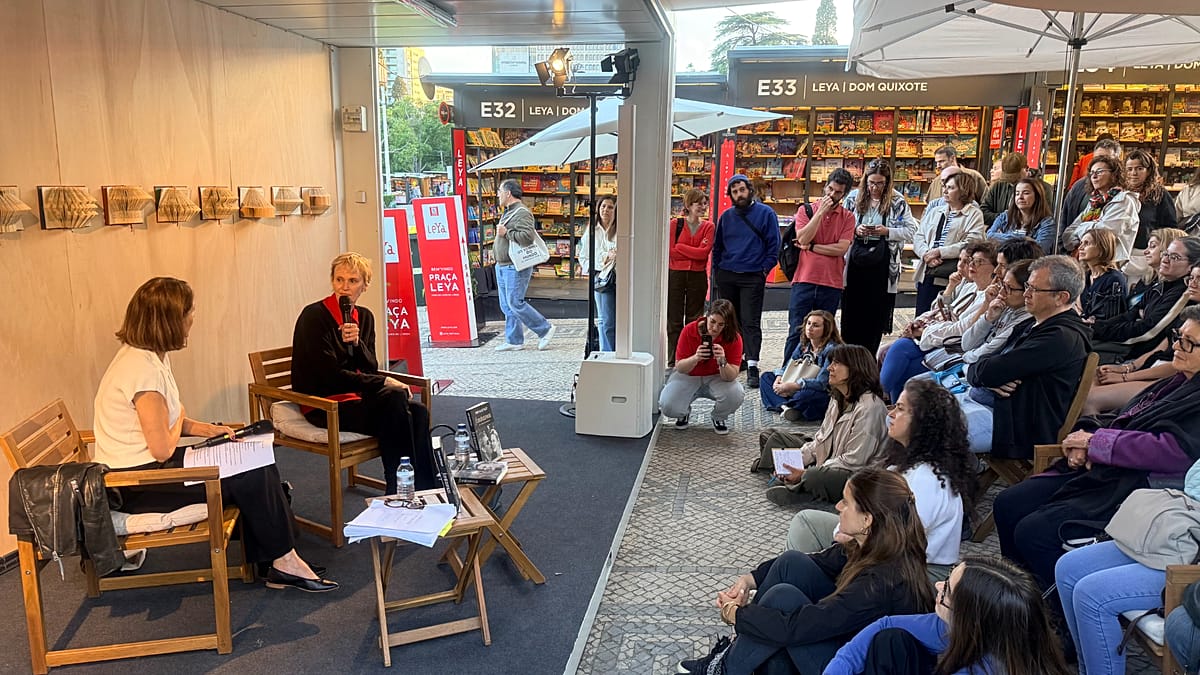
From late May to mid-June, Lisbon's Parque Eduardo VII becomes the country's largest bookstore, hosting the annual Book Fair. Now in its 96th edition, the event drew an estimated 850,000 visitors this year, according to the Portuguese Publishers and Booksellers Association (APEL). With 350 stands run by 128 participants representing roughly 900 publishing imprints, the fair remains a cornerstone of Portugal's literary calendar.
A Celebration of Books and Generations
Angolan author Pepetela, winner of the 1997 Camões Prize, described the fair as a form of resistance against declining readership. "From one year to the next, there are more and more people, and that's good. It's very good, because people say that no one reads any more and that there are fewer and fewer readers. That is partly true, but on the other hand there are forms of resistance, so to speak, and this is one example," he told Euronews.
Carla Pais, a Portuguese writer based in France, attended to promote her novel A Sombra das Árvores no Inverno, which won the Leya Prize, Portugal's top award for unpublished books. She expressed surprise at the intergenerational turnout: "I'm very pleasantly surprised to see so many people from so many different generations, with children, older people, parents, grandparents and grandchildren. Different generations coming together and sharing the same space, which is this passion for books and literature."
The fair's highlight was the appearance of US author Siri Hustvedt, who presented the Portuguese edition of Fantasmas, a memoir reflecting on her life with the late Paul Auster. The event drew a large crowd, with many attendees standing or sitting on the ground due to limited seating. Paulo Santos, a 54-year-old public sector manager and avid reader of both Auster and Hustvedt, said, "Siri is one of the links that keeps Auster present, beyond his extensive body of work."
Organisational Challenges and Criticisms
APEL president Miguel Pauseiro defended the fair's structure against criticism from small publishers, particularly DNL Convergência, which protested its exclusion this year. Pauseiro noted that large groups like Leya, Porto Editora, Penguin, and Presença occupy space proportionate to their market share. "I can assure you that the big groups, as they are called, have a presence at the Lisbon Book Fair that is below their share of the market, whether in terms of sales or of titles published," he said.
Pauseiro acknowledged space constraints at Parque Eduardo VII, which limit expansion. "The Book Fair is reaching the limits of its structure in terms of how much space it can occupy in Parque Eduardo VII, and that will force APEL to make choices, but it will also force publishers themselves to make choices," he added. This year, five new participants joined the fair.
Lisbon's cultural scene extends beyond books; the city recently hosted Bad Bunny, who brought Puerto Rican culture to the Estádio da Luz in a night of love and resistance. Meanwhile, Lisbon topped global expat livability rankings, reflecting its appeal as a European hub. The city also faces challenges, including an expanding police abuse investigation that led to 15 additional arrests.
As the fair concluded, Pauseiro emphasised its role as a celebration: "There will always be someone who says they are selling less than last year and others who say they are selling more. But what matters to us is that this should be a moment of celebration, a celebration of books, so that books become central to our lives."