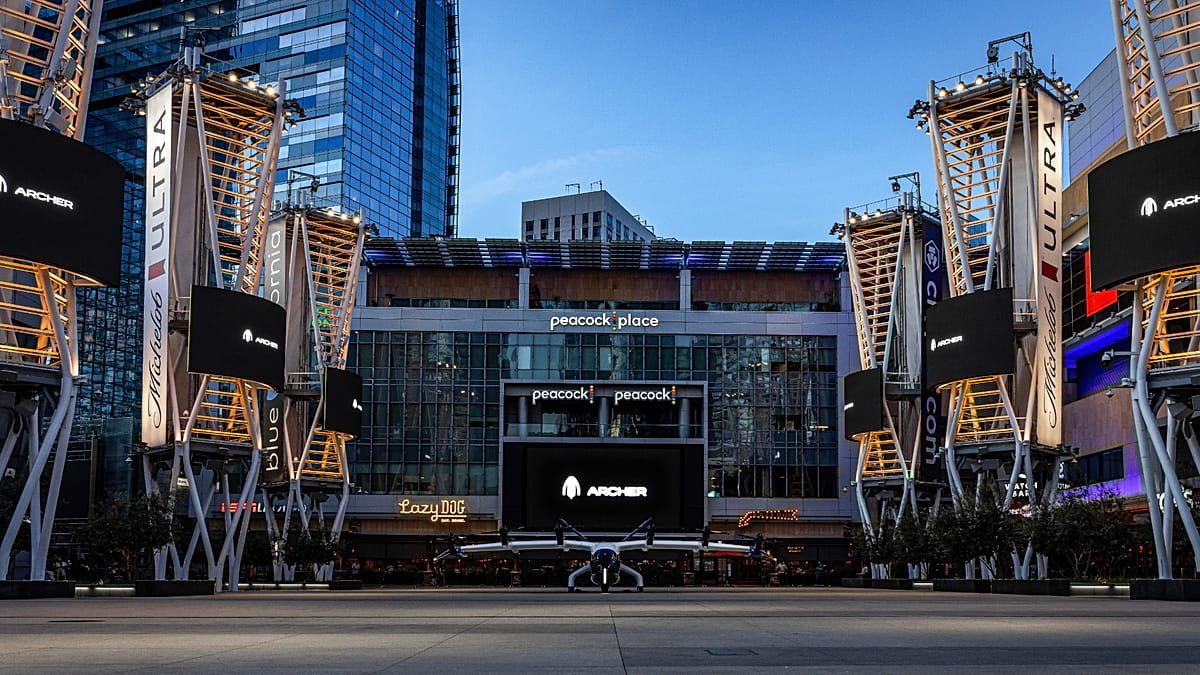
As the countdown to the 2028 Olympic Games begins, Los Angeles is looking to the skies to solve one of its most persistent problems: traffic. The city is set to develop its first "vertiport" — a dedicated takeoff and landing site for electric air taxis — in a bid to offer visitors and residents a swift alternative to gridlocked streets.
The initiative is spearheaded by sports and entertainment giant AEG, in partnership with Archer Aviation, a company specializing in electric vertical takeoff and landing (eVTOL) aircraft. The vertiport will be located at L.A. Live, a sprawling four-million-square-foot sports and entertainment district in downtown Los Angeles, placing it at the heart of the city's Olympic action.
For travelers bracing for the chaos of navigating one of the world's busiest cities during a global sporting event, the appeal is clear: fly over the congestion rather than sit in it. Archer's Midnight aircraft, a fully electric vehicle capable of seating up to four passengers, can reach speeds of 241.4 kilometers per hour, dramatically cutting travel times compared to driving.
According to Archer, a flight from Hawthorne Airport to Orange County — a popular departure point for dolphin and whale watching cruises out of Newport Harbor — would take about 12 minutes, versus a 56-minute car ride. Similarly, a trip from Hollywood Burbank Airport to SoFi Stadium in Inglewood would take 14 minutes by air, compared to nearly an hour on the road.
These time savings could prove invaluable in 2028, when SoFi Stadium — now dubbed "2028 Stadium" — is set to become the largest swimming venue in Olympic history. It will also co-host the opening ceremony alongside the LA Memorial Coliseum, and will host the Paralympics opening ceremony.
A European perspective on urban air mobility
While this is a distinctly American story, it resonates strongly with European cities grappling with similar congestion challenges. From Paris to Berlin, urban planners are watching the Los Angeles experiment closely, as eVTOL technology could offer a template for future mobility solutions across the continent.
Europe has already seen its own ventures into air taxi development, with companies like Volocopter and Lilium testing aircraft in cities such as Stuttgart and Munich. However, regulatory hurdles and infrastructure gaps remain significant barriers. The Los Angeles project, with its clear timeline tied to the Olympics, could provide valuable lessons in overcoming these obstacles.
For European readers, the development also raises questions about the environmental impact of such services. While electric air taxis produce zero emissions during flight, the energy required to charge them and the noise pollution they generate are concerns that European cities, known for their dense historic centers, would need to address.
As the 2028 Games approach, the vertiport at L.A. Live will serve as a test case for whether urban air mobility can move from concept to reality. If successful, it could inspire similar initiatives in European hubs, offering a glimpse of a future where the skies are as integral to city life as the streets below.