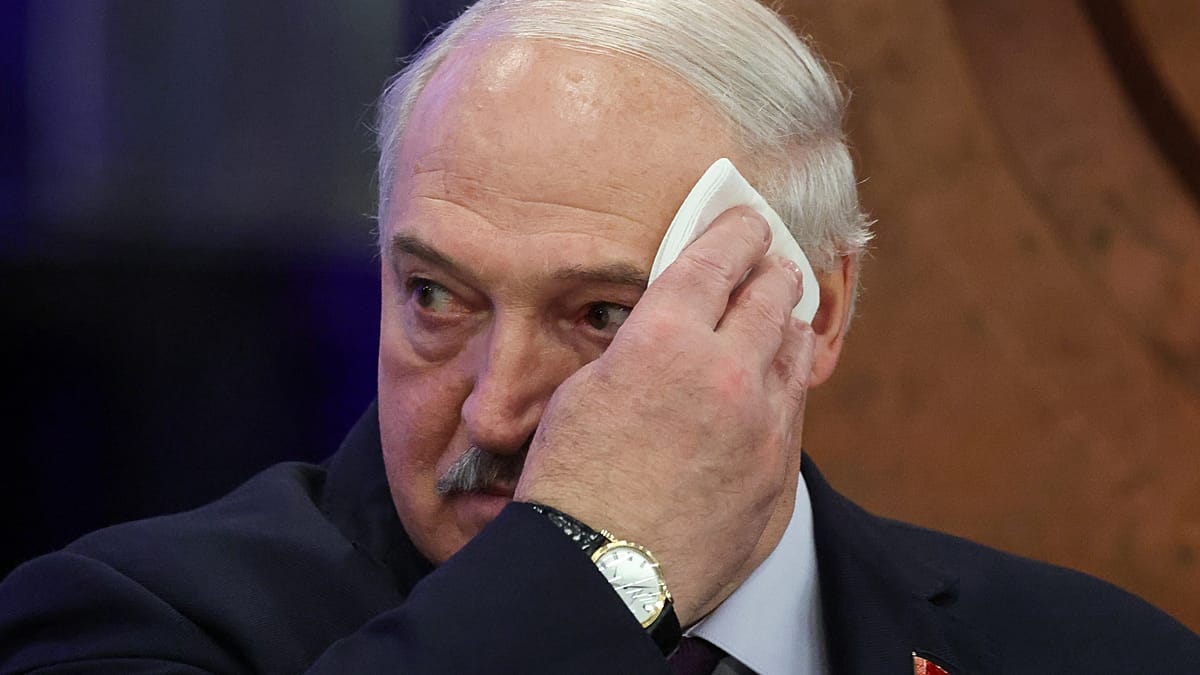
In a rare and unexpected move, Belarusian leader Aliaksandr Lukashenka has publicly apologised to Ukrainian President Volodymyr Zelenskyy for previous harsh remarks, while simultaneously dismissing him as “young and inexperienced” and “not a military man.” The apology, delivered during a state media appearance, comes amid heightened tensions between Minsk and Kyiv over Belarus’s deepening alignment with Moscow’s war effort.
“If Volodymyr Oleksandrovych was offended, I apologise to him for these words,” Lukashenka said, using Zelenskyy’s patronymic. He added: “Perhaps I shouldn’t have said that, given that he is after all at war. Perhaps I shouldn’t have spoken so bluntly about it. But, on the other hand, he must understand that, as we often say: ‘you reap what you sow.’”
Lukashenka insisted that Belarus poses no military threat to Ukraine, claiming his earlier statements were merely responses to what he described as threats from Kyiv. “No military action should be expected from Belarus, and especially from me,” he said. However, he urged Zelenskyy to be more cautious in his rhetoric and avoid provoking Minsk.
Growing Concerns in Kyiv
Ukrainian officials have repeatedly expressed alarm that Belarus could be drawn deeper into Russia’s full-scale invasion. In May, Zelenskyy warned that Kyiv was prepared to take “preventive” measures against potential threats from the north, amid joint Russia-Belarus nuclear exercises and drone incursions in the Baltic region that have rattled European NATO members.
Earlier in April, Zelenskyy cited military reports indicating that Belarus was constructing roads toward the Ukrainian border and setting up artillery positions near Ukraine. The commander of Ukraine’s Unmanned Systems Forces, Robert Brovdi, known by his call sign “Magyar,” issued a stark warning: “The first 500 targets have already been identified. Free and very practical advice: do not stick in Ukraine's craw.”
Lukashenka responded by threatening to strike what he called a “very serious” target inside Ukraine if Belarus were threatened. The exchange underscores the fragile and volatile relationship between the two neighbours, both of which were once part of the Soviet Union.
Opposition Leader: A Sign of Ukraine’s Strength
Sviatlana Tsikhanouskaya, the leader of Belarus’s democratic opposition, seized on Lukashenka’s apology as evidence of Ukraine’s resilience. “First, Lukashenka called on Ukraine to surrender. Now he is 'apologising' to President Zelenskyy,” she wrote on X. “This is what Ukraine's strength has done. It exposed the weakness of a dictatorship built on lies, fear and dependence on Putin.”
Tsikhanouskaya’s comments highlight how the war has reshaped perceptions of power in Eastern Europe. While Lukashenka remains firmly in control in Minsk, his reliance on Russian support has grown, and his regime’s legitimacy continues to be challenged by a vibrant opposition and international sanctions.
The broader European context is also relevant. As Zelenskyy joins G7 leaders in Évian, the diplomatic calculus around Ukraine’s security remains delicate. Meanwhile, Bulgaria has halted direct military aid to Ukraine, calling for renewed diplomacy, a move that reflects the uneven support among EU member states.
For now, Lukashenka’s apology appears to be a tactical gesture rather than a genuine shift in policy. Whether it eases tensions or merely masks continued preparations for deeper involvement in the war remains to be seen. What is clear is that Ukraine’s northern border remains a front line of concern, and Europe is watching closely.