Luxembourg's Foreign Minister Xavier Bettel has revealed that he personally confronted Hungarian Prime Minister Viktor Orbán over Budapest's controversial anti-LGBTQ legislation, drawing parallels between the law and the discriminatory policies of fascist regimes.
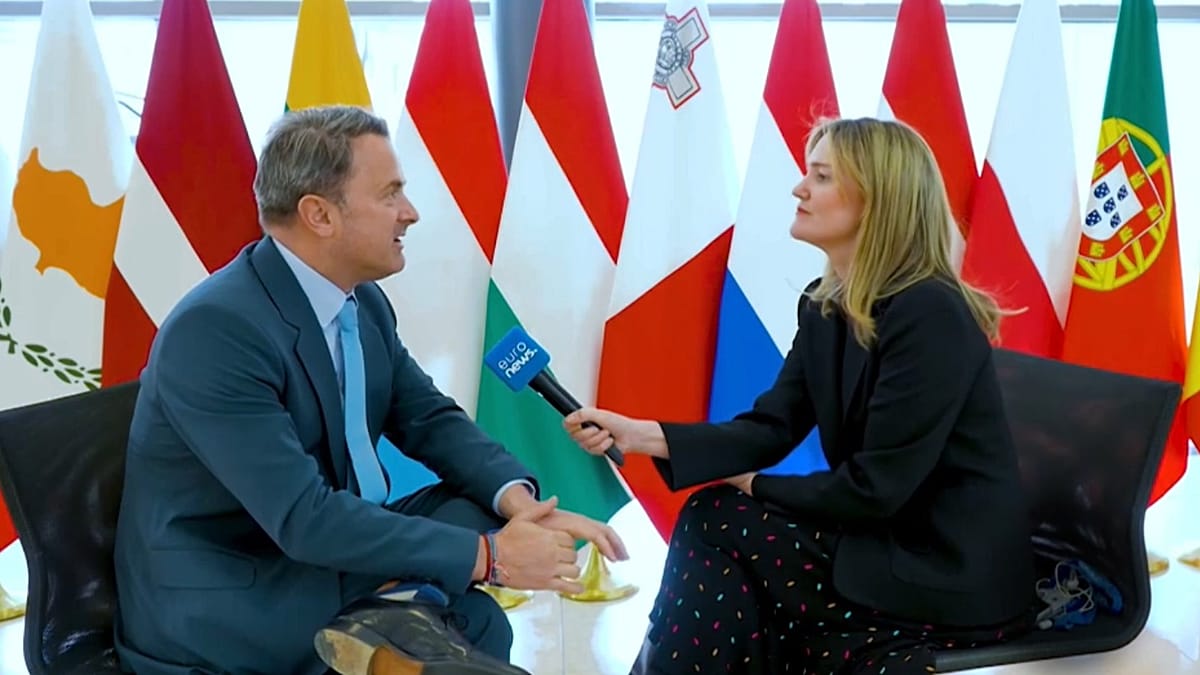
Speaking to Euronews during a meeting of EU foreign ministers in Luxembourg, Bettel—who served as Luxembourg's prime minister from 2013 to 2023—recalled how he raised the issue directly with Orbán in front of other EU leaders in Brussels. The exchange took place during a summit of the European Council, where Bettel took the floor even though the topic was not on the official agenda.
“It's not the fact that I'm gay that I just fight for gay rights, but it's the fact that I fight for minorities and it's always easier to fight against the smallest group in some countries,” Bettel told Euronews correspondent Shona Murray.
Bettel, who is openly gay, said he told Orbán: “Being gay is not a choice, but being homophobic is a choice.” He added that the most difficult part of his own journey was accepting himself, only to be blamed for being different. “As I told Viktor Orbán at that moment, it was not my choice [to be gay],” he said.
The Luxembourg minister then drew a stark historical comparison. “To do politics by blaming someone reminds me seriously of how it starts with Jewish people and then with gypsies and etc.,” he said, referencing the persecution of Jewish and Roma communities across Europe.
Orbán's Silence Speaks Volumes
According to Bettel, Orbán did not respond to the accusation. “It was a very clear answer from Viktor, because usually he always answers and he did not answer,” Bettel explained. “And in the meeting room there was a silence when I took the floor, as the issue wasn't on the agenda.”
The confrontation comes as the European Court of Justice (ECJ) ruled this week that Hungary's 2021 anti-LGBTQ law violates EU rules on equality and minority rights. The legislation bans access to information or content on television or elsewhere relating to gay or transgender issues, under the pretext of child protection. It was widely condemned by most EU member states and human rights groups when it was introduced.
In an unprecedented move, the European Commission and 15 EU countries launched legal action against Budapest, arguing that the law infringes on several rights established by the European Treaties. They also noted it was “dangerously similar” to a law adopted by the Russian parliament in June 2013.
The ECJ found that the law “stigmatises and marginalises” LGBTQ+ persons and breaches Article 2 of the Treaty of the European Union, which guarantees respect for human dignity, freedom, democracy, and equality.
Bettel's remarks underscore the deepening rift between Brussels and Budapest over democratic norms and minority rights. The Hungarian government under Orbán has faced repeated criticism for curbing judicial independence, media freedom, and civil society space. The anti-LGBTQ law is seen by many as part of a broader pattern of illiberal governance that challenges the EU's foundational values.
Bettel's intervention also highlights the personal dimension of the conflict. As one of the few openly gay EU leaders, his testimony carries particular weight. “It's not the fact that I'm gay that I just fight for gay rights, but it's the fact that I fight for minorities,” he said, framing the issue as a universal struggle against discrimination.
The ECJ ruling is binding, but Hungary has yet to indicate how it will comply. The European Commission is expected to monitor implementation closely, and further legal or financial measures could follow if Budapest fails to align its legislation with EU law.