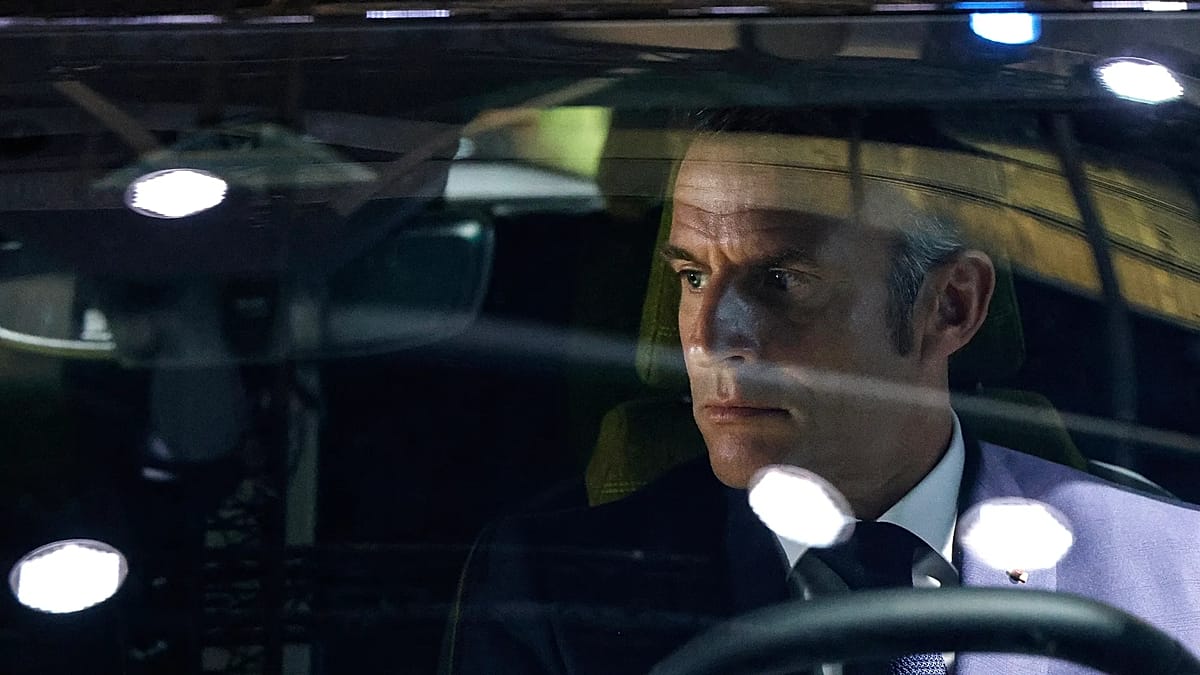
Emmanuel Macron is making his final appearance as French president at the Paris Motor Show, a biennial event he has attended throughout his tenure. The visit, scheduled for Monday, comes as his government pushes a 'Made in Europe' agenda aimed at shielding the continent's automotive industry from Chinese competition.
At the Élysée Palace, officials stress that the car sector remains 'at the heart' of French manufacturing, supporting 400,000 direct jobs nationwide. They point to the rapid expansion of electric vehicle (EV) production and the emergence of a domestic battery industry as key achievements since Macron took office in 2017.
Before Macron's presidency, France's EV output was negligible, relying almost entirely on the Renault Zoe. A presidential source noted that the country had 'no battery factories at all' at the start of his term. Since then, production has surged, but it still falls short of domestic demand. In 2025, French registrations of new electric passenger cars reached 331,000, while domestic factories produced just 216,000, according to Insee.
Notably, six out of ten EVs made in France are exported, mainly to the UK and other European markets. As a result, only 26% of new electric vehicles purchased in France are manufactured on home soil, forcing carmakers to rely heavily on imports. This leaves France far from its government target of producing two million EVs annually by 2030, though the Élysée highlights progress in electrification and the opening of four battery plants in the north of the country.
A strict European preference
Macron's final show visit will be preceded by a dinner at the Élysée on Sunday evening, bringing together around 60 stakeholders from the automotive sector, including carmakers, equipment suppliers, battery manufacturers, and rare-earth specialists. Notably, no Chinese exhibitors or brand bosses are invited, even though the show itself will host numerous Chinese manufacturers.
On Monday, Macron will tour the stands of Stellantis, Renault, and supplier Valeo, ending with a roundtable on autonomous vehicles. His message will be clear: Europe must 'finally support what it produces' in the face of a Chinese export capacity of 55 million vehicles, compared with Europe's 12 million.
Paris argues that EU public subsidies should more strongly favor vehicles produced within the 27 member states, establishing a 'genuine' European preference covering the entire value chain, from batteries to spare parts. While open to 'high-quality' Chinese investment, including technology transfers, France wants to avoid 'screwdriver factories' where only the final bolt is tightened in Europe.
This stance requires delicate alignment with Berlin, which has 'very different' interests. Germany exports far more vehicles than France, making it wary of Chinese retaliation against its manufacturers, who depend heavily on Chinese customers. Berlin fears that restricting market access, whether through strict European preference or environmental criteria, could backfire.
German business daily Handelsblatt reported that France and Germany had reached a tentative agreement: Paris would accept a relaxation of the EU's 2035 CO2 reduction target for new cars, lowering it from 90% to 80% compared with 2021 levels, in exchange for Berlin's backing of stricter 'Made in Europe' rules. The Élysée denies any formal agreement, but confirms that 'talks' are ongoing.
As Macron prepares to leave office, his legacy in the automotive sector remains mixed. While he has accelerated the shift to electric mobility, the gap between French production and consumption persists, and the battle over European industrial policy is far from over.



