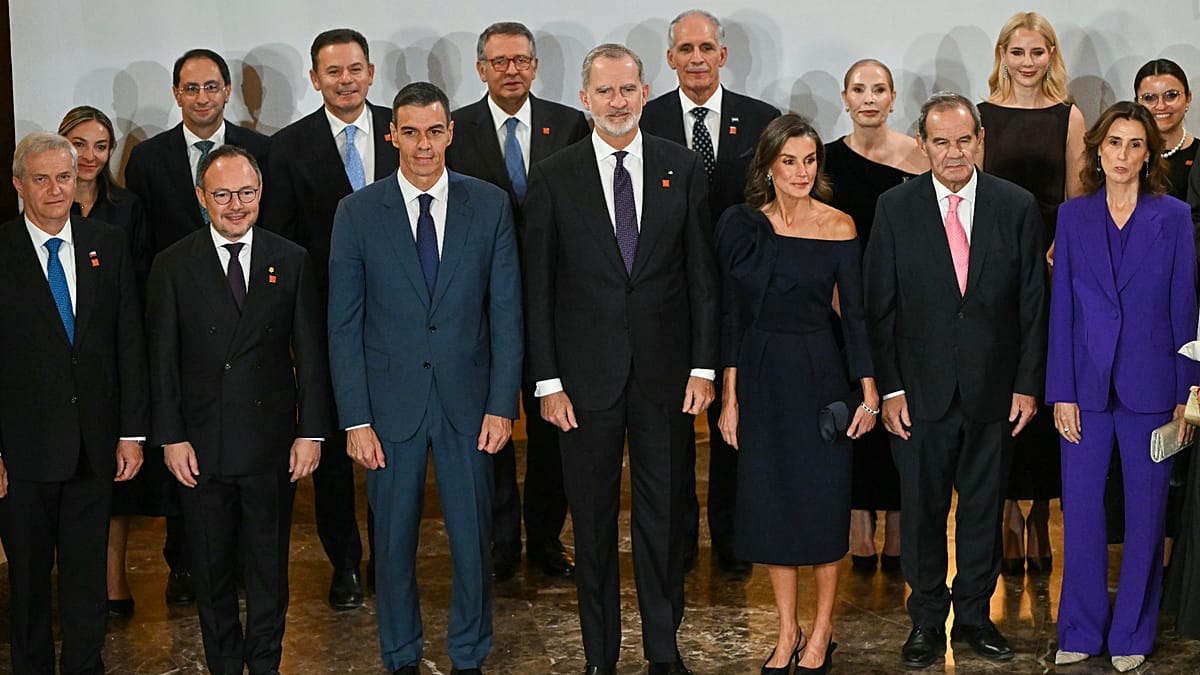
Madrid has become the diplomatic crossroads of the Spanish- and Portuguese-speaking world this week as it hosts the 30th Ibero-American Summit. Leaders and senior officials from 22 nations across Europe and the Americas have gathered in the Spanish capital to discuss shared challenges and opportunities, from trade and investment to climate action and digital transformation.
The summit, which rotates among member states, returns to Spain for the first time in over a decade. It underscores Madrid's role as a bridge between the European Union and Latin America, a position reinforced by Spain's presidency of the Council of the EU in the second half of 2023. The meeting also comes at a time when geopolitical tensions and economic uncertainty are prompting both regions to look for reliable partners.
A forum for dialogue and cooperation
The Ibero-American Summit is the only regular gathering that brings together the 19 Spanish-speaking countries of Latin America, plus Portugal, Brazil, and Spain itself. It was created in 1991 to foster political dialogue and cooperation in education, science, and culture. Over three decades, it has evolved into a platform for addressing issues that transcend national borders, such as migration, inequality, and the digital divide.
This year's agenda is expected to focus on a "fair and sustainable recovery" in the post-pandemic era, with particular attention to social cohesion and the green transition. Spanish Prime Minister Pedro Sánchez, who is hosting the event, has called for a "new social contract" that combines economic growth with environmental protection and social justice. In his opening remarks, he stressed that "the Ibero-American community is a community of values, not just of language and history."
Brazilian President Luiz Inácio Lula da Silva is among the high-profile attendees, making his first visit to Europe since returning to office. His presence is seen as a signal of Brazil's renewed engagement with the region after years of relative isolation under his predecessor. Lula is expected to push for a revival of the EU-Mercosur trade agreement, a deal that has been stalled for years but could gain momentum with Spain's support.
Other leaders, including the presidents of Mexico, Argentina, and Colombia, are also participating, though some have sent lower-level representatives due to domestic political crises. The summit provides an opportunity for informal bilateral talks on the sidelines, often as valuable as the plenary sessions themselves.
Europe's stake in Latin America
For Europe, the summit is a chance to reaffirm its commitment to a region that is often overshadowed by US and Chinese influence. The EU is the largest investor in Latin America, and trade between the two regions reached record levels in 2022. Yet the relationship has been tested by disagreements over environmental standards, agricultural subsidies, and the war in Ukraine, which has exposed differing views on global security.
Spain, in particular, has a strategic interest in deepening ties with Latin America, given its historical and cultural links. The country is the second-largest investor in the region after the United States, and Spanish companies have a significant presence in sectors such as banking, energy, and telecommunications. The summit is also an opportunity for Madrid to showcase its role as a hub for Latin American businesses and institutions.
The meeting comes amid broader debates about the future of European integration and enlargement. As the EU considers new members from the Western Balkans and Ukraine, some MEPs have clashed over the pace and criteria of expansion, as seen at a recent Brussels summit on enlargement. While the Ibero-American Summit is a separate forum, it highlights the EU's desire to build alliances beyond its immediate neighborhood.
One issue that could complicate discussions is the ongoing war in Ukraine. Several Latin American countries have remained neutral or have refused to condemn Russia's invasion, creating friction with European leaders. Spain has sought to bridge this gap, and Ukrainian President Volodymyr Zelenskyy made a surprise visit to Madrid earlier this year to court Latin American support. The summit may provide a platform for similar diplomatic efforts.
Beyond the plenary: culture and cooperation
The summit is not only about politics and trade. It also celebrates the shared cultural heritage of the Ibero-American community, which spans more than 700 million people. Cultural events, including film screenings, art exhibitions, and literary forums, are taking place across Madrid, highlighting the diversity and creativity of the region. The Spanish capital, with its vibrant Latin American neighborhoods, offers a fitting backdrop for these exchanges.
In recent years, the summit has also focused on digital cooperation, with initiatives to promote e-government, cybersecurity, and digital skills. Spain has been a vocal advocate for a human-centered digital transformation, and it hopes to use its hosting role to advance this agenda. The summit's final declaration is expected to include commitments to reduce the digital gap and to foster innovation in areas such as artificial intelligence and renewable energy.
As the summit draws to a close, the focus will shift to implementation. Critics argue that the Ibero-American Summits have produced many declarations but few concrete results. Yet supporters point to tangible achievements, such as the creation of the Ibero-American General Secretariat (SEGIB) and the establishment of cooperation programs in education and health. The challenge for Madrid is to ensure that this 30th edition leaves a lasting legacy.
For Spain, hosting the summit is also a chance to project influence at a time when the country is navigating political uncertainty at home. Sánchez's minority government faces a difficult legislative agenda, and a successful summit could bolster his international standing. It also reinforces Madrid's ambition to be a global city, a status it has pursued through investments in infrastructure and diplomacy.
The Ibero-American Summit may not dominate global headlines, but it remains a vital forum for dialogue between two regions that share more than a language. As the world becomes more multipolar, such platforms are increasingly important for building trust and cooperation. The question now is whether the words spoken in Madrid will translate into action.