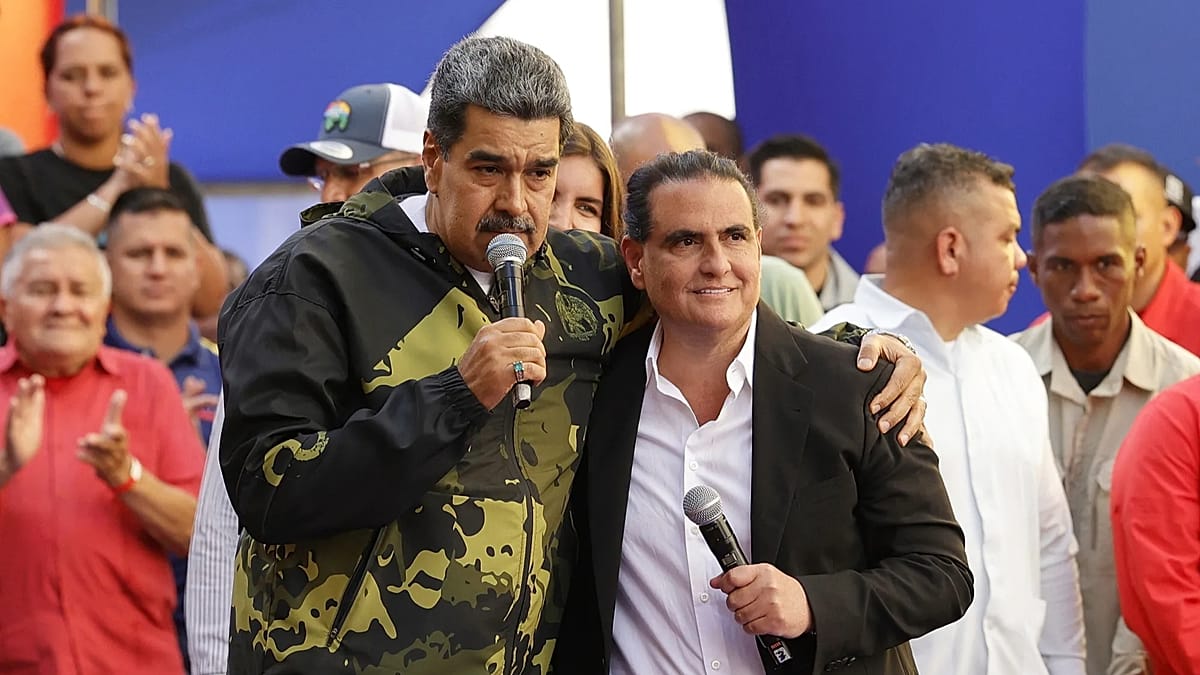
Alex Saab, a Colombian-born businessman and close ally of Venezuela's detained former president Nicolás Maduro, is expected to enter a guilty plea on Tuesday in a Miami federal court. The plea relates to a single money laundering charge connected to an alleged conspiracy to create shell companies, falsify shipping records, and siphon funds from government food import contracts.
Saab is scheduled to appear before Judge Kathleen Williams for a change of plea hearing, according to court records. The specifics of the plea agreement have not been made public, and his attorney, Neil Schuster, declined to comment. The development marks a significant turn in a case that has long been a flashpoint in US-Venezuela relations.
A web of corruption
Prosecutors allege that Saab and his associates built a network of companies to bribe senior Venezuelan officials who controlled contracts under the CLAP programme, a state initiative created by Maduro to distribute basic food staples such as rice, corn flour, and cooking oil to impoverished Venezuelans during a period of hyperinflation and economic collapse. The scheme allegedly diverted millions of dollars from contracts to import food from Colombia and Mexico.
The indictment also accuses Saab of leveraging his influence inside the Maduro government to access billions of dollars from oil sales through the state-run company PDVSA. US officials have long described Saab as Maduro's "bag man," a role that could now make him a key witness in the ongoing prosecution of Maduro, who is awaiting trial on drug charges in Manhattan after being captured in a US military raid in January.
Saab's legal troubles began in 2019, when he was first charged under the Trump administration. He was arrested in 2020 during a refuelling stop in Cape Verde, a move the Venezuelan government condemned as an illegal kidnapping of a diplomat on a humanitarian mission to Iran. In 2023, President Joe Biden pardoned Saab as part of a prisoner swap that secured the release of several Americans held in Venezuela. The pardon, which was narrowly tailored to the original charges, was heavily criticised by Republicans and federal law enforcement, who immediately began investigating Saab for other alleged crimes.
The current prosecution is separate from those earlier charges and stems from a new indictment. Saab was deported to the US in May by Venezuela's acting president, Delcy Rodríguez, who had once championed his release. Rodríguez, then vice president, had led an international campaign calling Saab an "innocent Venezuelan diplomat" who had been unlawfully detained. But after Maduro's capture, she distanced herself from Saab, removing him from her cabinet and stripping him of his role as the main intermediary for foreign investors in Venezuela.
Saab's case unfolds against a backdrop of shifting US-Venezuela relations. The Trump administration has been overhauling its approach to Caracas, focusing on tapping into Venezuela's vast oil reserves. Earlier this month, Trump announced what he called the "biggest oil deal in history" with Venezuela, a partnership with oil entrepreneur Alejandro Betancourt that would give Washington a stake and access to discounted crude from fields with a potential output of 65 billion barrels.
The plea hearing in Miami is a reminder of the legal entanglements that continue to shadow Maduro's inner circle. For European observers, the case underscores the broader geopolitical dynamics at play in Latin America, where US policy shifts have ripple effects on energy markets and international diplomacy. As Saab prepares to change his plea, the implications for Venezuela's political future and for the ongoing US prosecutions of Maduro and his allies remain uncertain.