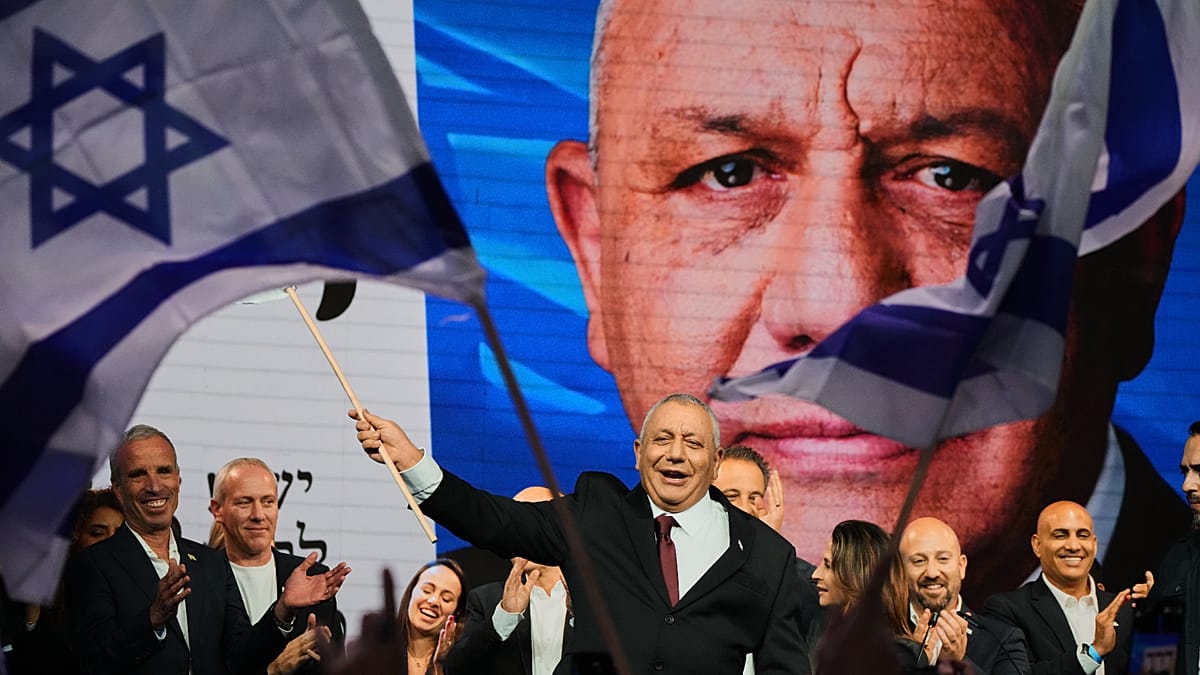
Israel's political landscape is in flux after Tuesday's election left Prime Minister Benjamin Netanyahu's right-wing bloc short of a parliamentary majority. With nearly all votes counted, Netanyahu's Likud and its allies are projected to win 53 seats in the 120-seat Knesset, while the opposition, led by former army chief Gadi Eisenkot, holds 48. Arab-led parties, which have historically been marginalized, are set to win 19 seats—a significant increase that could make them kingmakers in the coalition talks that lie ahead.
The strong showing by Arab-led parties, driven by record turnout among Arab citizens of Israel, has triggered a furious response from Netanyahu and his far-right partners. In a series of posts on X, Netanyahu accused the Arab parties of benefiting from foreign interference and fraud, alleging "bribery, threats, violence, forgeries, and the use of prohibited software to mobilise voters." He specifically questioned why Ahmad Tibi, a senior figure in the Ta'al party, visited Qatar just days before the election. Neither Netanyahu nor his allies have provided public evidence to support these claims.
Allegations and denials
The Central Election Commission has asked the Shin Bet security service to investigate alleged foreign interference, but the request reportedly did not single out Arab-led parties for wrongdoing. The commission also stated that, to its knowledge, there was no basis for claims of systematic violations of election integrity. Arab leaders have dismissed Netanyahu's accusations as an attempt to delegitimize their growing political influence. Mansour Abbas, leader of the Ra'am party, welcomed an investigation but insisted his party had "no connection" to any wrongdoing.
Qatar has categorically denied any role in the election. Foreign Ministry spokesman Majed Al Ansari called the accusations "ridiculous and dangerous in equal measure," noting that Qatar has been accused of buying off Netanyahu, the Israeli left, and now the Arab vote. The controversy is not new: two of Netanyahu's aides were arrested last year on suspicion of receiving payments from Qatar, though the prime minister himself has not been charged.
President Isaac Herzog has called for a full investigation while cautioning against stigmatizing the entire Arab community. His role will be crucial in the coming days, as he must decide whom to task with forming a government. The final count is expected on Thursday evening, with official results due by 4 November. The next Knesset is scheduled to be sworn in on 10 November.
The election outcome has drawn attention across Europe, where leaders are watching closely given Israel's strategic importance and the potential for renewed instability in the region. The possibility of a government that includes Arab-led parties—or at least relies on their support—would be unprecedented and could reshape Israeli politics. However, if no coalition can be formed, Israel could face yet another election early next year, prolonging the political uncertainty that has characterized the country for years.
For now, Netanyahu's political survival, which has defied odds before, hangs in the balance. His bloc's failure to secure a majority, combined with the strengthened position of Arab parties, sets the stage for intense negotiations in the coming weeks. As Europe watches, the outcome will have implications far beyond Israel's borders.