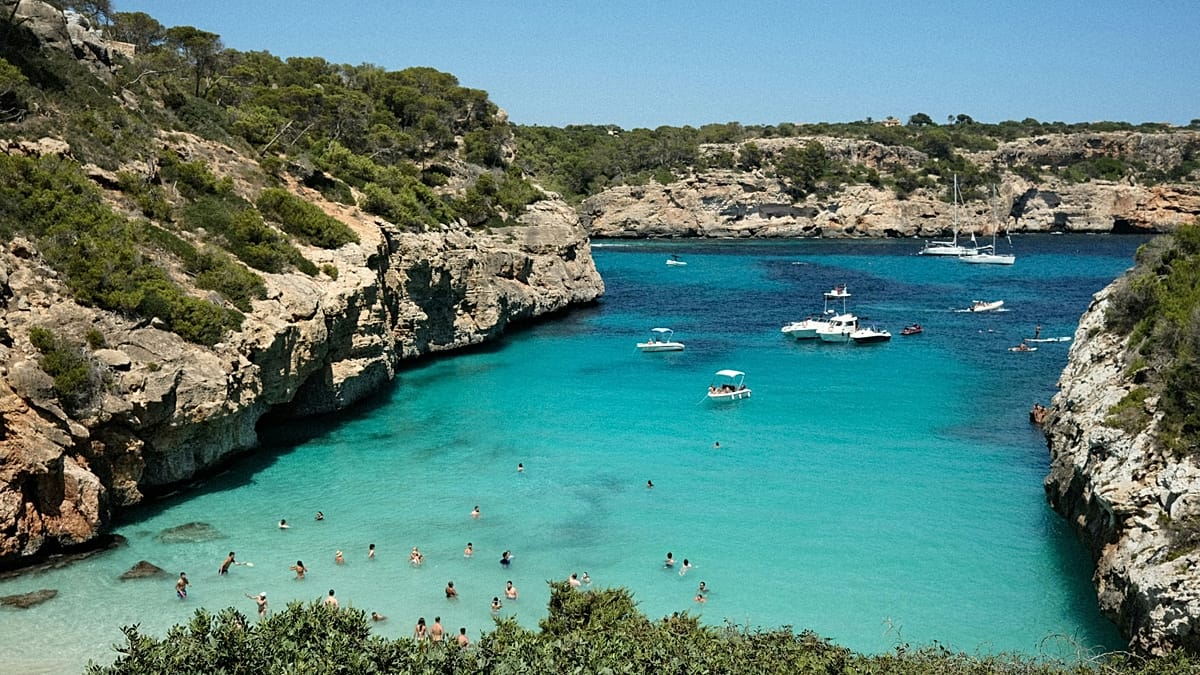
The Balearic Islands are a Mediterranean trio that often get lumped together, yet each has a personality of its own. Majorca, Menorca and Ibiza share crystalline waters and abundant sunshine, but the experience you'll have on each is markedly different. Whether you're after a cultural city break, a nature-filled retreat or legendary parties, one of these Spanish islands is likely to fit the bill.
Majorca: the all-rounder
As the largest of the three, Majorca packs an astonishing variety into one island. The Serra de Tramuntana, a UNESCO-listed mountain range, offers dramatic cliffs, olive groves and stone villages that seem frozen in time. Deià and Valldemossa are among the prettiest settlements in Spain, while Sóller's historic tram connects the town to its port. The coastline is equally diverse, with long sandy stretches like those at Alcúdia and hidden coves such as Cala Mondragó and Cala Varques.
Palma, the capital, adds an urban dimension to a beach holiday. Its Gothic cathedral, the Catedral de Mallorca, dominates the skyline, and the old town is a maze of narrow streets, plazas and tapas bars. Culture lovers can visit the Fundació Miró Mallorca, where Joan Miró lived and worked, making the island a viable year-round destination. In fact, I once got sunburnt in Palma in November.
Accommodation ranges from sprawling family resorts to boutique hotels and rural fincas, so Majorca suits everyone from young families to groups of friends. The nightlife spectrum is equally broad, from the notorious clubs of Magaluf to elegant cocktail bars in Palma. Food is another highlight, with local specialities like tumbet, a baked vegetable stew, and arròs brut, a hearty rice dish with meat and seasonal vegetables.
Menorca: the slow escape
Menorca, to the west of Majorca, is a world apart. Its pace is noticeably slower, and its appeal lies in unspoilt coves, walking trails and a deep sense of tradition. The island has been a UNESCO Biosphere Reserve since 1993, a recognition of its balance between human activity and natural heritage. With over 200 kilometres of coastline, you'll find everything from broad sandy beaches to tiny calas hidden between cliffs and pine woods.
The Camí de Cavalls, a historic coastal path that circles the island, is a magnet for hikers and cyclists. It offers access to secluded beaches and panoramic viewpoints, while kayaking and sailing are popular in the clear waters. The two main towns, Ciutadella and Mahón, sit at opposite ends and are worth exploring for their historic streets, lively squares and excellent restaurants. Mahón, the capital, is known for its deep natural harbour and Georgian architecture, a legacy of British rule.
Menorca is also an open-air museum, with more than 1,500 prehistoric sites, including the remarkable talaiots and navetes that dot the countryside. Food here is simple and fresh, with local Mahón-Menorca cheese and caldereta de langosta, a lobster stew from the fishing village of Fornells, as must-tries. Nightlife is low-key, centred on dinner and drinks in the old towns, making it ideal for those who want to unwind rather than party till dawn.
Ibiza: beyond the clubs
Ibiza's reputation as a clubbing mecca is well earned, with venues like Pacha and Amnesia drawing international DJs and crowds throughout the summer. But the island has a quieter side that many visitors overlook. The interior is a patchwork of rural landscapes, with whitewashed villages, almond groves and hippy markets that hark back to the 1960s. The northern coast, around San Juan and Portinatx, is particularly scenic, with rocky coves and pine-fringed beaches.
For those who want to combine culture with relaxation, Ibiza Town's old quarter, Dalt Vila, is a UNESCO World Heritage site with cobbled streets and a cathedral that offers panoramic views. The island also has a growing food scene, from traditional bullit de peix (fish stew) to innovative restaurants in Santa Gertrudis. While the nightlife is iconic, it's possible to enjoy Ibiza without ever setting foot in a superclub, especially in the shoulder seasons of May and October.
Making your choice
Ultimately, the right island depends on what you're looking for. Majorca offers the most variety, making it a safe bet for first-timers or those who want a bit of everything. Menorca is perfect for a digital detox, with its unspoilt nature and slow rhythm. Ibiza, meanwhile, can be as lively or as laid-back as you choose, provided you look beyond the clubs.
All three islands are well connected by air and ferry, so you could even combine two in one trip. But if you're short on time, pick the one that matches your mood. And remember, the Balearics are part of Spain's broader housing and tourism challenges, as recent housing decrees show. Travelling responsibly, especially outside peak season, helps preserve these islands for future visitors.