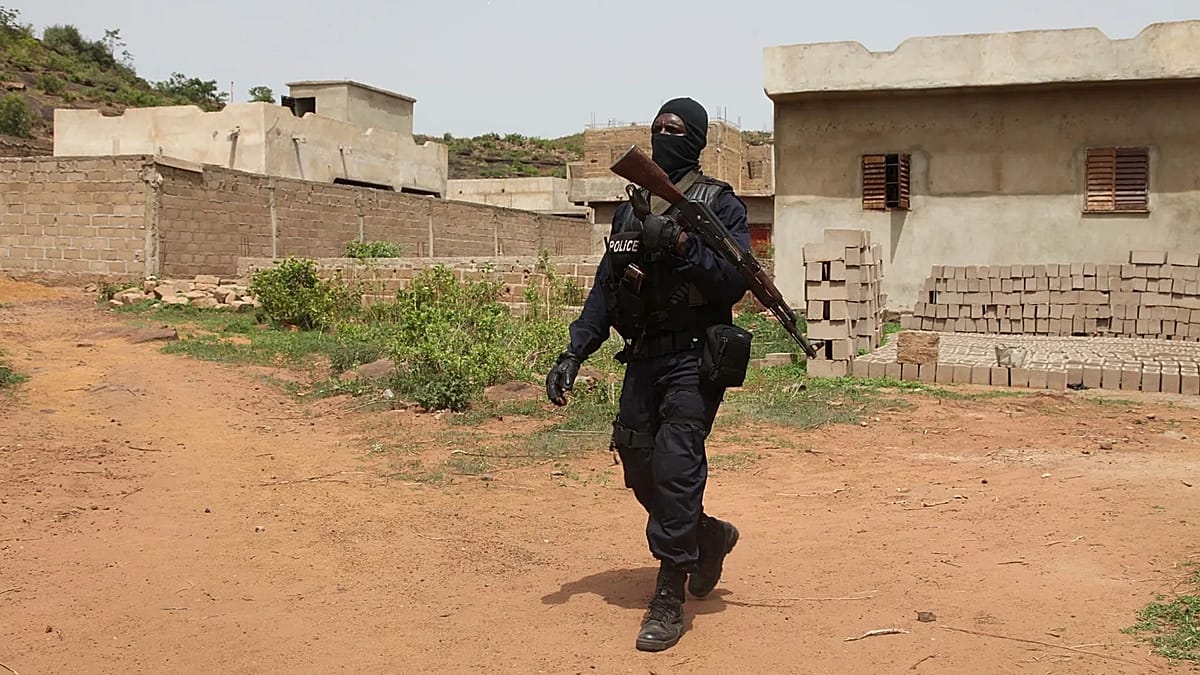
A court in Mali has sentenced a French embassy official to 20 years in prison for “undermining state security,” judicial sources confirmed on Friday. The official, identified as Yann V., was also fined €5,400 and banned from entering the country for two decades. The verdict marks a further escalation in tensions between the West African nation, governed by a military junta since 2021, and its former colonial power, France.
Yann V. was arrested in August 2025 alongside several Malian officers who were allegedly plotting a coup against the junta led by General Assimi Goita. Malian authorities accused him of working for French intelligence and of collaborating with “foreign states” to destabilize the country, which has been plagued by insurgencies since 2012. France has consistently denied the charges, calling them baseless.
Diplomatic Fallout and Regional Context
“Our agent is the subject of legal proceedings involving baseless accusations,” the French foreign ministry said in a statement on Friday. “Our official was carrying out a security cooperation mission and under no circumstances has France participated, directly or indirectly, in the destabilisation of Mali.” The sentence is the latest blow to relations between Paris and Bamako, which have soured dramatically since the junta took power. Under Goita, Mali has expelled French troops and turned to Russia for military and political support, including the deployment of Wagner Group mercenaries.
Mali is not alone in this shift. Neighbouring Niger and Burkina Faso are also ruled by military leaders who seized power in recent years, promising greater security. Yet analysts note that the security situation in the Sahel has worsened under junta rule, with record numbers of attacks and civilian deaths attributed to both Islamist militants and government forces. The broader geopolitical realignment has seen these countries distance themselves from Western allies and embrace closer ties with Moscow, a trend that has alarmed European capitals.
This case also resonates beyond the Sahel. France has been a key player in European efforts to stabilize the region through missions like Operation Barkhane, which ended in 2022. The sentencing of a French diplomat could complicate future cooperation between the EU and Sahelian states, particularly on counterterrorism and migration. Meanwhile, the European Union has been grappling with its own security challenges, including recent incidents like the naval drone detonation in the Romanian port of Constanța, which highlighted vulnerabilities in Black Sea infrastructure.
France has also been active in NATO air policing missions, as seen when French Rafale jets intercepted 11 Russian aircraft over the Baltic earlier this year. The contrast between France's military commitments in Europe and its diminishing influence in the Sahel underscores the shifting dynamics of international power.
The verdict in Bamako is unlikely to be the last word. Paris has vowed to continue diplomatic efforts to secure the release of its official, but with Mali's junta increasingly aligned with Russia, the path to resolution remains uncertain. For now, the case serves as a stark reminder of how quickly post-colonial alliances can unravel in an era of renewed great-power competition.