On Thursday, Maltese prosecutors laid out their case against Yorgen Fenech, the businessman accused of orchestrating the 2017 murder of investigative journalist Daphne Caruana Galizia. The trial, which began on Wednesday after years of delays, heard that Fenech allegedly paid €150,000 in cash to have the journalist killed.
According to the indictment, Fenech, 44, approached an acquaintance to find hitmen, initially claiming he feared Caruana Galizia would publish damaging information about his uncle. That acquaintance then contacted brothers Alfred and George Degiorgio, agreeing on a price of €150,000, which he says Fenech handed over in a brown envelope. The Degiorgio brothers were each sentenced to 40 years in prison in 2022 for their role in the murder.
A Car Bomb and a Coded Text
Over the summer of 2017, the two brothers, along with an accomplice, planned the assassination. The accomplice, sentenced to 15 years in 2021, testified that the trio initially considered shooting Caruana Galizia with sniper rifles at her home but ultimately chose a car bomb. On 16 October 2017, the 53-year-old mother of three was killed near her home in Bidnija when a bomb hidden under the driver's seat of her Peugeot 108 was detonated via a coded text message.
Fenech, who won a multimillion-euro contract with the Maltese state in 2013 to build a gas-fired power plant, was arrested in 2019 as he tried to flee Malta on his yacht. He denies all charges.
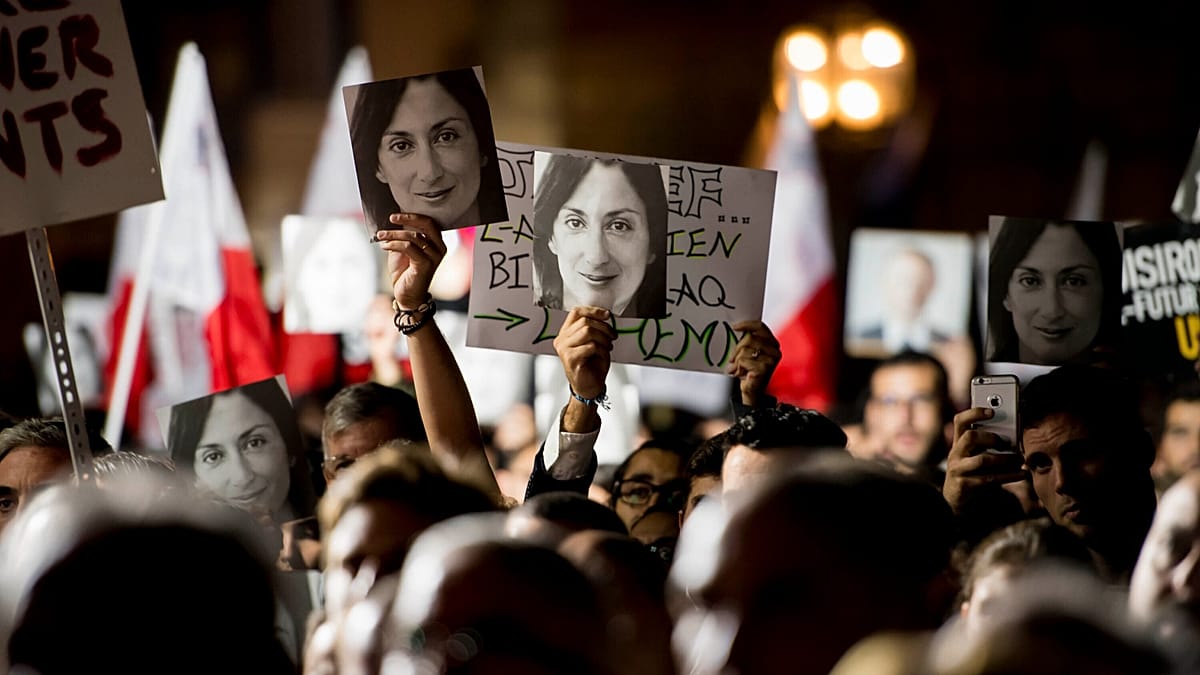
Caruana Galizia, often described as a "one-woman WikiLeaks," had spent years exposing corruption at the highest levels of Maltese politics and business, highlighting the opaque ties between the country's elite. Her death sparked international outrage and put Malta, the European Union's smallest member state, under scrutiny for its rule-of-law shortcomings. The case also led to the resignation of then-Prime Minister Joseph Muscat in January 2020, following mass protests over his perceived protection of allies from the investigation.
The trial is expected to last several weeks. This case echoes broader concerns about journalist safety in Europe, as seen in recent incidents such as the bomb attack on Italian journalist Sigfrido Ranucci and the legal targeting of journalist Pilar Rahola in Barcelona.