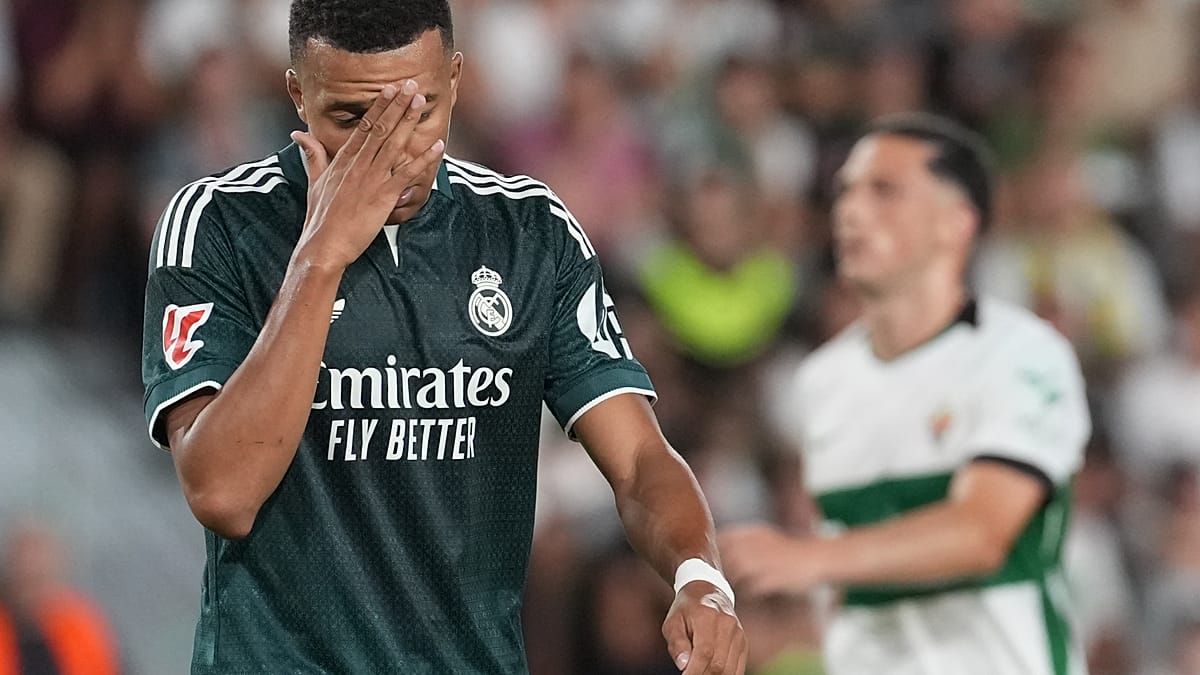
Kylian Mbappé has addressed for the first time the controversy that erupted before Real Madrid's match against Elche, when he and two teammates partially covered a shirt bearing a message of support for the Spanish enclave of Ceuta. The French striker, speaking to the Spanish newspaper AS, said the gesture was not a rejection of Ceuta's people and stressed his full solidarity with the city and with migrants who have lost their lives.
“I want to explain it properly so that people understand,” Mbappé said. He explained that the initiative to wear the shirt had come from the clubs, and that the players were expected to put it on. “The first thing I want to say is that I stand in full solidarity with Ceuta and with all the victims. Because before being a player, I am a human being,” he added.
The controversy centred on a shirt that read “We are all mackerel” — a nickname for Ceuta's inhabitants — completed by the phrase “Our city, our homeland.” Before Tuesday's match, Mbappé, Vinícius Júnior, and Ibrahima Konaté only partially put on the shirt, covering the message. The action drew criticism from LaLiga president Javier Tebas, who said the players had failed to wear the shirt properly.
Mbappé, however, insisted his intention was to send a broader message of solidarity. “I also wanted to have a gesture and a thought for all the migrants who have lost their lives and who are also living in harsh conditions,” he said. He acknowledged that the situation was “difficult” and denied that his decision meant he was against the people of Ceuta. “I have nothing against them, and I support them 100 percent — my thoughts are with them. But I also wanted to spare a thought for all the people who are suffering,” he explained.
The incident has reignited debate over the status of Ceuta and Melilla, Spain's two North African enclaves, which have become flashpoints for migration into Europe. The enclaves have seen periodic surges in crossings, and the issue has exposed divisions within the European Union over how to handle migration. As the debate in the European Parliament has shown, the question of solidarity with frontline member states remains contentious.
Mbappé's comments come at a time when Ceuta is again in the spotlight. The EU recently approved €114.7 million in funding to help Spain manage the migration crisis in the enclave, and there have been calls to reconsider asylum rules after a surge in border crossings. The incident also highlights the delicate balance between national identity and humanitarian concerns, a theme that resonates across the continent.
“I'm a guy who wants the best for the world we live in. I am trying to send a message of positivity and peace, and I hope this is resolved quickly,” Mbappé concluded. His remarks may help defuse the immediate controversy, but the underlying tensions over migration and solidarity are unlikely to disappear.
Ceuta's symbolic weight
Ceuta, along with Melilla, represents the only land border between the European Union and Africa. The enclaves have long been a symbol of Europe's migration challenges, and the recent events have prompted discussions about suspending asylum rights in certain circumstances. The shirt controversy, though seemingly a minor sporting incident, has become a proxy for these larger debates.
For Mbappé, the episode was a reminder that footballers are often drawn into political and social issues, whether they seek it or not. His attempt to balance support for Ceuta with compassion for migrants reflects the complexity of the issue, one that European leaders and citizens continue to grapple with.