The eastern slopes of the Alps, stretching from Austria into Hungary, offer more than just scenic forests and mountain peaks. Here, hiking and mountain biking trails wind through landscapes that have been shaped by centuries of human history—from Celtic tribes and Roman soldiers to medieval knights and Ottoman armies. For those who like their weekends active and educational, this region is a rewarding destination, especially in the golden light of autumn.
Velem: a Hungarian village with ancient roots
Perched at 589 metres in the Kőszeg Mountains, the white chapel of Saint Vid (or Vitus) is visible from kilometres away. The chapel, built in the early 18th century on the ruins of a much older settlement, marks the end of a moderate hiking trail that leads deep into the forest. The area was inhabited by Celts around 2,000 years ago, and later the Romans established a watchtower here to protect the aqueducts supplying the ancient city of Savaria (modern-day Szombathely). Even today, walkers can spot the man-made terraces carved by Celtic farmers into the hillsides.
From Velem, another popular trail climbs to Geschriebenstein, the highest peak in the region, which sits exactly on the Austro-Hungarian border. The ascent from the Hungarian side is a bit adventurous, while the Austrian approach is a gentle stroll. For those who prefer a more structured route, the Források útja (Springs Trail) is a 14-kilometre circuit that showcases eleven springs, both famous and obscure, scattered through the Kőszeg Mountains.
Kőszeg: the town that stopped an army
A few kilometres from the Austrian border lies Kőszeg, one of Hungary's most charming small towns. Its centrepiece is Jurisics Castle, a medieval Gothic fortress that became the focus of a dramatic siege in 1532. With only about 50 soldiers and 700 local volunteers, the castle's captain, Miklós Jurisics, held off a vastly larger Ottoman force that was marching toward Vienna. The exact reasons for the Ottoman retreat remain debated—some historians point to the heavy August rains that turned the battlefield into mud—but the town's resistance became a legendary chapter in European history.
Hiking from Velem to Kőszeg across the mountain makes for a full day's excursion. Along the way, you pass cold-water springs, the Saint Vid chapel, and the 19th-century Styrian houses once used by foresters. The trail offers a tangible connection to the past, with each step echoing the footsteps of traders, soldiers, and pilgrims.
Lockenhaus: where knights and cyclists meet
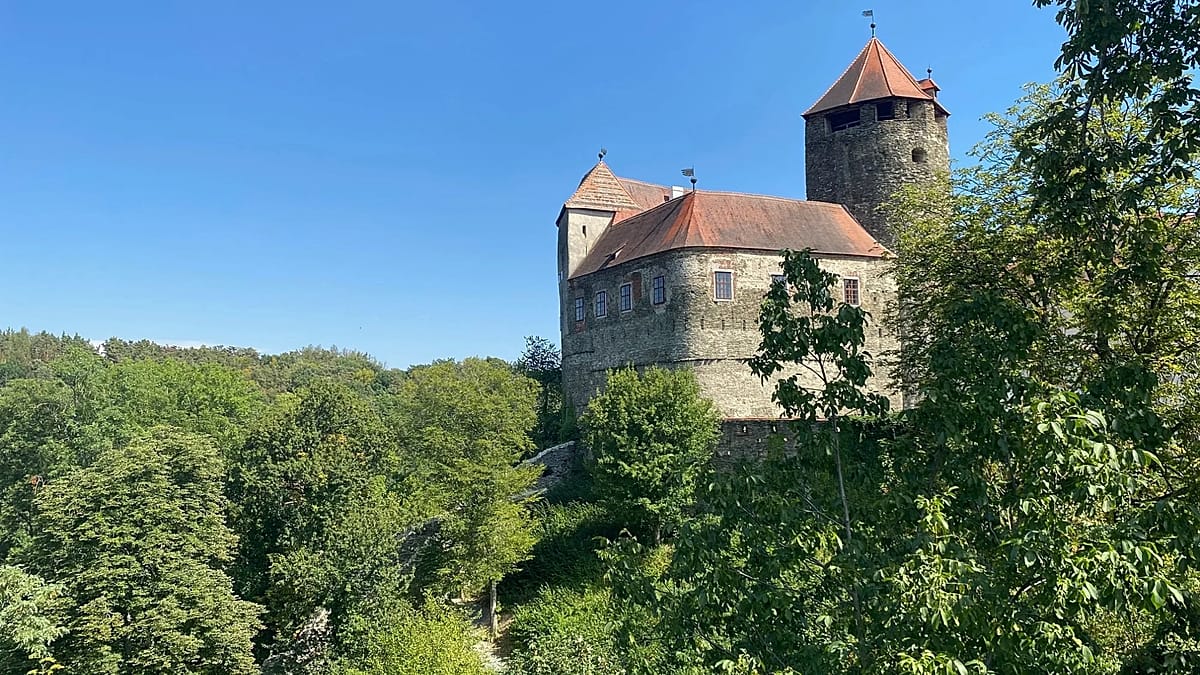
On the Austrian side, the 13th-century Lockenhaus castle, once associated with the mysterious Knights Templar, rises above the Geschriebenstein Nature Park. The surrounding forests are crisscrossed by mountain bike trails ranging from easy to extremely challenging. Cyclists can take advantage of the Burgenland Trails shuttle bus from Rechnitz, which runs on weekends and public holidays, ferrying bikes and riders to the trailheads. From Geschriebenstein, bikers can descend to Lockenhaus, Rechnitz Badesee, or even cross into Hungary. The bike routes are clearly separated from walking paths, so hikers and cyclists can enjoy the landscape without getting in each other's way.
Lockenhaus castle is also home to a notable colony of Geoffroy's bats, visible from April to July, as well as kestrels and swifts that nest in the walls. Near the lake below the castle, lucky visitors might spot a beaver family going about its business.
Stadtschlaining: a medieval gem on the wine route
Just 22 kilometres from Lockenhaus, along the R1 Jubiläumsradweg bicycle road, lies Stadtschlaining, a town that has preserved its medieval character remarkably well. Its 13th-century castle, Burg Schlaining, stands on the outskirts, surrounded by rolling hills that invite walking and cycling. After exploring the castle gardens—which are free to enter—visitors can set off on the idyllic Weinstrasse (wine route) of Südburgenland, where vineyards and small villages offer a taste of local hospitality.
These four destinations—Velem, Kőszeg, Lockenhaus, and Stadtschlaining—offer more than just a workout. They are living museums, where the layers of European history are visible in the landscape, from ancient terraces to medieval fortifications. For history lovers and outdoor enthusiasts alike, a weekend here is a journey through time as much as through the mountains.