French liberal MEP Christophe Grudler, set to lead negotiations on the European Parliament's version of the so-called 'Industrial Accelerator Act,' has sharply criticized the European Commission's proposal for a 'Made in Europe' preference. In an interview with Euronews, Grudler argued that the Commission's approach, which would extend preferential treatment in public procurement to a wide range of 'like-minded' non-EU countries, is misguided and naive.
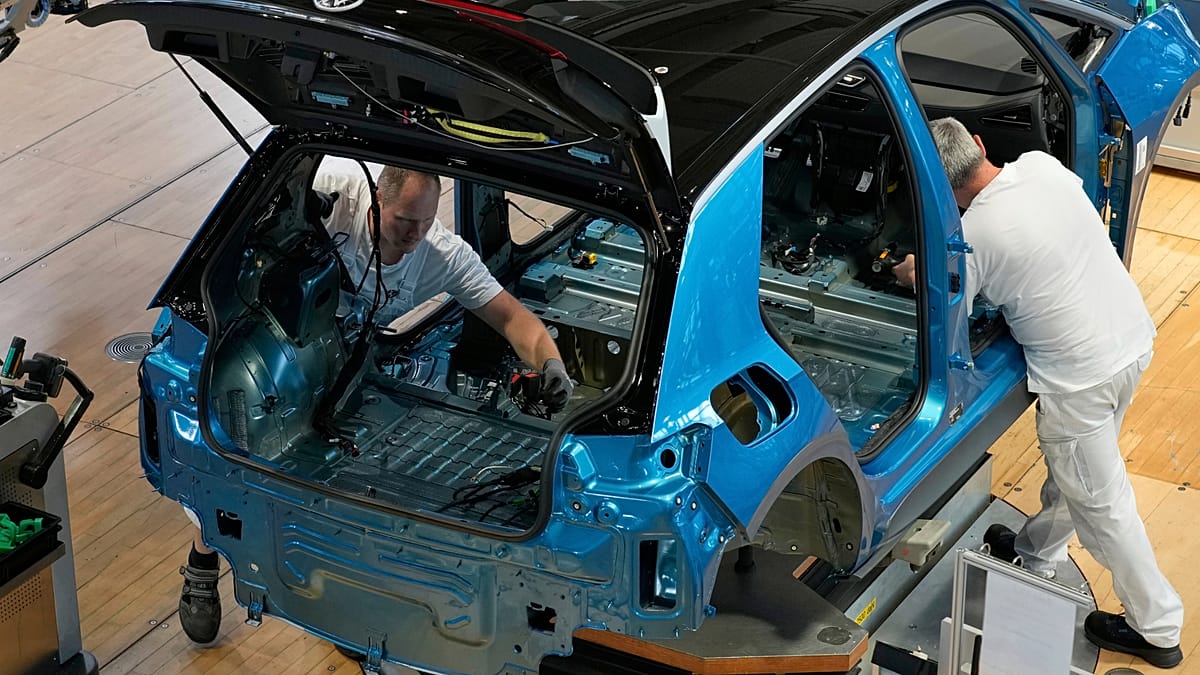
The 'Made in Europe' provisions aim to shield EU strategic industries—such as clean tech, automotive, and energy-intensive sectors like aluminium and steel—from foreign competition, particularly from the United States and China. The Commission's proposal, unveiled on 4 March, leans toward a broad definition that includes partners deemed aligned with EU values and trade openness.
Grudler, however, contends that geography should be the guiding principle. 'The Commission's option is very poor. It reflects a completely outdated view of trade policy,' he said. 'When the Americans introduced the Buy American Act, they didn't worry about whether it would strain ties with Europe. At some point, we need to stop being naive.'
A Narrower Circle of Partners
Grudler proposes limiting 'Made in Europe' to countries closest to the EU, starting with the European Economic Area (EEA): Iceland, Liechtenstein, and Norway. Switzerland, he noted, is also a strong candidate due to its long-standing public procurement agreement with the EU, dating back to 1989. 'All European companies have access to the Swiss public procurement market, and all Swiss companies have access to the European public procurement market. It is therefore a rather good candidate,' he explained.
The UK, despite Brexit, could be considered to some extent, but Grudler cautioned that 'conditions will need to be examined' and that 'Europe has to make sure it comes out financially ahead.' This stance reflects a broader tension within the EU between member states like Germany and the Nordic countries, which favor a more inclusive definition, and France, which pushes for a narrower, more protectionist approach.
The debate comes as the EU seeks to bolster its industrial resilience amid global trade tensions. The European preference is designed to counter unfair competition, particularly from China, which has voiced strong opposition to the proposal, viewing it as a restriction on its access to EU procurement and investment. Grudler dismissed such concerns, stating, 'China has overcapacities in cars or in steel. They are relying on the naivety of Europeans to do business, to generate double-digit growth again, and then to invest in research and development and get ahead on everything, all the while cheating through direct subsidies to destroy our industries.'
Grudler emphasized that the law must send 'a strong signal' to investors backing key EU industries, 'particularly energy-intensive sectors and clean technologies.' He framed the legislation as 'another step in Europe's resilience against unfair competition from other continents.'
The European Parliament is set to begin negotiations on the proposed rules shortly, with Grudler as a lead negotiator. The outcome will likely shape the EU's trade and industrial policy for years to come, as the bloc navigates a complex geopolitical landscape. For context, the EU has already taken steps to protect its industries, such as imposing tariffs on Chinese glass fibre made in third countries, a move that underscores the bloc's growing assertiveness in trade disputes.
As the debate unfolds, the 'Made in Europe' law will test the EU's ability to balance openness with strategic autonomy—a challenge that resonates across the continent, from Brussels to Berlin and beyond.