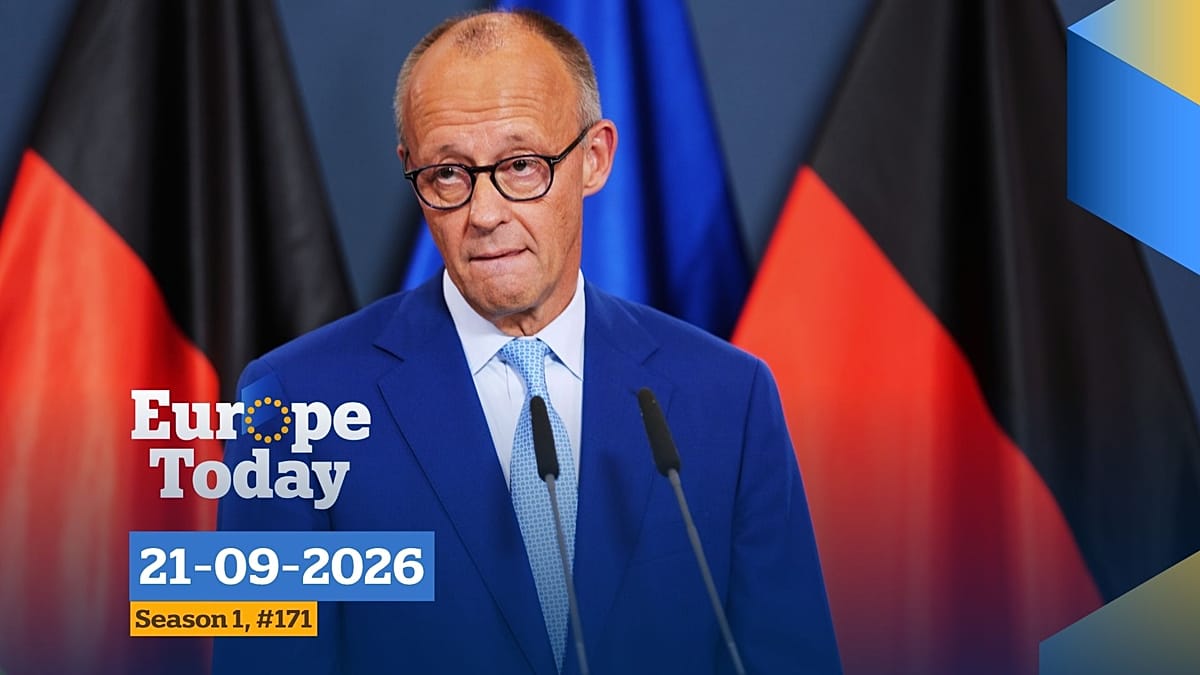
German Chancellor Friedrich Merz is once again under intense political pressure after his Christian Democratic Union (CDU) suffered a heavy defeat in Sunday's state elections in Mecklenburg-Vorpommern and Berlin. The results, which saw the far-right Alternative for Germany (AfD) make significant gains, have reignited debates about the stability of Merz's leadership and the future direction of his party.
The elections, held against a backdrop of economic uncertainty and security concerns, delivered a clear rebuke to the CDU. In Mecklenburg-Vorpommern, the party's support collapsed, while in Berlin, the CDU also lost ground. The AfD, which has capitalized on voter discontent over migration and energy policy, emerged as a major winner, further complicating the political landscape in Germany.
Sabrina Repp, a German MEP for the Social Democrats from Mecklenburg-Vorpommern, described the results as a "wake-up call" for the established parties. "Voters are sending a clear message that they feel unheard and unrepresented," she said in an interview. "The traditional parties must address the root causes of this discontent, or we will continue to see the extremes gain ground."
Ukraine's largest drone strike on Moscow
In a separate development, Ukraine launched its largest-ever drone strike on Moscow, targeting the Russian capital in a coordinated operation timed to coincide with Russia's parliamentary elections. The attack, which involved dozens of drones, struck several key infrastructure sites, causing significant disruption and underscoring Kyiv's growing capability to project power deep into Russian territory.
Federico Borsari, a fellow with the Transatlantic Defense and Security Program at the Center for European Policy Analysis, noted that the strike was both a military and psychological blow. "This is a demonstration of Ukraine's ability to strike at the heart of Russia, and it sends a clear signal that the war is not confined to the front lines," he said. "The timing, during Russia's elections, is particularly significant."
The attack has heightened tensions across Europe, with many governments expressing solidarity with Ukraine while also preparing for potential Russian retaliation. The European Union has condemned the strikes on Russian soil, but has also reiterated its support for Ukraine's right to self-defense.
Meanwhile, the United States and Iran are locked in an escalating standoff, with Washington threatening further sanctions and military action. US President Donald Trump is set to address the UN General Assembly this week, where the Iran file is expected to dominate discussions. Aadel Haleem, reporting from Doha, noted that the Gulf states are watching the situation closely, fearing that a conflict could destabilize the region further.
In Brussels, the Belgian capital is grappling with a surge in drug-related violence, which has shaken public confidence and strained relations with the United States. Bill White, the US Ambassador to Belgium, acknowledged the growing wariness among Belgians about American influence, but stressed the importance of transatlantic cooperation in tackling organized crime.
These developments come as Europe faces a range of challenges, from political instability in Germany to security threats on its eastern flank. The German state election results have already sparked debate about the future of Merz's chancellorship, with some within the CDU calling for a change in leadership.
As the continent navigates these turbulent times, the need for strong, coordinated European action has never been more apparent. Whether it is addressing the fallout from the largest drone assault on Moscow or the far-right gains in German state votes, European leaders must find ways to respond effectively to the challenges ahead.
The coming weeks will be critical, as the EU seeks to maintain unity in the face of external threats and internal divisions. With the Duma majority secured amid drone strikes, Russia's leadership remains defiant, but the costs of the war are mounting. For Europe, the stakes could not be higher.