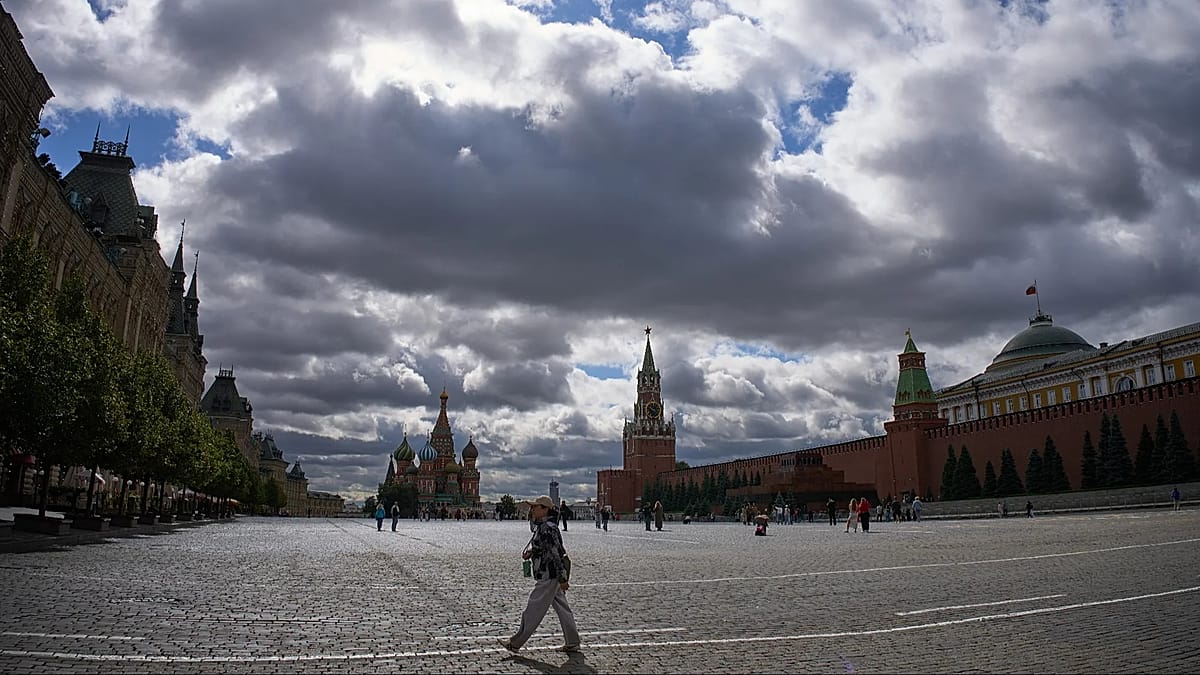
Moscow came under its most intense aerial assault since the start of the full-scale war, according to the city's mayor, as Ukrainian long-range drones reached the capital's outskirts and struck a key oil refinery.
In a Telegram post on Sunday, Mayor Sergey Sobyanin said Russian air defences had intercepted more than 1,600 drones nationwide since Saturday, with around 450 of them heading toward the capital. He described the attack as the largest on Moscow so far, adding that several drones had hit the Moscow refinery and one struck a residential building, though no fatalities were reported in the city itself.
Andrey Vorobyov, the governor of the wider Moscow region, reported that two people had been killed in strikes across the area. The attacks underline the growing reach of Ukraine's drone programme, which has repeatedly targeted Russian energy infrastructure in recent months.
Kyiv confirms strikes on key facilities
Ukrainian President Volodymyr Zelenskyy confirmed that Ukrainian forces had targeted the Moscow region overnight, saying they hit a "key" oil industry facility and a logistics hub. In a post on X, he wrote: "Our long-range responses had a very significant impact in the Moscow region last night." He added that the operation involved FP-1 attack drones and Palianytsia missiles, among other munitions.
Zelenskyy also used the attack to press his case for continued Western support, saying: "Moscow must end its brutal war and choose peace instead of building layered rings of air defense at the expense of other regions." He shared video footage that appeared to show the aftermath of the strikes.
The assault comes as Ukraine continues to develop its own long-range strike capabilities, reducing its reliance on Western-supplied missiles. The Palianytsia, a Ukrainian-designed rocket-drone hybrid, has been used in several recent deep strikes inside Russian territory.
Russian strikes on Ukraine continue
Meanwhile, Ukrainian authorities reported that a child had died after a Russian strike on the Kyiv region, raising the death toll from that attack to four. Timur Tkachenko, head of the Kyiv Regional State Administration, said the child died in hospital after being injured in the Vyshhorod district. "The Kyiv region has endured more than a day of enemy attacks," he said, adding that 31 structures had been damaged across five districts.
In the southern Kherson region, a 71-year-old priest was killed in a drone attack on a monastery in the village of Chervonyi Mayak on Saturday, according to local authorities. Four others were reportedly injured in the incident.
Zelenskyy, who has been calling for further sanctions against Moscow, said Russia had launched more than 2,000 attack drones, 1,700 aerial bombs, and 19 missiles against Ukraine this week. The scale of the Russian bombardment has put renewed pressure on Ukraine's air defences and civilian infrastructure.
The escalation on both sides comes as European leaders debate how to respond to Russia's continued aggression. The EU defence chief has argued that Russia must pay a painful price for its hybrid attacks, and the bloc has been exploring ways to tighten sanctions and boost military aid to Ukraine.
The attacks also highlight the vulnerability of energy infrastructure on both sides. While Ukraine has repeatedly targeted Russian refineries and storage facilities, Russia has systematically struck Ukrainian power plants and grids. The fragility of oil security is a concern for Europe, which has been working to diversify its energy supplies.
As the war enters another phase of long-range exchanges, the human cost continues to mount. The death of the child in the Kyiv region and the priest in Kherson are stark reminders of the toll on civilians. For Moscow, the attack on its own capital brings the war home in a way that previous strikes have not, even as the Kremlin maintains that its air defences are capable of protecting the city.