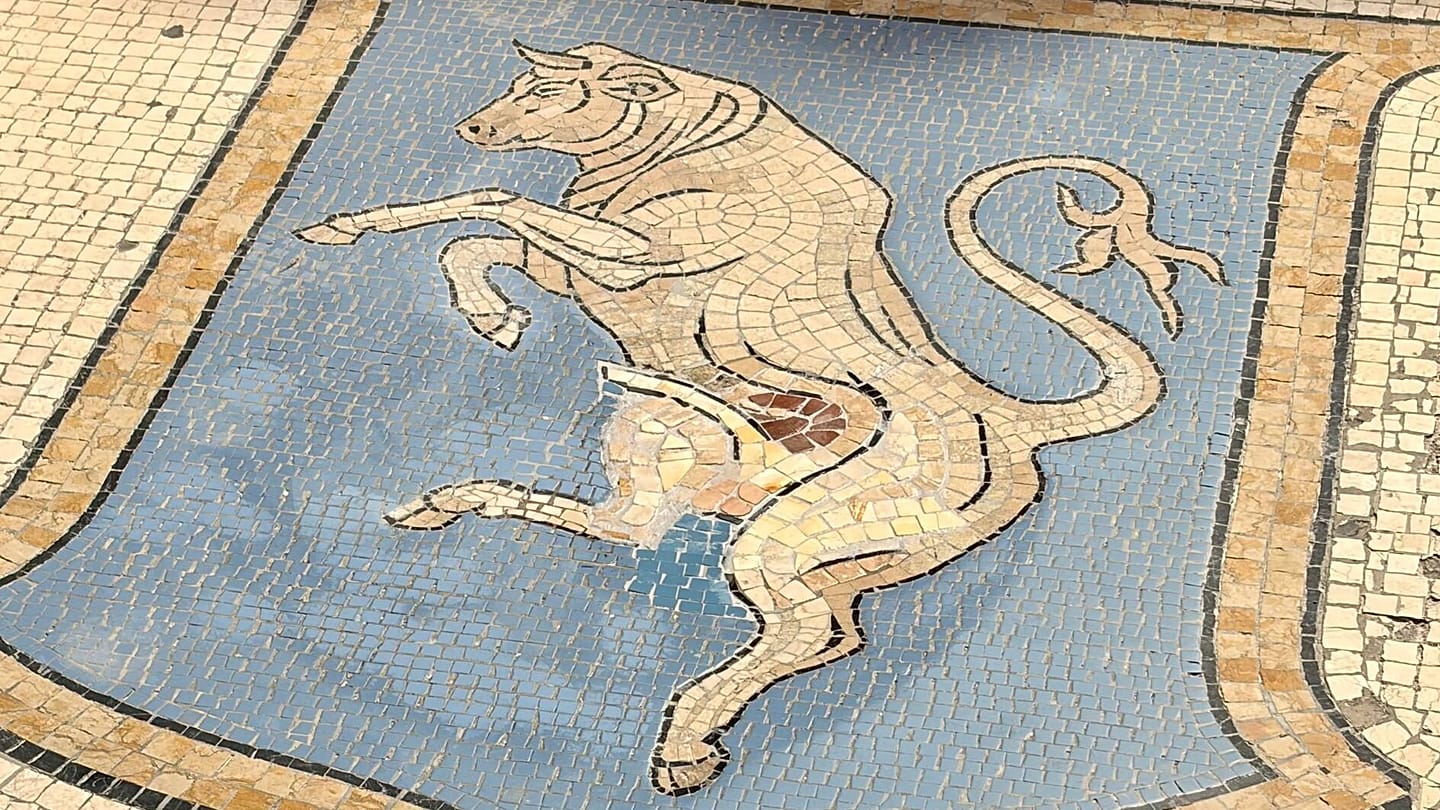
Milan's Galleria Vittorio Emanuele II, the 19th-century shopping arcade that connects Piazza del Duomo to Piazza della Scala, is home to one of Italy's most peculiar tourist traditions: rubbing the testicles of a bull mosaic for good luck. After centuries of this ritual, the bronze and stone artwork has worn down to the point of needing urgent restoration.
The bull, part of a larger mosaic depicting the coats of arms of Turin, Rome, Florence, and Milan, has long been a focal point for visitors. Locals and tourists alike spin their heels on the animal's genitals, believing it brings fortune—a practice that has eroded the surface and left the mosaic uneven.
A Delicate Conservation Challenge
Restorers from the city's cultural heritage department began work this week, carefully cleaning and repairing the damaged area. The mosaic, made from small tesserae of marble and glass paste, requires meticulous attention to preserve its original design. The team is using specialized tools to fill gaps and stabilize loose stones, ensuring the artwork can withstand future foot traffic.
“This is not just about fixing a tourist attraction; it's about preserving a piece of Milanese identity,” said Elena Rossi, the lead conservator. “The bull has become a symbol of the city's blend of elegance and superstition.” The restoration is expected to take several weeks, during which the area will be cordoned off, much to the dismay of luck-seekers.
The tradition is believed to date back to the arcade's opening in 1877, though its exact origins are unclear. Some say it started as a joke among local workers; others claim it was a deliberate nod to Turin's association with the bull. Regardless, the practice has become so ingrained that the city has had to intervene multiple times over the decades.
This isn't the first restoration of the mosaic. In 2015, during Milan's Expo, the bull was temporarily repaired after similar wear. But the constant rubbing—by an estimated 10,000 people per day during peak tourist season—has accelerated the damage. The current project aims to use more durable materials, though conservators admit that no solution can fully prevent future erosion.
Milan's Galleria is no stranger to quirky traditions. Nearby, visitors also spin on the mosaic of a boar in the arcade's central octagon, though with less fervor. The bull, however, remains the star attraction, drawing crowds who queue to perform the ritual. Some locals argue the tradition should be preserved as part of the city's living heritage, while others see it as a nuisance that damages public art.
The restoration comes amid broader efforts to maintain Italy's cultural treasures, which often face wear from mass tourism. Similar challenges have been seen at sites like the Trevi Fountain in Rome and the Ponte Vecchio in Florence. In Milan, the Galleria's management has considered installing a protective barrier or a replica bull for rubbing, but no decision has been made.
For now, visitors will have to wait until the restoration is complete to resume their luck-seeking. In the meantime, they can explore other attractions in the arcade, such as its luxury boutiques and historic cafes. The Galleria remains a vibrant hub of Milanese life, even without its most tactile tradition.
As one local put it, “The bull will be back, and so will the tourists. It's a cycle that defines Milan—a city that balances high culture with a touch of superstition.” The restoration is a reminder that even the most enduring traditions require care, especially when they involve a bull's most sensitive feature.