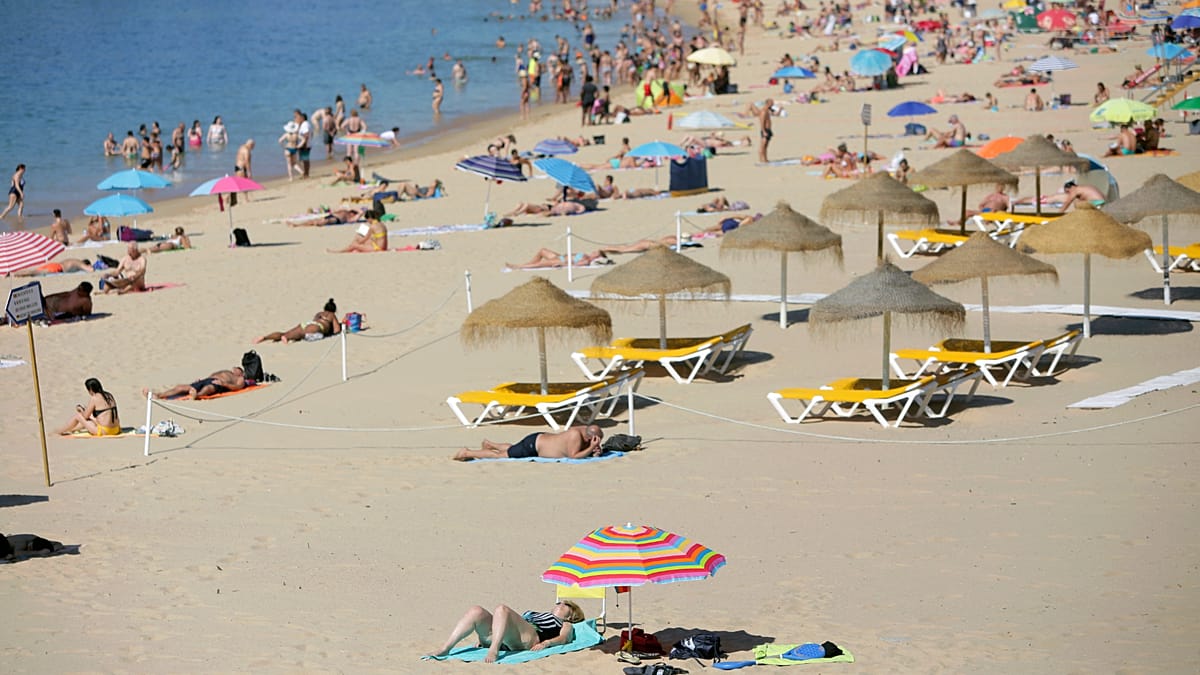
For years, bathers on Portugal's southern and southwestern coasts have faced a perplexing question: where exactly can one plant a sun umbrella without trespassing on a concession area? The uncertainty has now prompted the Portuguese government to mandate clear, diagrammatic maps at beach entrances, delineating concession, circulation, safety, and free zones.
The initiative, announced by Minister for Environment and Energy Maria da Graça Carvalho during a visit to the Portuguese Environment Agency (APA), aims to end a dispute that flared after APA president José Pimenta Machado declared that preventing bathers from placing umbrellas in front of licensed concessions was "an abuse". Machado later clarified that concession areas are limited to a rectangle covering no more than 30% of a beach's usable area or 50% of its seafront, with the remainder open for free use.
Despite formal guidance from the APA, doubts persisted as the 2025 bathing season began. The new maps, to be posted at every beach entrance, will visually show the boundaries of each zone, which vary from beach to beach and are set by local mayors. The minister stressed that the maps do not alter existing rules—concession areas remain capped at 30% of usable beach or 50% of the seafront—but simply make them transparent.
Local Mayors Take the Lead
The measure follows a meeting with mayors from Algarve municipalities—Vila Real de Santo António, Castro Marim, Faro, Lagos, and Vila do Bispo—and Grândola in the Alentejo region. These local leaders, who have faced the brunt of complaints and disputes, agreed to produce and install the maps as quickly as possible. The maps must be validated by the Maritime Authority and the APA.
"It is also in the mayors' interest; they are annoyed, because they are the first face people come up against in some of these misunderstandings, so they will act as fast as possible," Carvalho said. The urgency reflects the fact that the bathing season is already underway, with peak summer months approaching.
The move is part of a broader effort to improve beach management along Portugal's coast, which attracts millions of tourists each year. The Algarve alone accounts for a significant share of the country's tourism revenue, and clarity on beach access is seen as essential to maintaining visitor satisfaction. For those planning a holiday, the new maps should eliminate the guesswork—and potential fines—associated with umbrella placement.
Portugal's beaches have long been a draw for European travelers, and the country's hotel sector has been noted for offering good value. According to a recent analysis, Portugal ranks best for hotel affordability among popular European destinations, making it a top choice for sun-seekers. The new mapping initiative is likely to enhance that appeal by reducing on-the-ground friction.
The APA's intervention also underscores a broader trend in European coastal management: balancing commercial concessions with public access. Similar debates have occurred in Spain, Italy, and Greece, where beachfront businesses often clash with free-use advocates. Portugal's solution—a simple, standardized map—may serve as a model for other member states grappling with the same issue.