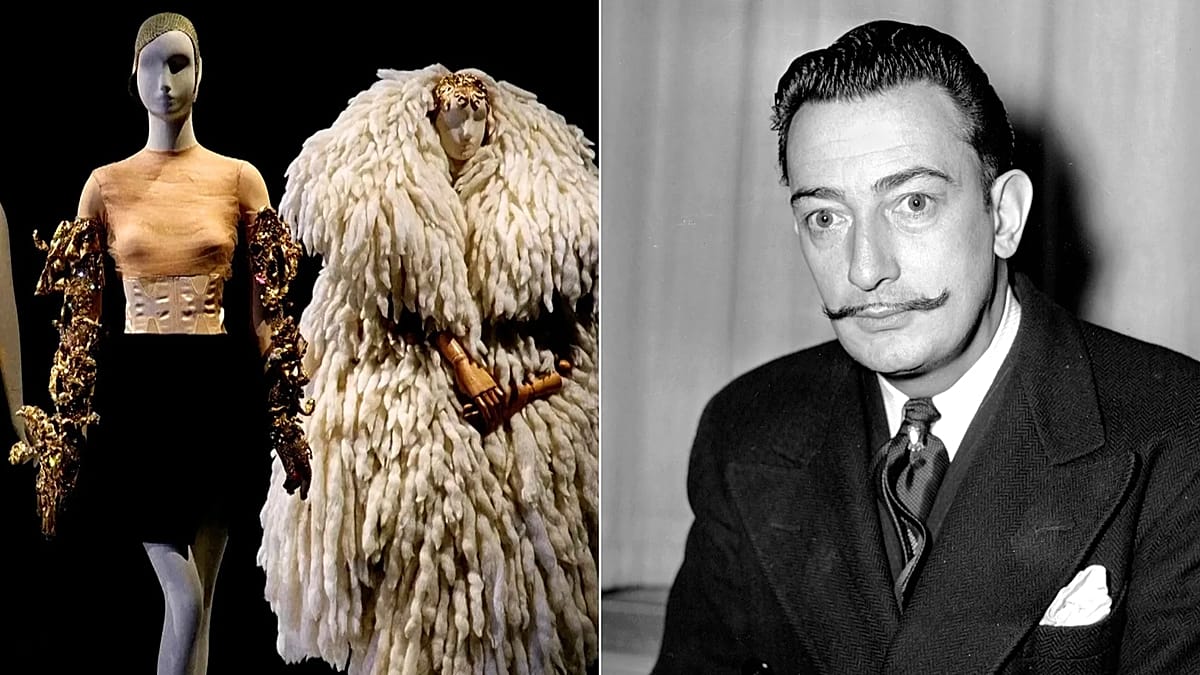
Milan, Italy's fashion capital, is turning its attention to a surprising muse: Salvador Dalí. A new exhibition at the Palazzo Reale, titled “Dalí and Fashion,” brings together more than 200 objects—artworks, garments, photographs, and archival material—to explore the Spanish Surrealist's deep and often overlooked connection to the world of style.
The show is not a chronological retrospective. Instead, it pairs paintings and sculptures with dresses, hats, and accessories, revealing how Dalí drew from fashion and how fashion has repeatedly returned the favor. Curators Judith Clark and Laura Bartolomé have assembled pieces that span from the 1930s to the present day, including recent work by Daniel Roseberry for Schiaparelli and Maria Grazia Chiuri and Jonathan Anderson for Dior.
A two-way exchange
Dalí's engagement with fashion began in earnest in the 1930s, when he collaborated with Elsa Schiaparelli, the Italian-born designer known for her own surrealist flair. Their partnership produced iconic pieces like the shoe hat, inspired by a photograph of Dalí with a woman's shoe balanced on his head. Dalí sketched the idea, and Schiaparelli turned it into a wearable, high-heeled hat.
“His paintings and artworks became fashion, but the reverse was also true: fashion found its way into his paintings and the Surrealist objects of the era,” Clark explains. The exhibition highlights this mutual influence through Dalí's fascination with mannequins, clothing, and the human form—themes that recur throughout his oeuvre.
Bartolomé notes that Dalí was not merely a source of inspiration for designers; he was also an active participant in the fashion world. “By the mid-1930s, he was working alongside renowned fashion designers like Elsa Schiaparelli and inevitably drew inspiration from fashion,” she says. The show includes archival sketches and photographs that document these exchanges.
From Schiaparelli to Dior
The contemporary section of the exhibition features creations by designers who continue to mine Dalí's visual vocabulary. Daniel Roseberry's recent work for Schiaparelli—known for its exaggerated, surreal silhouettes—sits alongside pieces by Maria Grazia Chiuri and Jonathan Anderson for Dior, who have both referenced Dalí in their collections.
“On display are Daniel Roseberry's most recent creations for Schiaparelli, as well as those by Maria Grazia Chiuri and Jonathan Anderson for Dior,” Bartolomé says. “This was a challenge, but also a unique opportunity to link Dalí not only to the most renowned names in 20th-century fashion history but also to his enduring influence on the creative directors and designers of such celebrated fashion houses today.”
The exhibition also touches on broader themes, such as the transformative power of clothing and the art of disguise—concepts that were central to Dalí's work. Visitors can see how his paintings of melting clocks and distorted figures find echoes in the draped, sculptural garments on display.
Milan, already a hub for fashion and culture, is an apt setting for this dialogue. The city's own tech scene may be booming, but its artistic heritage remains a draw for exhibitions like this one. The show runs at the Palazzo Reale until late summer, offering a fresh perspective on an artist whose influence extends far beyond the canvas.
For those unable to visit in person, the exhibition's catalog provides a deep dive into the archival material, including letters and sketches that reveal the collaborative process between Dalí and Schiaparelli. It's a reminder that fashion and art have long been intertwined—and that Dalí's surreal vision continues to inspire, shock, and transform.