In a decision that caught many investors off guard, Moody's has chosen to keep France's sovereign debt rating at Aa3, albeit with a negative outlook. The New York-based agency's announcement on Friday evening provided a moment of relief for the government, which had braced for a possible downgrade amid rising borrowing costs and social unrest.
The rating decision comes at a tense time for the French economy. The yield on France's ten-year government bonds (OATs) has climbed sharply this week, surpassing 5.1% on Wednesday—a level not seen since 2002—as investors grew jittery following the riots of 17 October and the broader political deadlock. Moody's justified its stance by citing the assumption that a 2027 budget reducing the deficit will be adopted, while also expecting funding costs and social tensions to moderate in the coming months.
A brief reprieve, not a vote of confidence
Government officials were quick to frame the decision as a validation of their economic strategy. Economy Minister Roland Lescure described it as "recognition of the strength of our economy and the credibility of the budget" presented by the executive. He reiterated that the goal of passing a "responsible" budget that brings the deficit down to 5% by the end of the year is "non-negotiable."
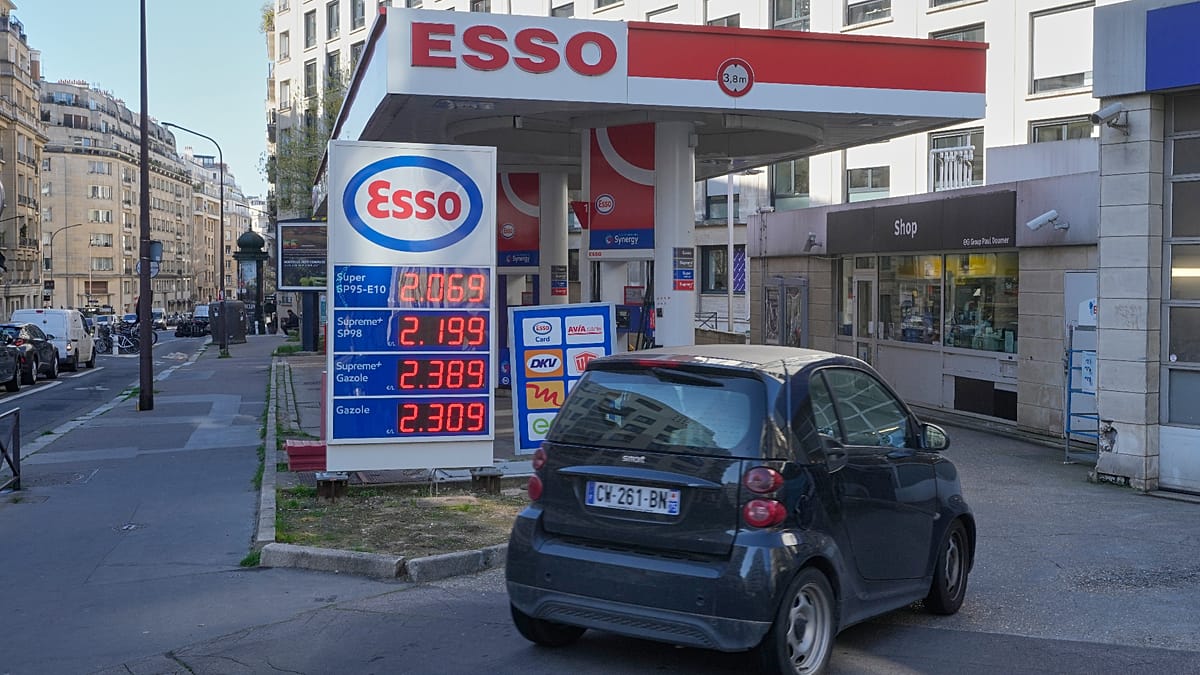
Prime Minister Sébastien Lecornu took to X to argue that Moody's decision "confounds the doom-laden forecasts of many 'experts'" and those who speculate on French debt. He also pointed to the ongoing budget debate in the National Assembly as evidence that "there is a way forward" for creditors. In a separate remark, he highlighted the release of 10 million barrels of diesel to ease pump prices from 1 November, insisting it would not compromise public finances.
Yet economists warn that this reprieve should not be mistaken for a clean bill of health. Théophile Legrand, rates strategist at Natixis, called the decision "a welcome short-term surprise for the government and the markets," but stressed that the negative outlook means "the risk of a downgrade remains fully present." He noted that a downgrade had been the "central" scenario among analysts, though its impact might have been muted given that markets had largely priced it in.
The upcoming protests, scheduled for this Saturday, are being closely watched by investors. "The mobilisation expected this weekend will be a test for the government, particularly its ability to manage the situation," Legrand said, referring to the unrest on 17 October. Even if the chaos of last week does not repeat, he cautioned that "the persistence of a climate of political uncertainty" is likely to keep pressure on French bonds.
Jérémie Peloso, chief Europe strategist at BCA Research, echoed these concerns. "The excesses observed during the protests have certainly poured fuel on the fire," he said. "However, it is above all the political deadlock, the glaring lack of budgetary ambition, both from the current government and from the various presidential candidates, and the deterioration of the public finances that are igniting the bond market."
Peloso went further, describing French government debt as "a genuine pariah" in the market. He pointed to the unsustainable path of public finances, the return of inflation amid the war in the Middle East, "anaemic" growth, and expectations of further ECB rate hikes as compounding factors. The consequences are already visible in the real economy, particularly in the property sector, where access to credit is becoming increasingly difficult.
Despite the recent sell-off, Peloso does not rule out a short-term rebound in OATs, driven by opportunistic buyers looking to "buy the dip." He noted that losses on equity markets could prompt investors to shift into bonds, traditionally seen as safe-haven assets. This week, several French stocks have stumbled, with Carrefour falling more than 13% after estimating the cost of the 17 October looting at between €80 million and €200 million. Luxury groups Kering and Hermès also suffered double-digit or near-double-digit declines, hit by weaker quarterly results and the vandalism of shops.
But Peloso insists that any such bond buying "must not lose sight of the fact that French debt remains a genuine time bomb." He added: "All the more so as an explosive presidential election is looming in less than six months." The core issue, he argues, is the "glaring lack of political will to tackle budgetary imbalances seriously," with none of the major parties willing to accept the political cost of drastic savings. "As long as this reality does not change, investors will find it very hard to regain confidence in French debt."
The situation in France is part of a broader European picture, where fiscal discipline and political stability are under scrutiny. While the European Union has its own mechanisms for overseeing member states' budgets, the market's verdict on French debt is a stark reminder that national politics can have continental repercussions. As France's economy contracts again, the pressure on Paris to deliver a credible fiscal plan is mounting.
For now, the government can breathe a sigh of relief, but the clock is ticking. The negative outlook from Moody's is a clear signal that the next few months will be critical. With new protests on the horizon and an election campaign looming, the window for meaningful reform is narrow. As Jérôme Mathis, economics professor at Paris-Dauphine, put it in an earlier analysis, this is "a crisis of confidence specific to France," one that will not be resolved by a single rating decision.