Morocco's dramatic penalty shootout victory over the Netherlands at the World Cup in Monterrey triggered exuberant celebrations in The Hague, home to one of Europe's largest Moroccan diaspora communities. The joy, however, gave way to confrontations with Dutch police that resulted in multiple arrests.
The last-16 match ended 1-1 after extra time before Morocco prevailed in a tense shootout. PSV Eindhoven forward Ismael Saibari converted the decisive spot kick, sending the Atlas Lions into the quarterfinals against co-host Canada. The result was a historic milestone for Moroccan football, but its reverberations were felt most acutely in the Netherlands, where an estimated 32,000 residents of Moroccan descent live in The Hague alone—nearly 6 percent of the city's population.
Celebrations Turn to Confrontation
In the Schilderswijk district, a historic hub for Moroccan-Dutch culture, supporters draped in Moroccan flags filled the streets after the final whistle. Car horns blared, fireworks lit the sky, and crowds gathered at a busy junction, kicking footballs and climbing onto vehicles. The atmosphere was festive for about an hour before riot police moved in.
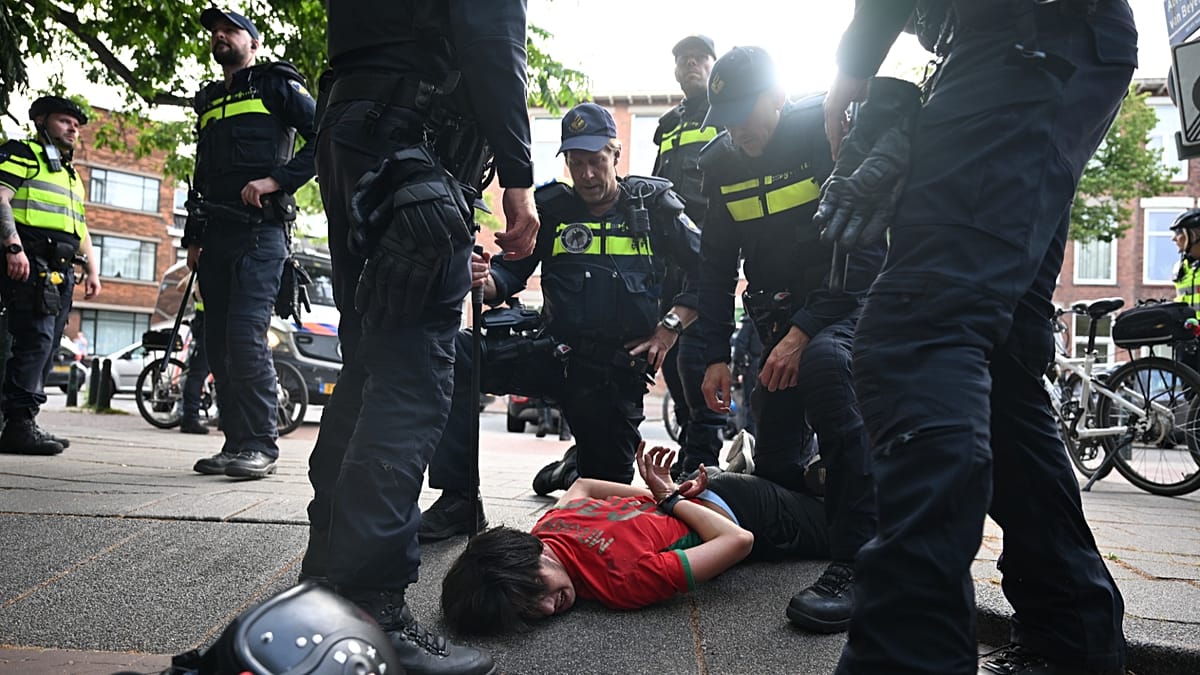
Police deployed water cannon and baton charges to disperse the gathering, citing reports that officers were attacked with stones and heavy fireworks. Around a dozen young men were pinned to the ground, handcuffed, and taken away in police vans. Dutch authorities said the crowd had become unruly, with some participants setting off powerful fireworks and pelting officers with projectiles.
“Heavy fireworks were set off” in Schilderswijk, police stated, adding that riot squads and water cannon were necessary to break up the gathering. The clashes underscore the complex integration dynamics in Dutch cities, where Moroccan-Dutch communities—many descended from labour migrants who arrived under a 1969 bilateral agreement—remain both vibrant and occasionally at odds with authorities.
This is not the first time football celebrations have sparked tensions in the Netherlands. Similar scenes occurred during previous World Cups and European Championships, often involving diaspora communities supporting their countries of origin. The incident also comes amid broader debates about policing, public order, and integration in Dutch society.
Morocco's run in the tournament has already drawn attention across Europe, particularly after controversial FIFA decisions that sparked outrage among European football federations. The Atlas Lions' next match against Canada will be closely watched, not least by the large Moroccan diaspora in cities like Rotterdam, Amsterdam, and Brussels.
The Hague's mayor condemned the violence, calling for calm and dialogue. Local community leaders urged restraint, emphasizing that the vast majority of celebrations were peaceful. “Football should unite, not divide,” said one representative of a Moroccan-Dutch cultural association in Schilderswijk.
As Morocco prepares for its quarterfinal clash, the events in The Hague serve as a reminder of the deep emotional ties that bind European diaspora communities to their ancestral homelands—and the challenges that can arise when sporting passion spills into the streets.