Finnish prosecutors have charged a Finnish-Russian woman with aggravated human trafficking for taking her children to areas of Syria that were under the control of the so-called Islamic State (IS) group. The charges, filed with the Eastern Uusimaa District Court, cover a period from 2014 to 2024, according to Finland's National Prosecution Authority.
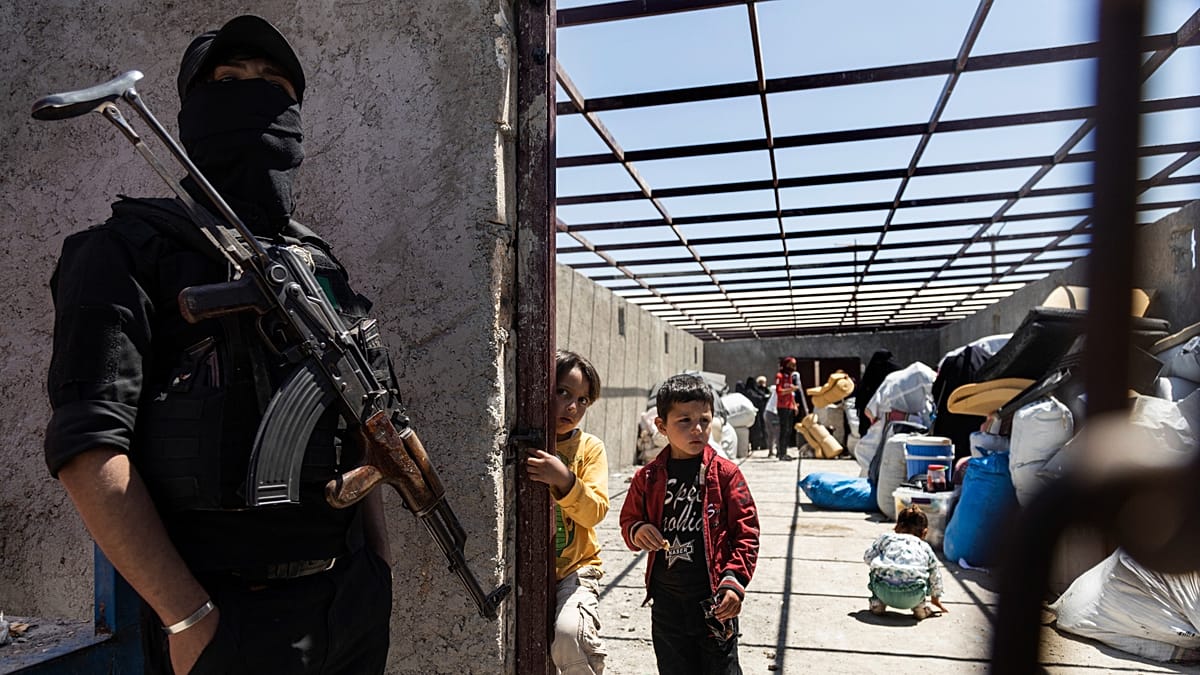
The woman, who is in her 40s and now lives in Finland, first brought her children to Syria in 2014, according to a preliminary police investigation. The family later ended up in the Al-Hol camp in northeastern Syria, a sprawling detention facility that has housed thousands of relatives of suspected IS fighters.
Detective Chief Inspector Jan Aarnisalo, who led the investigation, said the children were subjected to a life in which their "rights to a safe upbringing could not be met." The investigation was completed last year, and the case has now been referred to the court.
Return to Finland
By the end of 2021, the woman and one of her children had returned to Finland. The second child came back later. Both children are now adults, though their exact ages have not been disclosed.
The woman denies the charges. Her lawyer has not yet commented publicly on the case. The trial is expected to begin in the coming months, and the court will have to weigh the complex circumstances of a family that became entangled in one of the most brutal conflicts of the past decade.
The case highlights a broader European dilemma: how to deal with citizens who travelled to join IS and their families, many of whom remain in camps in Syria. Several European countries have repatriated women and children, but the legal and humanitarian challenges persist. Finland's decision to prosecute a mother for trafficking her own children is unusual and could set a precedent for how such cases are handled elsewhere in Europe.
The Al-Hol camp, where the family was held, has been a focal point for international efforts to repatriate foreign nationals. Conditions there have been widely criticised by human rights groups, and the camp's population includes many children who were born or raised under IS rule. The Finnish prosecution's focus on the mother's actions, rather than on the broader circumstances, may draw scrutiny from child welfare advocates.
This case also comes amid heightened security concerns across Europe, with several EU member states recently seeking Brussels aid for tourism hit by war fears, as the continent grapples with the fallout from conflicts in the Middle East and Ukraine. The Finnish legal system now faces the delicate task of balancing accountability for alleged crimes with the welfare of the children involved, who are now adults but whose formative years were spent in a war zone.
The charges of aggravated human trafficking carry a maximum sentence of ten years in prison under Finnish law. The prosecution will need to prove that the woman's actions were deliberate and that she exploited her children's vulnerability. Her defence is likely to argue that she was herself a victim of coercion or manipulation by IS.
As the case proceeds, it will be watched closely by legal experts and human rights organisations across Europe. The outcome could influence how other countries approach similar cases involving families who returned from IS-controlled territory. For now, the woman remains free pending trial, and the court has not set a date for the first hearing.