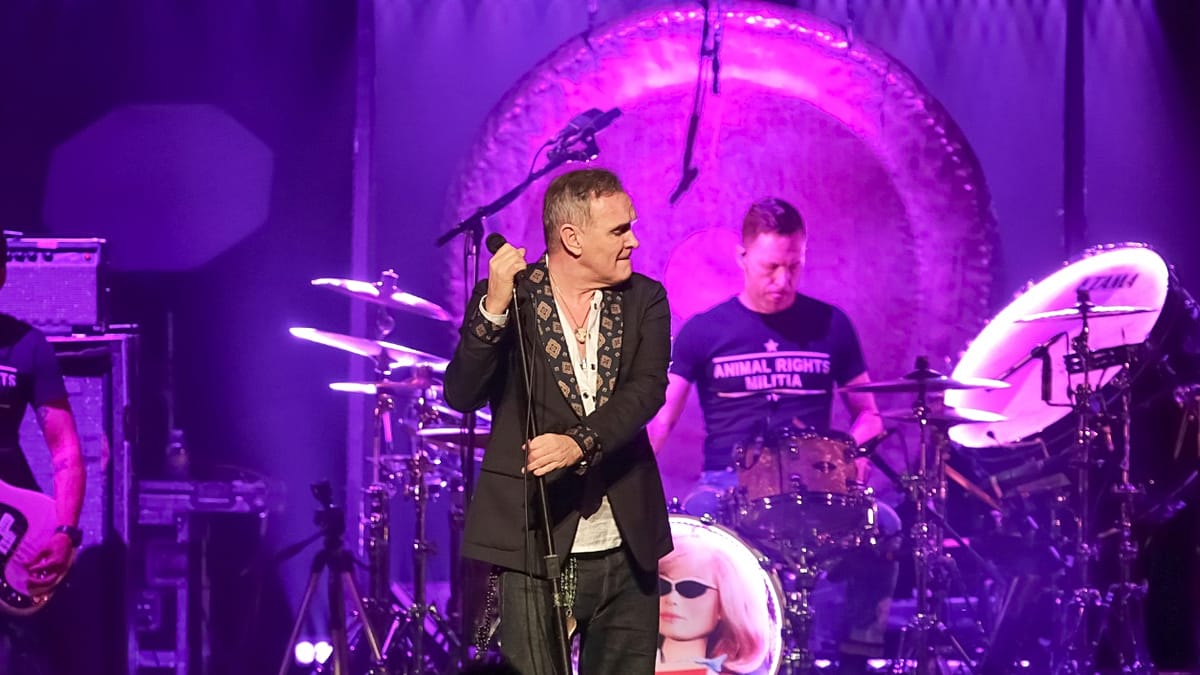
Few artists have woven animal-rights activism into their public identity as thoroughly as Morrissey. Days before his scheduled concerts in Barcelona and Madrid, the former Smiths frontman has sent a letter to Spanish Prime Minister Pedro Sánchez, urging him to push for an end to bullfighting and the running of the bulls (encierros). The letter, circulated with support from the animal-rights group PETA, revives a campaign the singer has pursued for years.
In his letter, Morrissey calls on Sánchez to use his “influence” to end a tradition that, in his view, “continues to tarnish” Spain’s international image. “Please,” he writes, “do something the whole world will love: bring this barbarity to an end.” The appeal arrives at a moment when bullfighting has returned to the centre of political debate in Spain.
Renewed Political Momentum
On 15 July, a group of 52 members of the Spanish Congress revived the citizens’ initiative “No es mi cultura”, which seeks to strip bullfighting of its status as protected cultural heritage. The proposal had already gathered more than 715,000 signatures. PETA is backing the campaign with an international petition addressed directly to Sánchez, arguing that thousands of bulls suffer “a slow and painful death” in Spanish bullrings each year and that public opposition to the shows is growing both inside and outside the country.
Morrissey’s involvement is not a one-off response to his Spanish tour. It is deeply embedded in his artistic identity. In 2014 he released “The Bullfighter Dies”, a track from his album World Peace Is None of Your Business, in which he mocks the bullfighter and repeats the refrain: “The bullfighter dies and nobody cries.” Over the years, he has used interviews, concerts, and press statements to denounce meat consumption, factory farming, animal experimentation, and bullfighting. He even asked the late Pope Francis to publicly condemn the practice.
For his followers, this commitment is an integral part of his persona; for his detractors, it is another example of his tendency to turn any public appearance into a controversy. And he rarely goes unnoticed when he visits Spain. This March, he cancelled a concert in Valencia, claiming he was in a “catatonic” state because he could not cope with the noise of the city as it prepared for the Fallas festival. The explanation fed a reputation that has followed him for years: that of an artist as brilliant as he is unreliable.
It was not an isolated incident. In 2025, he also pulled out at the last minute from a show at Las Noches del Botánico in Madrid, citing medical reasons. According to specialist outlet Muzikalia, Morrissey has now accumulated more than 350 cancelled concerts over the course of his career. Now, even before his Spanish tour gets under way, he has ensured people are talking about him again—and, once more, not just because of his music.
The broader context of animal-rights activism in Europe is also relevant. Across the continent, debates over cultural traditions versus animal welfare continue to surface, from the devastating wildfires in Andalusia that claimed 12 lives to ongoing discussions about environmental protection. Meanwhile, the EU has been signalling unilateral trade measures against China, reflecting a continent grappling with multiple challenges.
Morrissey’s campaign, while focused on Spain, resonates with a wider European audience that increasingly questions the ethics of traditional practices. Whether his latest intervention will shift political opinion in Madrid remains uncertain, but it has already reignited a conversation that shows no signs of fading.