Lisbon's MOTELX festival closed its landmark 20th edition on Saturday night, once again proving that Portugal's horror scene punches well above its weight. Over the past two decades, the festival has become a key stop for genre cinema in Europe, and this year's programme drew from across the continent and beyond, mixing established names with bold newcomers.
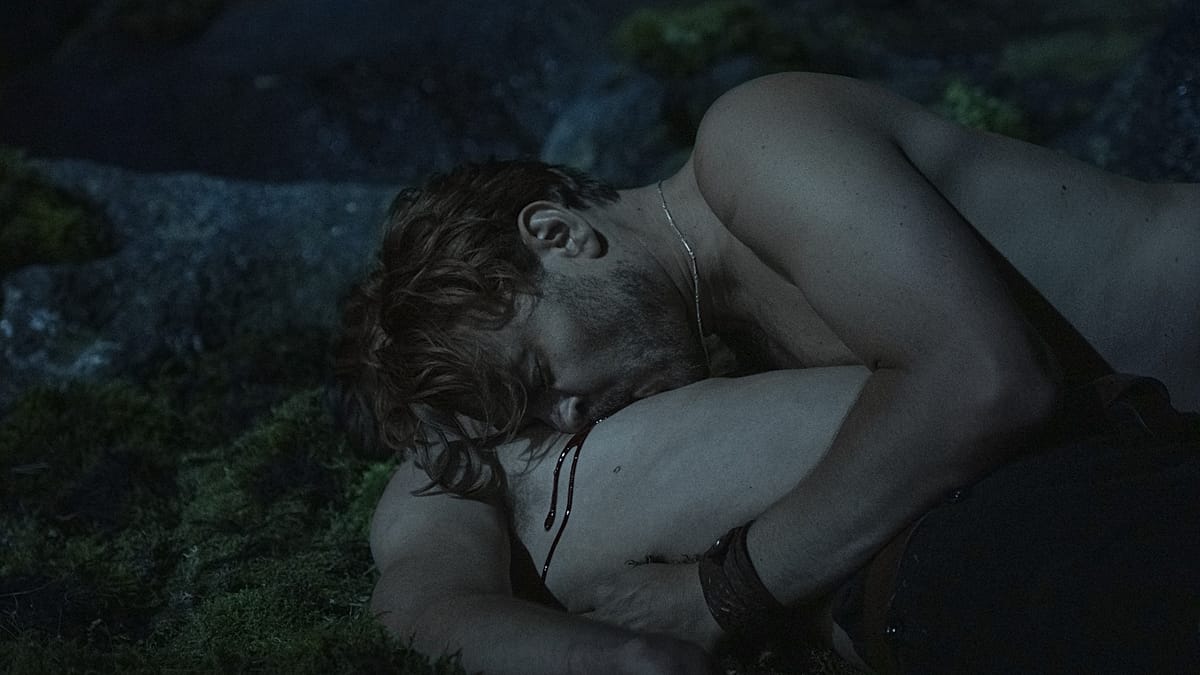
The night's biggest prize, the Méliès d'Argent for best European feature, went to No Rest for the Wicked by Danish director Kasper Kalle. Set in the Faroe Islands in the 19th century, the film weaves desire, religion, repression, beauty, love and death together with rare elegance, according to the jury. The film's stark Nordic landscapes serve as more than a backdrop; they become a character in a story about faith and human frailty.
In the short film category, the Méliès d'Argent was awarded to Mancave by Norwegian director Fredrik S. Hana. The jury, composed of Isilda Sanches, Leone Niel, and Teresa Nicolau, praised the film's ability to unsettle and surprise within a compact runtime. Both winning films will now compete for the Méliès d'Or at Sitges, Spain's premier genre festival, later this year.
Portuguese shorts shine
MOTELX also celebrated homegrown talent. The MOTELX Award for Best Portuguese Horror Short, worth €5,000, went to A Hora do Chico! by João Severo and Rafael Sá Carneiro. The jury, made up of Fernando Vasquez, José Santiago, and Sandra Henriques, highlighted the film's ambition and maturity, calling it a disturbing journey through a past that few miss, which merges, in the best possible way, with an alternative reality. The short takes a darkly imaginative look at Portugal's Estado Novo dictatorship, blending historical memory with speculative fiction.
A Special Mention was given to Consumido by [carrozo], praised for its humour and visual care, combined with narrative economy that turns the roles of predator and prey on their head. The film's clever inversion of power dynamics resonated with the jury and audiences alike.
Other awards included the MOTELX Award for Best Portuguese Horror Screenplay, which went to Hóspede by Miguel Monteiro Rico. In the festival's family-friendly Lobo Mau section, the Spanish production Lexi, directed by Portuguese filmmaker Bruno Simões, took top honours. The Audience Award was claimed by Gunman, written and directed by Argentine filmmaker Cris Tapia Marchiori.
Tributes to two pioneering women
The festival also paid tribute to two women who have shaped genre cinema in very different ways. Portuguese-Swedish filmmaker Solveig Nordlund received the Noémia Delgado Award, which recognises outstanding women in horror cinema. Nordlund, a veteran of Portuguese cinema, has long been a bridge between Scandinavian and Iberian film cultures.
Julie Corman, widow of legendary American producer and director Roger Corman, was honoured to mark the centenary of his birth. She returned to MOTELX for a masterclass largely devoted to her husband's long career, having previously accompanied him when he was a special guest at the 2017 edition. The tribute underscored the festival's commitment to celebrating the history of the genre while championing its future.
MOTELX's 20th edition once again demonstrated the vitality of European horror, with Nordic cinema taking centre stage. The festival's ability to mix international prestige with local discovery has made it a fixture on the European festival circuit, and this year's programme was no exception. As the lights went down on Saturday, audiences left with the familiar mix of adrenaline and anticipation for what the next edition will bring.