At least 49 people were killed and 58 others injured on Monday when Myanmar's military carried out an airstrike near a civilian market in Kyauktaw township, in the western state of Rakhine, according to the Arakan Army and a local rescue official. The attack, which occurred around noon, is among the deadliest in the region since the junta's crackdown on opposition began in 2021.
The Arakan Army, a powerful ethnic armed group that controls Kyauktaw and much of Rakhine, said in a statement that a fighter jet dropped two bombs near the market, killing vendors, shoppers, and passers-by. Of the 58 wounded, 22 are in critical condition. The group's statement vowed to take "effective retaliatory measures soon against the individuals and organisations directly responsible for the attacks involving deliberate airstrikes that have caused mass casualties."
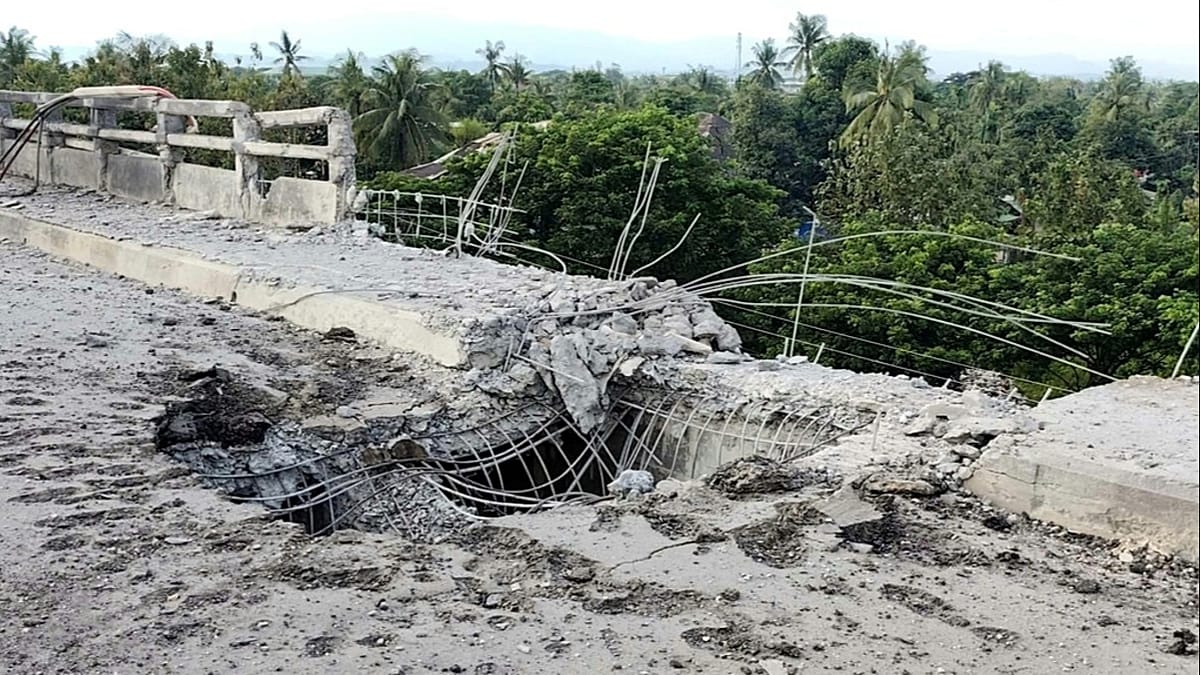
Wai Hun Aung, a senior rescue official in Rakhine, confirmed the casualty figures to the Associated Press, citing rescue workers at the scene. He described the market as the region's main wholesale hub, drawing traders and shoppers from across the state. "This is one of the most severe airstrikes in Rakhine," he said. Photos and videos posted on social media showed buildings on fire, damaged vehicles, and a nearby bridge partially destroyed.
Escalating conflict in Rakhine
The airstrike is the latest in a series of deadly attacks by Myanmar's military against pro-democracy resistance forces and ethnic armed groups across the country. Since the junta seized power from the elected government of Aung San Suu Kyi on 1 February 2021, Myanmar has been plunged into turmoil. After security forces suppressed peaceful protests with lethal force, many opponents of military rule took up arms, turning large parts of the country into conflict zones.
The Arakan Army, which is the well-trained and well-armed military wing of a movement seeking autonomy for Rakhine's ethnic minority, launched an offensive in November 2023. It has since captured a strategically important regional military headquarters and 14 of the state's 17 townships. The military has imposed severe restrictions on trade routes since fighting intensified, worsening food shortages in the region.
The junta has not commented on Monday's attack. In previous instances, it has routinely stated that it strikes only legitimate military targets and has accused resistance groups of terrorism. The lack of independent verification of the attack underscores the difficulty of reporting from conflict zones in Myanmar, where access for international media and humanitarian organisations remains severely limited.
This tragedy in Southeast Asia echoes patterns seen in other conflicts, such as the Russian strikes on civilian infrastructure in Ukraine, where markets and residential areas have been hit, causing civilian casualties. The international community has repeatedly called for restraint, but the junta has shown little willingness to alter its tactics.
For Europe, the situation in Myanmar is a reminder of the fragility of democratic transitions and the importance of supporting civil society and human rights globally. The European Union has imposed sanctions on Myanmar's military leaders and has been a vocal critic of the coup, but its influence on the ground remains limited. As the conflict grinds on, the humanitarian toll continues to mount, with thousands displaced and in need of aid.
The airstrike in Kyauktaw is a stark illustration of the brutal tactics employed by the junta in its fight to retain control. With the Arakan Army vowing retaliation, the cycle of violence is likely to escalate further, deepening the suffering of civilians caught in the crossfire.