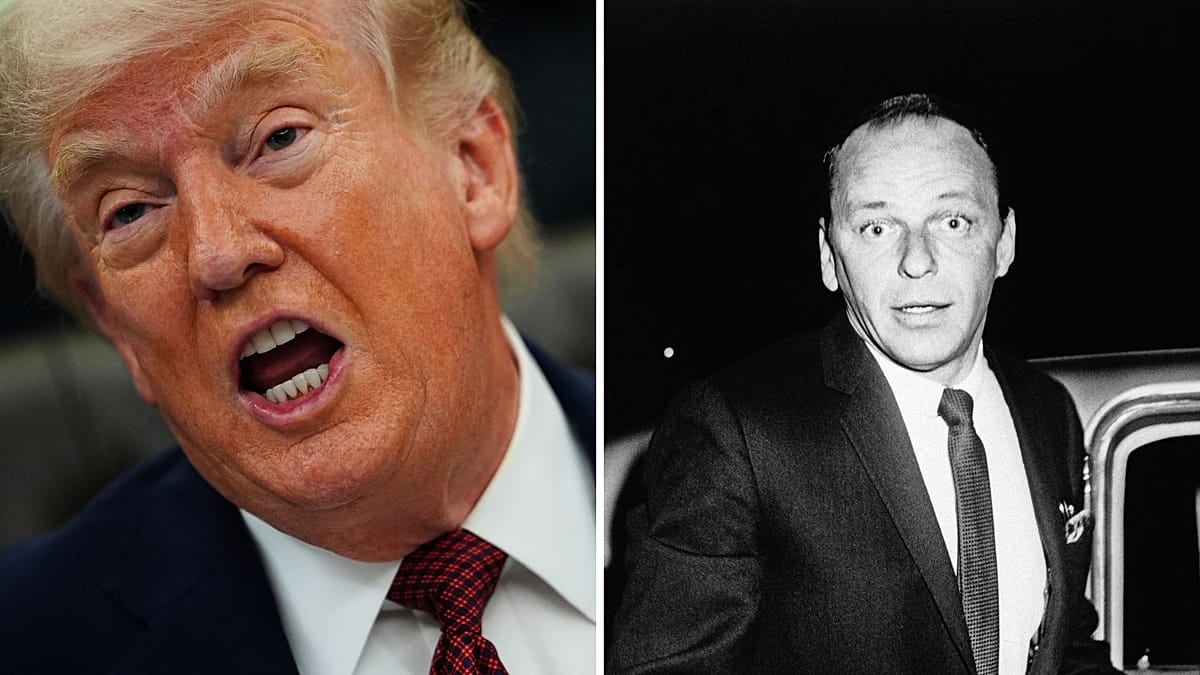
Nancy Sinatra has sharply criticised former US President Donald Trump for sharing a video clip of her late father, Frank Sinatra, performing his iconic anthem 'My Way'. In a post on X, she labelled the move a "sacrilege," reigniting a long-standing debate about the political appropriation of popular music.
The clip, posted by Trump on Truth Social without commentary, features the legendary singer delivering his signature song. The post prompted immediate speculation and concern among followers, given its late-night timing and the song's lyrical themes of finality and self-determination. Commentator Harry Sisson suggested the post might signal escalating international tensions, asking, "Why is Donald Trump posting Frank Sinatra singing 'My Way' in the middle of the night? I guess the Iran stuff is getting REALLY bad…"
A Pattern of Protest
Nancy Sinatra's objection is far from an isolated case. It represents the latest chapter in a protracted conflict between Trump's political campaigns and the music industry. When asked by a user if anything could be done to stop Trump's use of the song, Sinatra replied, "Unfortunately, no. The only people who can do something are the publishers." She also amplified comments from fans asserting that her father, who died in 1998, "loathed" Trump and would not have approved of his political actions.
This dispute underscores a broader transatlantic cultural and legal tension. While the story centres on US domestic politics, the phenomenon of politicians using music without artist consent—and the resulting public rebukes—resonates in Europe, where political campaigns also carefully curate soundtracks. The backlash from artists often generates significant media coverage across the continent, highlighting the intersection of intellectual property rights, political messaging, and artistic integrity.
The list of artists who have publicly called out Trump for using their work is extensive and includes some of the most revered names in music. Bruce Springsteen objected in 2016 to the use of 'Born in the U.S.A.', a song critiquing the treatment of Vietnam veterans, being presented as a patriotic anthem. R.E.M. expressed outrage when their songs 'Losing My Religion', 'Everybody Hurts', and 'It’s the End of the World as We Know It (And I Feel Fine)' were played at rallies. Other prominent objectors include Neil Young, The Rolling Stones, Adele, Foo Fighters, and the estate of Leonard Cohen.
In a particularly pointed 2020 case, Cohen's estate issued a statement condemning the unauthorized use of 'Hallelujah' at the Republican National Convention, noting they had explicitly denied permission. The estate wryly added that the only song they might have considered approving was Cohen's darker 'You Want It Darker'.
The Legal Landscape and European Parallels
Legally, US politicians often operate within a grey area. Campaigns can purchase blanket licensing agreements from performance rights organisations, which grant legal access to vast song libraries for events like rallies. This practice frequently leaves artists feeling powerless, as their creative work is leveraged for political causes they may oppose. The resulting public disputes, like the one initiated by Nancy Sinatra, become battles fought in the court of public opinion rather than in a court of law.
While this is a distinctly American political story, the core issue of cultural appropriation and artist rights has clear European implications. The European Union maintains robust intellectual property frameworks, and European artists are equally protective of their work's context. A similar controversy involving a European political figure using an artist's song without blessing would likely prompt a comparable outcry. Furthermore, the story touches on the powerful role of media and celebrity in modern politics, a dynamic equally prevalent in European capitals from Paris to Rome.
The incident also arrives amid a complex global moment, where political messaging is scrutinised for subtext. The posting of 'My Way'—with its lyrics "And now, the end is near / And so I face the final curtain"—during a period of heightened international tension was interpreted by some as a deliberate, ominous signal. This reflects how cultural artefacts can be weaponised in political discourse, a trend observable on both sides of the Atlantic.
Ultimately, Nancy Sinatra's denunciation is a forceful reminder that an artist's legacy is not a political prop. As the 2024 US election cycle intensifies, further clashes between campaigns and the music industry seem inevitable. These disputes consistently demonstrate that while a campaign can legally license a song, it cannot license the artist's endorsement or silence their dissent.