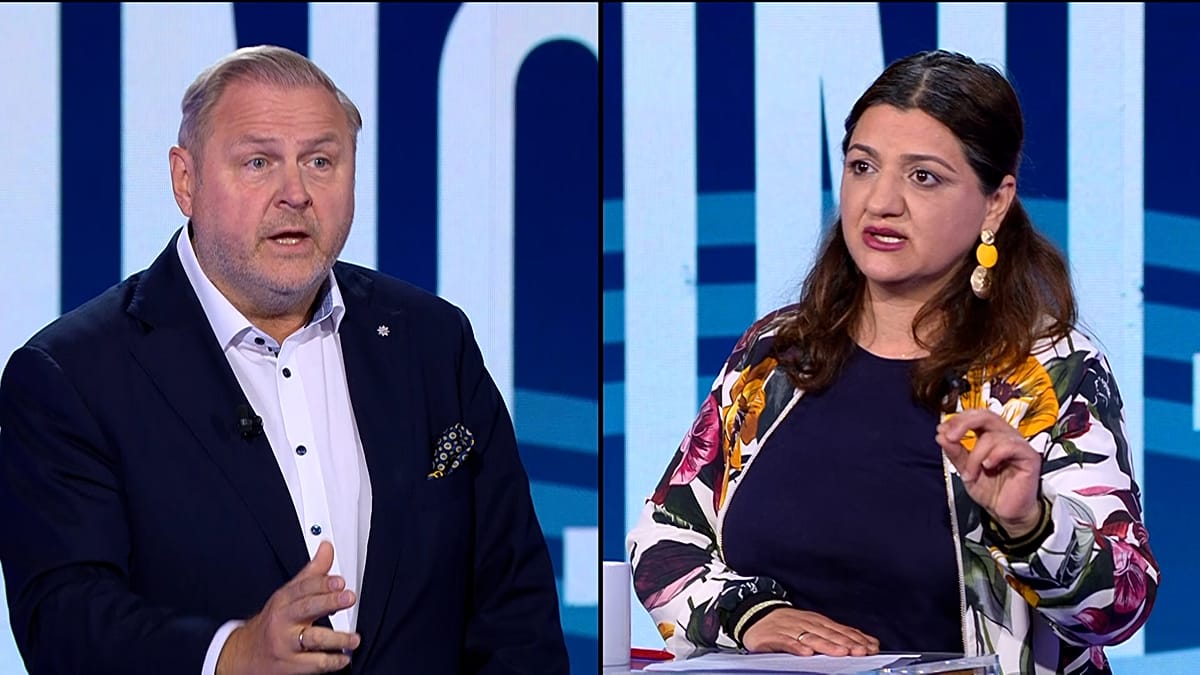
A stark ideological confrontation over Europe's global posture unfolded this week in the European Parliament's studios in Brussels. On the Euronews debate programme The Ring, two MEPs with profoundly different worldviews clashed over the European Union's appropriate response to the ongoing war in the Middle East, exposing the bloc's internal fractures as the conflict persists.
The Ring of Debate: Security vs. Anti-War Activism
The format brought together figures from opposite ends of the political and experiential spectrum. Representing a hawkish, security-focused perspective was Riho Terras, an Estonian member of the European People's Party (EPP) and a former commander of the country's defence forces. His opponent was Özlem Demirel, a German MEP from The Left group, known for her anti-militarist activism and Turkish heritage. Anchored by Méabh Mc Mahon, the programme highlighted a core dilemma for Brussels: how to project influence in a crisis where its twenty-seven member states are deeply divided.
The EU's collective position, reiterated by leaders in recent weeks, has been to advocate for "de-escalation, the protection of civilians, and restraint," carefully avoiding any suggestion of direct military involvement. However, this cautious, consensus-driven approach is being challenged from within, as the debate between Terras and Demirel made clear.
Diplomacy Without Power?
Riho Terras, drawing on his military background, argued forcefully that the EU's diplomatic appeals carry little weight without credible force to back them. "Nobody listens to somebody who does not have military means," he stated, framing military capability as a fundamental prerequisite for effective statecraft. His viewpoint reflects a growing sentiment, particularly among eastern and Baltic member states, that European security strategy must be underpinned by tangible strength, a lesson heavily informed by the war in Ukraine. This aligns with calls from figures like former Finnish Prime Minister Sanna Marin, who has urged the EU to integrate battlefield lessons into its defence planning.
In stark contrast, Özlem Demirel offered a scathing critique of military interventionism. "We know from history that military means and wars never brought democracy to this region," she asserted, connecting the violence to economic interests with the pointed remark: "Bombs fall, the stock markets rise, people die." Her position underscores a deep-seated pacifist and anti-imperialist tradition within parts of the European left, which views EU alignment with military powers as complicity in civilian suffering.
The debate transcends the immediate crisis, touching on the EU's fundamental identity as a global actor. Is it primarily a "soft power" bloc built on law and diplomacy, or must it evolve into a "hard power" capable of defending its interests and values in a volatile world? This unresolved question continues to hamper a unified European foreign policy.
Broader Implications for Europe
The discord in Brussels has tangible consequences. Beyond the geopolitical stance, the conflict's instability directly affects European interests, from energy security to regional trade. The EU's Energy Commissioner has already warned of prolonged energy price hikes stemming from the turmoil, a economic pressure felt across the continent.
Furthermore, the humanitarian dimension exerts its own pressure on European governments. Civil society movements are mobilising, as seen with the major civilian flotilla currently attempting to reach Gaza, a mission likely to force difficult diplomatic responses from European capitals. The internal EU debate also occurs against a backdrop of other foreign policy challenges, including the bloc's fraught relationship with the Syrian regime, which is pursuing economic reintegration via Gulf states despite European sanctions.
This episode of The Ring, produced by Luis Albertos and Amaia Echevarria and edited by Vassilis Glynos, serves as a microcosm of the larger debate paralysing the Council of the EU and the European External Action Service. With national capitals from Paris to Warsaw holding divergent historical ties and strategic priorities, forging a common line remains exceptionally difficult. The clash between Terras's realpolitik and Demirel's principled opposition illustrates that for the European Union, defining its role in the Middle East conflict is as much about resolving internal contradictions as it is about addressing external crises.