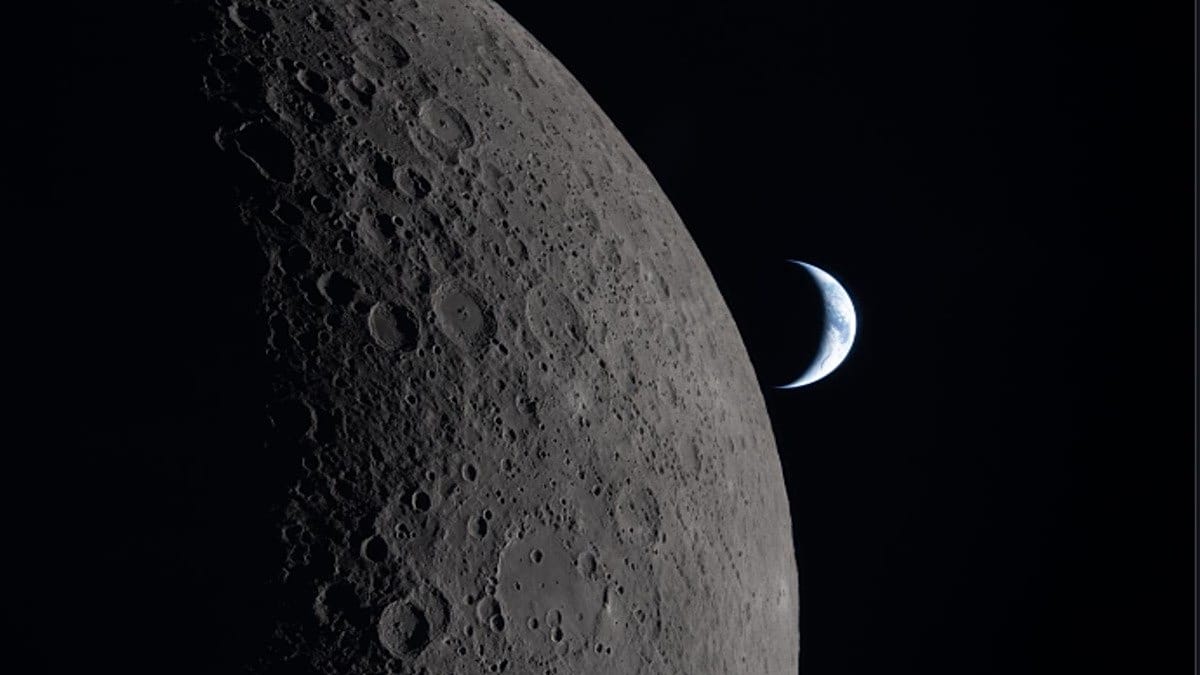
As human spaceflight enters a new era with missions like Artemis II aiming to return astronauts to the lunar surface, the practical challenges of sustaining a long-term presence are coming into sharp focus. A central obstacle is power. While solar energy has propelled satellites and the International Space Station for decades, NASA now argues it is insufficient for the harsh realities of the Moon. In response, the US space agency is pursuing an ambitious plan to deploy nuclear fission reactors on the lunar surface within this decade.
The initiative, known as the Fission Surface Power Project, targets the 2030s for operational deployment, with plans to launch a demonstration reactor into orbit as early as 2028. This endeavour requires a formidable partnership between NASA, the US Department of Energy, and the Department of Defence. The White House Office of Science and Technology Policy (OSTP) has already issued new guidelines to develop a cohesive federal roadmap for space nuclear technology, signalling high-level political support.
The Lunar Energy Conundrum
The fundamental limitation of solar power on the Moon is the lunar night. Lasting approximately 14 Earth days, this prolonged period of darkness and extreme cold renders solar panels useless. Battery technology, while advancing, currently lacks the capacity and durability to power an entire base through such an extended blackout. This constraint would severely limit scientific operations, life support, and resource extraction for any sustained habitat.
Furthermore, some of the most scientifically valuable locations, like the permanently shadowed craters at the lunar south pole, never receive direct sunlight. These regions are believed to harbour significant deposits of water ice—a critical resource for life support and rocket fuel. Exploring and utilising these areas is a key goal of programmes like Artemis, but it is impossible with purely solar-dependent technology. A reliable, location-independent power source is therefore not just an upgrade; it is a prerequisite for a permanent lunar foothold.
In contrast, a compact nuclear fission reactor could provide continuous, abundant power for a decade or more, irrespective of sunlight or local conditions. The proposed design for the lunar reactor aims for a capacity of 40 to 100 kilowatts of electricity—enough to sustain a small habitat, scientific laboratories, and equipment for processing local resources like regolith or water ice for several years.
Strategic and Technological Implications
The push for nuclear power in space extends beyond mere habitability. NASA Administrator Jared Isaacman underscored the strategic imperative, stating on social media, "The time has come for America to get underway on nuclear power in space." The OSTP echoed this, noting that "Nuclear power in space will give us the sustained electricity, heating, and propulsion essential to a permanent presence on the Moon, Mars, and beyond."
Nuclear electric propulsion, enabled by such reactors, could also revolutionise deep-space travel for robotic and crewed missions, allowing spacecraft to undertake complex, long-duration journeys without the crippling risk of fuel depletion. The lunar surface is envisioned as a crucial test bed for these technologies before they are deployed for the more daunting challenge of a crewed mission to Mars.
This technological race has a clear geopolitical dimension. The United States views the development of advanced space nuclear systems as vital to maintaining its competitive edge against other spacefaring nations, notably China and Russia, who have their own lunar ambitions. Success in this domain would cement leadership in the next chapter of space exploration.
For Europe, which contributes significantly to global space science through the European Space Agency (ESA) and national programmes in France, Germany, and Italy, NASA's pivot presents both a challenge and an opportunity. European institutions are deeply involved in lunar exploration, including the Artemis programme and the planned Moon Village concept. The energy question is universal. While Europe has historically focused on solar and fuel cell technologies for space, the potential of nuclear power for deep-space missions and bases may necessitate new strategic discussions and research partnerships across the Atlantic.
The development also intersects with broader energy security debates on Earth. As the EU's Energy Chief has warned of prolonged energy price volatility linked to global conflicts, the drive for resilient, off-grid power sources—whether in remote terrestrial locations or on another celestial body—highlights a common technological frontier. The rigorous safety and regulatory frameworks required for launching and operating nuclear systems in space could also inform best practices for advanced nuclear technologies on Earth.
NASA's lunar reactor plan marks a definitive shift in the philosophy of space exploration. It moves the goal from temporary visits to permanent settlement, acknowledging that the energy needs of an off-world outpost mirror those of a remote terrestrial community: they must be reliable, dense, and independent of intermittent sources. The success or failure of this audacious engineering project will likely determine the pace and scope of humanity's expansion into the solar system for generations to come.



