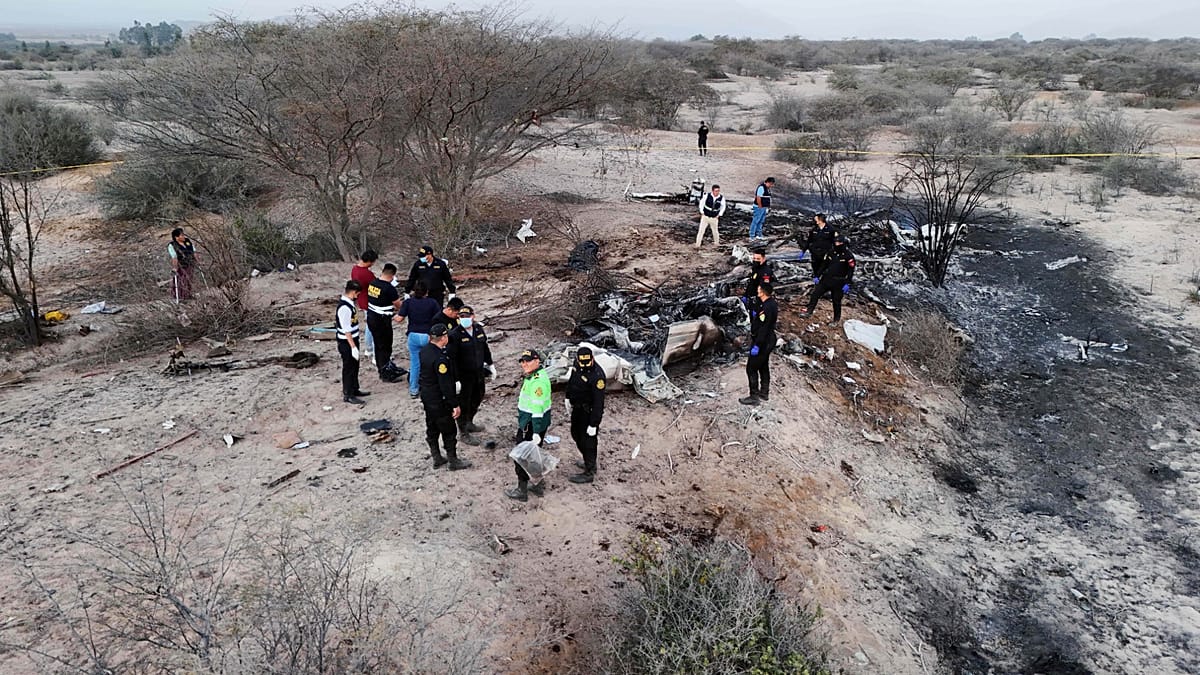
A light aircraft carrying tourists to view Peru's famous Nazca Lines crashed on Saturday, killing all 13 people on board, according to Peruvian authorities and local media. The Cessna Caravan C-208, operated by the Peruvian airline Aerodiana, went down near the town of Socos shortly after reporting an emergency to the Nazca airfield control tower.
The plane had taken off from Pisco airport at around 12:10 pm local time for a sightseeing flight over the ancient geoglyphs, which are etched into the desert floor of southern Peru and date back some 2,000 years. At approximately 1 pm, the crew radioed that they were in trouble, and all contact was lost, the Ministry of Transport and Communications said in a statement.
Police Major Jorge Andrade told reporters at the scene, as reported by AFP: "We have information that 11 passengers and two crew members have died. Given the severity of the accident, there are no survivors. We have recovered four bodies so far."
The victims included seven Italian nationals, two Germans, and two Spaniards, according to the state-owned Peruvian news agency Andina. The two pilots were Peruvian. The crash has sent shockwaves through the tight-knit European travel community, particularly in Italy, where the news dominated headlines on Sunday.
European tourists at the heart of the tragedy
The high proportion of European passengers underscores the popularity of the Nazca Lines as a destination for travellers from the continent. Italy, Germany, and Spain are among the top source markets for Peru's tourism industry, with many visitors combining a trip to the archaeological wonder with other South American destinations.
Italian authorities have confirmed they are in contact with Peruvian officials to assist with the repatriation of the victims' remains. The Italian foreign ministry said it had activated its crisis unit, while the German and Spanish embassies in Lima have also offered consular support to the families of the deceased.
The crash is a stark reminder of the risks associated with small aircraft operations in remote areas. Sightseeing flights over the Nazca Lines are a major draw for tourists, but they have a history of accidents. In 2016, a similar crash killed four people, and in 2010, a plane carrying tourists crashed, killing two.
Local authorities had temporarily suspended sightseeing flights on Friday due to wind speeds exceeding 40 kilometres per hour, but operations resumed on Saturday morning. The exact cause of the crash remains under investigation, with Peru's aviation authority sending a team to the site.
The Nazca Lines, a UNESCO World Heritage site, are best viewed from the air, which is why these flights are so popular. The geoglyphs, which include figures of animals, plants, and geometric shapes, were created by the Nazca culture between 500 BC and 500 AD. They are so vast that they are only fully visible from an elevated vantage point.
For the European families affected, the tragedy is a devastating blow. Italy's Ferragosto holiday season is in full swing, and many Italians are travelling abroad. The loss of seven Italian citizens in a single accident is a rare and painful event.
As the investigation unfolds, questions are being raised about safety standards for tourist flights in Peru. The country's civil aviation authority has pledged a thorough inquiry, and the airline Aerodiana has expressed its condolences to the families.
This tragedy also highlights the broader issue of aviation safety in the region. While commercial airlines in Europe adhere to strict regulations, smaller operators in other parts of the world may not always meet the same standards. European tourists are often advised to check the safety records of local carriers before booking such excursions.
The crash has also drawn attention to the growing popularity of adventure tourism in South America, which has seen a surge in European visitors in recent years. London's top ranking for tourist welcome shows how much Europeans value travel, but this incident serves as a sombre reminder of the potential dangers.
Peru's president expressed his condolences on social media, saying, "We deeply regret the loss of lives in this tragic accident. Our thoughts are with the families of the victims, both Peruvian and foreign."
The recovery operation is ongoing, and authorities have set up a crisis centre in Nazca to assist relatives. The site of the crash has been cordoned off as investigators work to piece together what went wrong.
For now, the focus is on mourning the dead and supporting the families. But the broader questions about safety and regulation will likely persist, as will the memories of a beautiful but fragile wonder that has now claimed more lives.