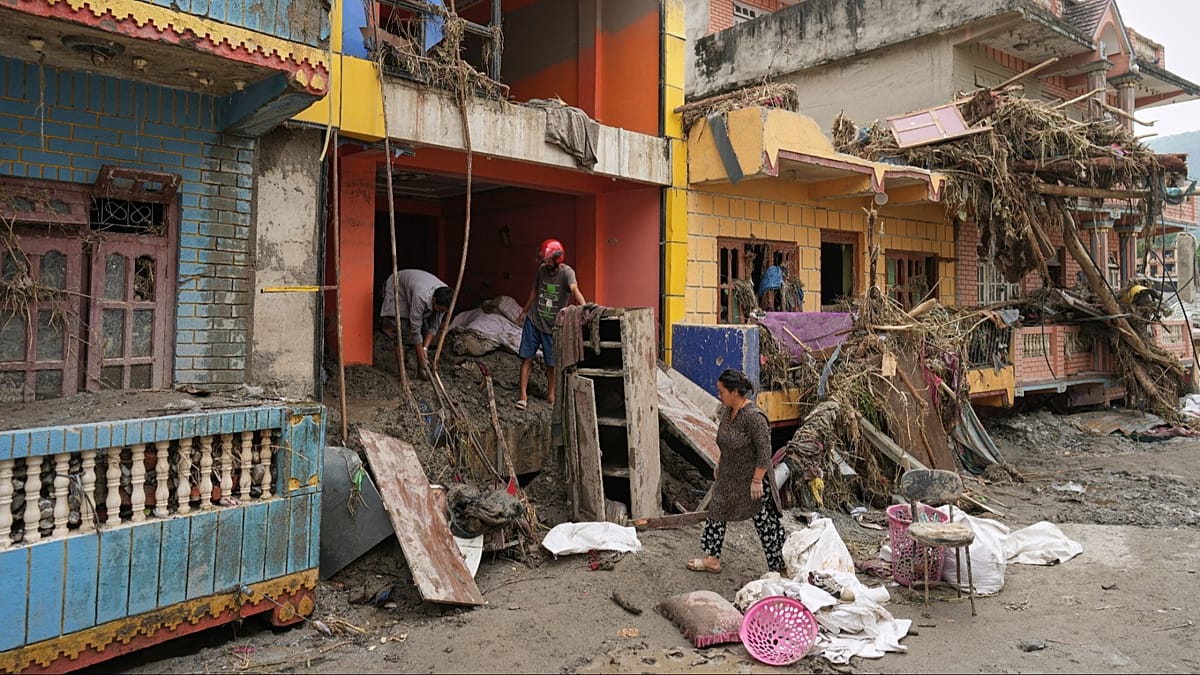
The scale of the disaster unfolding in Nepal and Tibet became clearer on Friday as the number of missing people surpassed 2,400, a figure that underscores the immense human cost of the flash floods triggered by a glacial collapse. Emergency teams have so far recovered 586 bodies, with some victims carried as far downstream as India.
Rescuers are working through thick mud and debris, even as the threat of further flooding looms. Nepal's disaster authority has added 933 hydropower workers to the missing list, which already included trekkers and pilgrims heading to Tibet's sacred Mount Kailash.
In Kathmandu, hospitals have become the focal point of a desperate search. Relatives crowd the corridors, clutching photographs and names of the missing, hoping for any news. Samjhana Thing, 27, told AFP about her brother: "Today is the third day and we don't know anything. Hopefully he is in a safe place. We lost everything. He is our everything."
Glacial collapse and a new threat
The US Geological Survey has attributed the catastrophe to a glacial collapse that unleashed a vast torrent of ice and debris, making it the deadliest natural disaster for Nepal since the 2015 earthquake. The deluge also created unstable lakes, one of which now poses a direct danger to rescue teams. Nepali police have urged all personnel to "immediately move to a safe location" after receiving reports of another dam burst on the Tibetan side.
In Tibet, China suspended its rescue operation in the hardest-hit area of Gyirong on Friday due to the risk of renewed flooding, before later declaring the threat had eased. State broadcaster CCTV reported that a lake formed by debris had begun overflowing toward rescue teams, but the water level subsequently dropped, allowing operations to resume "in an orderly manner." Chinese President Xi Jinping, who chaired a meeting on the rescue efforts, has offered Beijing's assistance to Nepal.
The disaster has drawn international attention, with scientists confirming the glacial collapse as the likely trigger. For European readers, this event is a stark reminder of the fragility of mountain ecosystems and the global implications of climate change, which is increasing the frequency of such extreme events.
Rescue efforts and trapped workers
Emergency teams have been racing against time to reach survivors in affected zones, where food and water supplies are running low. The Nepali military has located people trapped inside a tunnel at the Trishuli 3A hydropower project, where they are working to find a way in. "Two helicopters have been dispatched but it is challenging because it is tough to even locate the entry points of the tunnel," army spokesman Raja Ram Basnet told AFP. So far, 350 workers and residents have been brought to safety, but more than 100 remain trapped in the same area.
Survivors describe a disaster that struck with terrifying speed. Buddha Tamang, a worker at a dam along the Trishuli valley, told AFP he survived only because he was inside a tunnel when the flood hit. "The senior officers working on the other side, they were all swept away," he said, after being airlifted to safety on Thursday following more than 24 hours marooned.
The Nepal army's rescue efforts have been heroic, but the scale of the devastation is immense. The International Red Cross estimates that at least 93,000 people have been affected and are in "great need."
Aid begins to arrive, but children are most vulnerable
Aid has started to reach some survivors, with makeshift army relief centres providing shelter. Children separated from their families are being cared for as efforts to reunite them continue. UNICEF has stated that at least 17,000 children are in urgent need of humanitarian assistance, with 18 schools destroyed and another 20 damaged.
For European travellers and aid organisations, this crisis highlights the need for robust disaster preparedness in mountainous regions. The essential guidance for European travellers is being updated as the situation evolves. The international community, including the European Union, is closely monitoring the situation and considering how to support the relief efforts.
As the search for the missing continues, the full extent of the tragedy is only beginning to emerge. The coming days will be critical for those still trapped and for the families waiting for news.