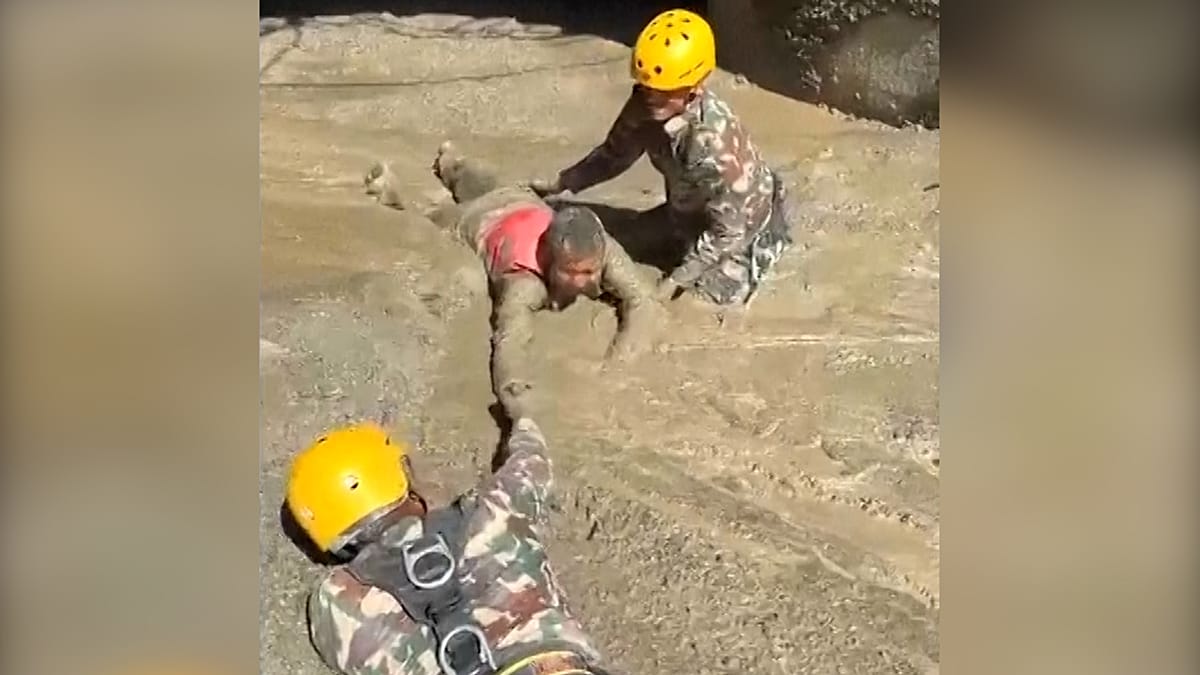
Kathmandu — Nepal's army has pulled hundreds of people to safety from a flooded hydropower tunnel in the Himalayan nation's worst disaster in years, even as the search continues for more than 1,500 people still unaccounted for. The rescue operation, which involved soldiers wading through waist-deep water and debris, has been underway since the weekend, when torrential rain triggered a glacial lake outburst that sent a wall of water and mud down the Bhote Koshi river valley.
The tunnel, part of a hydropower project near the Chinese border, had become a trap for workers and villagers who sought shelter from the sudden flood. According to the Nepali army, at least 400 people were rescued from the tunnel alone, many of them suffering from hypothermia and minor injuries. The operation has been complicated by damaged roads and landslides that have cut off several villages in the district of Sindhupalchok.
Diaspora mourns and demands action
As the rescue effort continued, the Nepali diaspora in New York held vigils over the weekend, lighting candles and placing marigold garlands outside the consulate. Many of those gathered had relatives in the affected region and expressed frustration at the slow pace of official communication. “We are here because we cannot be there,” said one protester, who gave her name as Sunita. “Our families are waiting for news, and the government is not telling us anything.”
The disaster has also resonated across Europe, where a significant Nepali community lives and works, particularly in the United Kingdom, Portugal, and Germany. In London, a small vigil was held outside the Nepali embassy, and community leaders have called on the British government to offer technical assistance for search-and-rescue operations. The European Union has not yet issued an official statement, but several member states have expressed readiness to help if requested.
Scientists have warned that the flood was likely triggered by the collapse of a glacial lake, a phenomenon increasingly common as global temperatures rise. A preliminary analysis by glaciologists at the University of Zurich suggests that the lake, which had been growing for decades, breached its moraine dam after a period of intense rainfall. The findings echo earlier research on the region's vulnerability, and experts say that similar events are likely to become more frequent in the coming years.
The Nepali government has faced criticism for its slow response and for allowing construction in high-risk zones. The hydropower tunnel, which was part of a project financed by a Chinese company, had been built despite warnings from local environmental groups about the danger of glacial floods. “This is a man-made tragedy on top of a natural one,” said a spokesperson for the Nepal Water Conservation Foundation. “We have known about these risks for decades, and we have done almost nothing to mitigate them.”
Meanwhile, the search for the missing continues, with the army using helicopters and drones to survey the debris-strewn valley. The official death toll stands at 14, but officials expect it to rise as rescue teams reach more remote areas. The government has declared a state of emergency in the affected districts and has promised compensation for the families of the victims.
For the diaspora, the tragedy has also raised questions about the safety of remittance-dependent communities back home. Many Nepalis who work abroad, including in Europe, send money to relatives in the very regions now devastated. “We work so hard to build a future, and then nature takes it all away,” said a Nepali nurse in Lisbon, who asked not to be named. “We need to think about how we can help our country become more resilient.”
As the rescue operation enters its fourth day, the focus is shifting to the long-term recovery. The flood has destroyed bridges, roads, and farmland, and thousands of people are now homeless. International aid agencies, including the Red Cross, have begun distributing food and tents, but they warn that the scale of the disaster is far beyond what local authorities can handle alone.
For now, the vigils in New York and London are a reminder that the impact of this disaster extends far beyond the Himalayas. The Nepali diaspora, which numbers in the hundreds of thousands across Europe, is mobilizing to raise funds and awareness. But as one mourner in New York put it, “We can light all the candles in the world, but what we really need is for our leaders to act.”