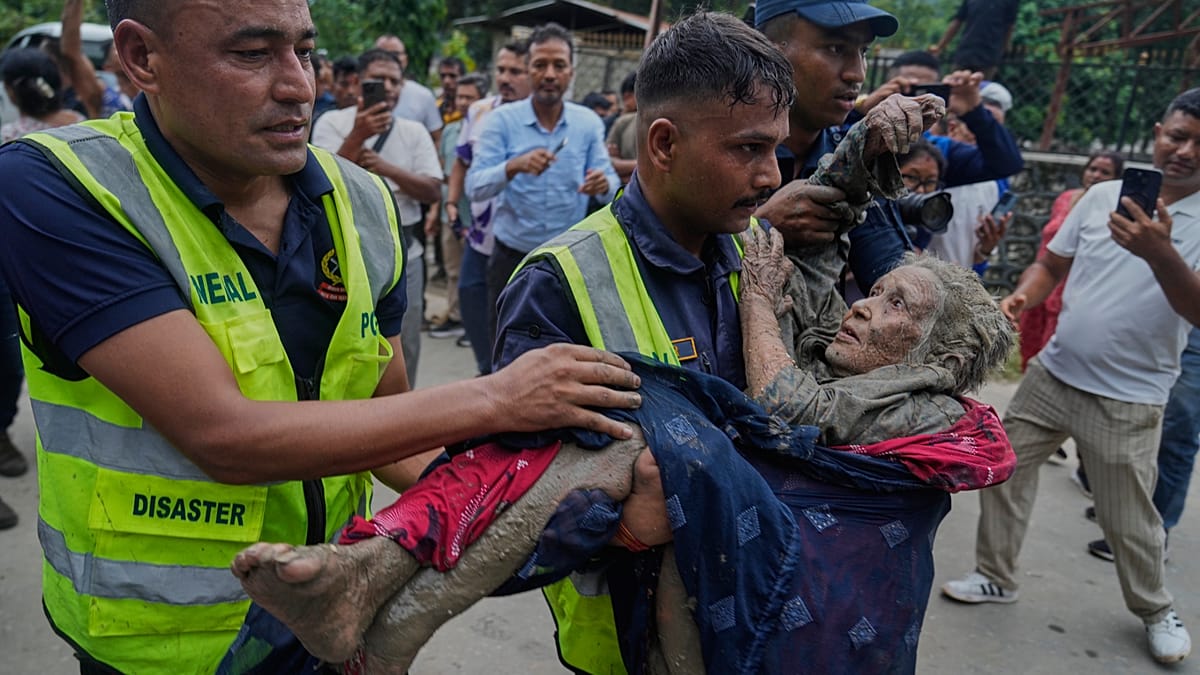
Severe flooding and landslides in Nepal have thrown travel plans into chaos, with hundreds of foreign tourists reported unaccounted for. The Nepal Tourism Board said on Thursday that 644 tourists were out of contact, including 517 foreign nationals. Among them are visitors from 19 European countries, as well as China, the United States and Australia.
The disaster has hit hardest in Rasuwa and neighbouring Nuwakot, north of Kathmandu near the Tibetan border. These areas are popular with trekkers and adventure travellers, and the disruption comes at a peak season for tourism.
Nepal has long been a magnet for backpackers and hikers drawn to its dramatic Himalayan scenery, relatively low costs, and a mix of mountain trekking, historic cities, and Buddhist and Hindu culture. The country is home to eight of the world's ten highest peaks, including Mount Everest, and official figures show 1.16 million international tourists visited in 2025, with more than 165,000 going trekking.
What should travellers in Nepal do?
European governments and other foreign embassies are advising travellers to follow instructions from Nepalese authorities and closely monitor local conditions. The embassies of Finland, France and the UK, together with Australia, Norway, Switzerland and the EU Delegation in Nepal, issued a joint statement urging people in affected areas to "follow the guidance of local authorities and official safety advisories as the situation continues to evolve."
France warns that flooding and landslides can cut telephone and internet connections for several days. Travellers are advised to check with local authorities before making journeys and to follow their instructions. The Netherlands advises people caught in flooding to move to higher ground, avoid bridges, and not attempt to walk or swim through floodwater. Travellers should be prepared to evacuate and keep passports, medication and other essential belongings together in a waterproof bag.
Foreign travellers should also:
- Avoid flood and landslide-affected areas and do not travel simply to observe the damage.
- Stay away from rivers, riverbanks, bridges, unstable slopes and damaged buildings.
- Check local weather, flood warnings and road conditions before travelling.
- Contact their tour operator, trekking company, guide or accommodation provider before attempting to change location.
- Keep relatives or friends informed of their location and condition, preferably by text or online if telephone networks are congested.
- Keep phones charged and passports, medication and essential documents readily accessible.
- Contact their travel insurer as soon as possible if their journey has been disrupted or they require medical treatment, evacuation or repatriation.
Nepal's Department of Hydrology and Meteorology provides weather and flood information through the toll-free number 1155, with callers able to select weather forecasts or early flood warnings.
Nepal emergency numbers
- Police: 100
- Fire: 101
- Ambulance: 102
- Tourist Police: 1144
- Flood and extreme weather information: 1155
The Tourist Police service is particularly useful for foreign visitors and has officers with English-language skills.
Help for EU nationals
EU citizens requiring consular help should first contact their own country's embassy, consulate or foreign ministry. Not every EU country has an embassy in Nepal, but under EU consular protection rules, an EU citizen whose own country is not represented can seek assistance from the embassy or consulate of another EU member state. Belgium's foreign ministry, for example, identifies Germany, Finland and France as EU countries with embassies in Kathmandu.
France's embassy in Kathmandu can be reached at +977 980 101 7201. France is asking its citizens to follow local-authority instructions and, where possible, tell relatives that they are safe.
This is not the first time Nepal has faced such devastation. Earlier this year, a glacial collapse in Nepal and Tibet left hundreds missing, and flash floods at the China border killed eight people. The current crisis underscores the fragility of the region's infrastructure in the face of extreme weather.
For European travellers, the key is to stay calm, stay informed, and follow official instructions. As the situation evolves, embassies are working to provide updates and support. Those with loved ones in Nepal should keep in touch through text or social media if phone lines are congested.