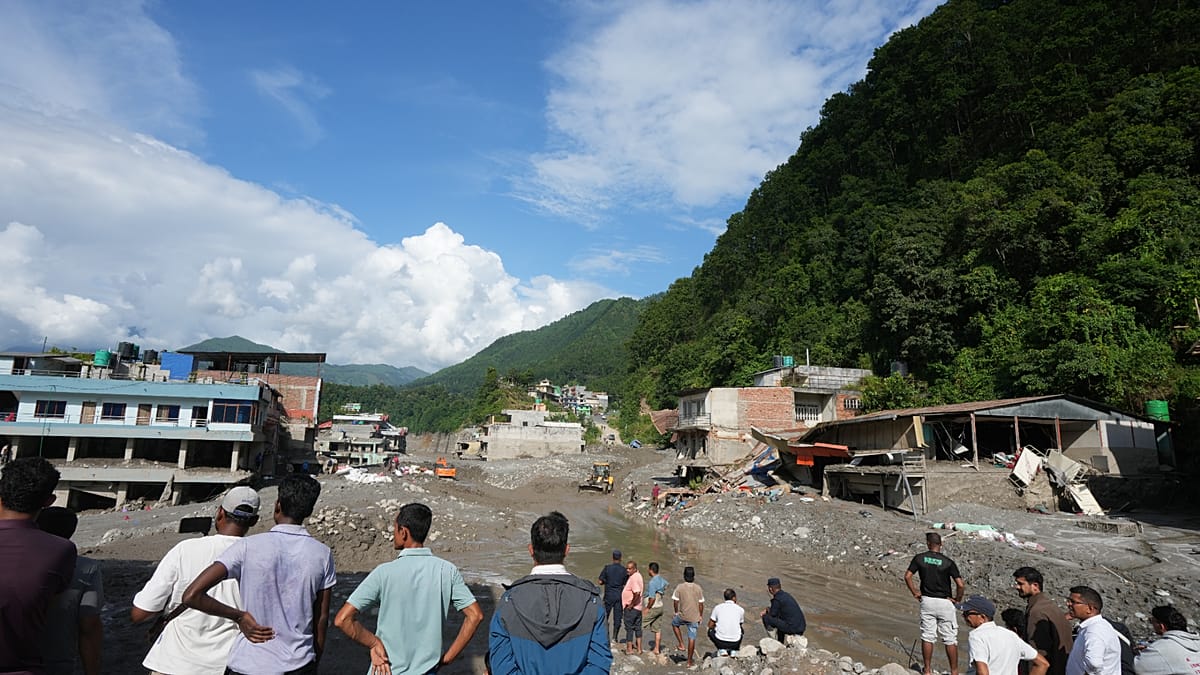
Rescue teams in Nepal and Tibet continued their search for survivors on Sunday, three days after flash floods devastated communities along the Himalayan border. The death toll has now surpassed 900, with thousands more unaccounted for, according to officials in Kathmandu.
The floods, triggered by intense monsoon rains, swept through villages and towns in the early hours of Friday, catching many residents asleep. Entire settlements were submerged or washed away, and infrastructure including roads, bridges, and power lines was destroyed, leaving several districts completely cut off.
Aid delivery by air
With ground access blocked by landslides and damaged roads, the Nepalese army has been using helicopters to airlift food, water, and medical supplies to the worst-affected areas. In Tibet, Chinese authorities have deployed similar operations, though the scale of the disaster there remains less clear.
“We are racing against time,” said a spokesperson for Nepal’s National Disaster Risk Reduction and Management Authority. “The priority is to reach every isolated community and provide basic necessities.”
In Kathmandu, hospitals have been overwhelmed with the injured, while families have posted photographs of missing relatives on walls outside major medical centers, hoping for news. The emotional toll is visible across the capital, where many have gathered to await updates.
The disaster has drawn international attention, with offers of assistance coming from several countries, including India and China. The European Union has expressed condolences and pledged support for relief efforts, though no formal aid package has yet been announced.
Climate concerns
Scientists point to climate change as a factor intensifying monsoon rains in the region, making such catastrophic floods more frequent. This event echoes previous Himalayan disasters, such as the 2021 floods in Uttarakhand, and raises questions about preparedness in mountainous areas across Asia.
For Europeans, the tragedy is a reminder of the global nature of climate risks. As Spain's record heat deaths show, extreme weather is a growing concern closer to home, and international cooperation on climate adaptation is more urgent than ever.
Meanwhile, the search for survivors continues, with hopes fading as time passes. Local officials have warned that the death toll could rise further as debris is cleared and remote areas are reached.
In a related development, a temple in south London held a prayer service for missing members of the Nepali diaspora, reflecting the global reach of this tragedy. Many families in Europe are anxiously awaiting news of loved ones.
The Nepalese government has declared a national day of mourning for Wednesday, and international aid agencies are mobilizing to support the relief effort. The full scale of the destruction is still being assessed, but the human cost is already immense.