In the West, death is often met with silence—a quiet room, a somber procession, a hushed gathering. But in the ancient city of Bhaktapur, Nepal, the annual Sa: Paru festival turns that notion on its head, replacing silence with the thunder of drums, the clang of bells, and the joyful energy of a community in motion.
Sa: Paru, also known as Gai Jatra, is celebrated by the Newar people across the Kathmandu Valley. It honors those who have died in the past year, but rather than mourning, it offers a vibrant farewell as the departed soul is believed to move toward salvation. The festival's atmosphere is more carnival than funeral, a deliberate inversion of Western grief.
“When people pass away in western societies, people wear black. They grieve in silence – it's a very somber moment,” says Ajay Bahadur Pradhanang, chairman of The Nanee, a boutique hotel in Bhaktapur. “But in Nepal, everybody comes together and it's turned into this carnival, a real joyous moment of farewell.”
A community effort
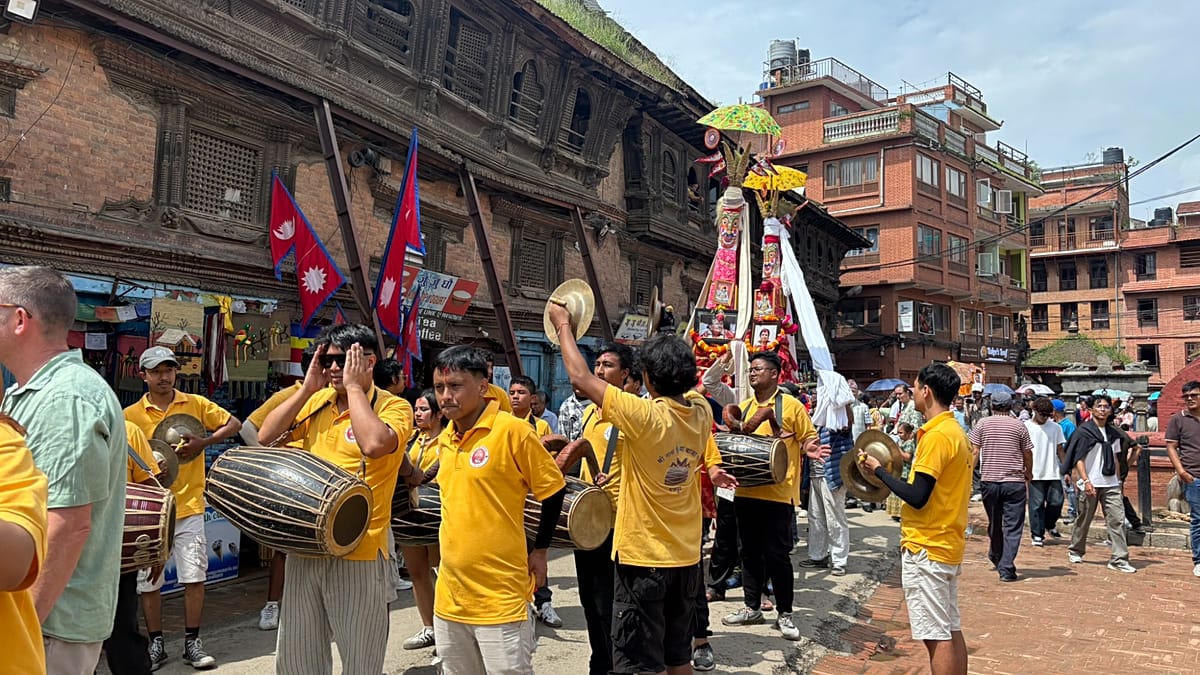
In the days leading up to the main event, which falls after the full moon in the tenth month of Nepal's lunisolar calendar (usually August or September), neighbors gather to construct taha: sa—intricate bamboo structures that have replaced the cows traditionally used in the procession. Each structure is wrapped in cloth (red for women, white for men), topped with a painted portrait of a cow, and adorned with photographs of the deceased, depictions of Shiva, and an umbrella to shield from sun and rain.
Building a taha: sa is no small feat. It requires skill, coordination, and many hands. “For Sa: Paru, we have to have certain rituals, and these would be impossible if it was just me, or just my family, without the wider community to help us,” Ajay notes. The festival is a testament to the idea that it takes a village not just to raise a child, but also to honor a life's end.
On the festival morning, the streets of Bhaktapur fill with processions of taha: sa, accompanied by music, drums, bells, and the rhythmic clash of sticks as pairs perform the Ghintang Ghisi dance. Each group seems to move to its own beat—some rush, making the structures sway like drunken cows; others march slowly, pausing to dance. As the streets clog, the crowd moves as one, a sea of color and sound.
Attire is wonderfully eclectic: traditional dress mixes with football kits and Hawaiian shirts. “Come as you are,” the festival seems to say, and everyone is welcome to join, provided they don't mind crowds.
Mano Dhaubhadel, a Nepali living in the US who returned for the festival after losing his younger brother, describes it as “something you don't see anywhere else in the world. The culture here is just magnificent, and it's there for everyone to enjoy, not just Newars. The best way to learn is to get involved.”
For those seeking deeper understanding, guides like Peepul Subedi, a priest and PhD student, offer context. “The whole city comes together for this festival, and every household who has a family member who has passed away in the past year will take out this sort of structure,” he explains. “It represents the message that everyone has to die, and all of us are going through the same sort of sorrow – that's life. We're not celebrating death by dancing and singing, we are celebrating the fact that the departed soul is moving towards salvation.”
While most of the Kathmandu Valley celebrates for a single day, Bhaktapur extends the festivities over eight days, with different dance performances throughout the city. The origins of Sa: Paru are believed to date back to the 14th century, with King Pratap Malla often credited for expanding the festival to include satirical elements, intended to cheer up his wife after the death of their son.
For European travelers, Sa: Paru offers a profound cultural contrast—a chance to witness how another society approaches death with celebration rather than solemnity. It's a reminder that grief is universal, but its expression is wonderfully diverse. As Ajay puts it, “It's a real joyous moment of farewell.”
If you're planning a trip to Nepal, consider timing it to experience this unique festival. And for more on how different cultures handle loss, you might also be interested in Braga's Paraíso festival, which similarly uses music and art to honor heritage and memory.