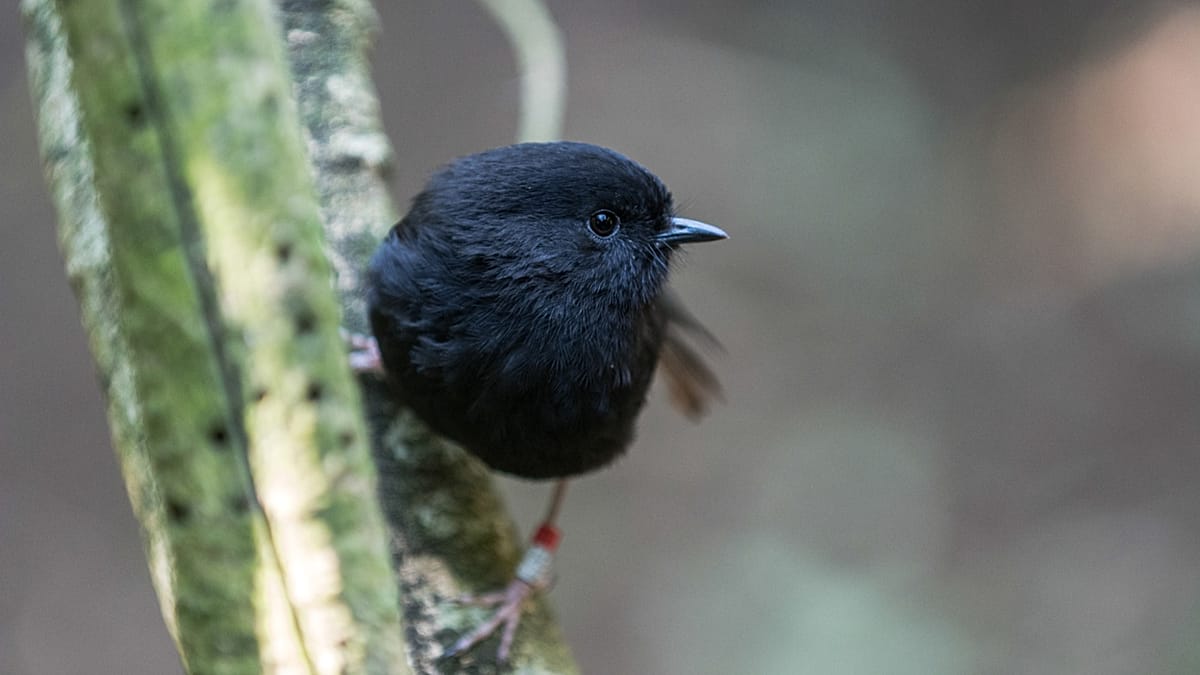
The black robin, a critically endangered species that once teetered on the very edge of existence, has been chosen as New Zealand's Bird of the Year. More than 105,000 people cast ballots in the annual poll, a record for the competition, with the black robin securing over 26,000 votes. It finished ahead of the kakapo and the kārearea, the New Zealand falcon.
The bird is found only on the Chatham Islands, an archipelago some 800 kilometres east of New Zealand's South Island. Its survival story is one of the most striking in modern conservation. In 1980, the entire population amounted to five individuals, including a single breeding female. Through intensive intervention, numbers have climbed to roughly 350.
A contest that has grown far beyond a simple poll
Run by the conservation group Forest & Bird, the Bird of the Year competition began in 2005 as a modest email survey. It has since evolved into a national event, with organised campaign teams, social-media skirmishes and a proliferation of memes. The primary aim is to draw attention to New Zealand's native species and the pressures they face.
The team behind the black robin's campaign is now pushing for a third habitat for the species, hoping to reinforce and expand a population that remains dangerously concentrated.
Despite the name, the black robin is not a close relative of the European robin familiar to gardens across Britain and the continent. The two differ sharply in appearance: adult black robins are almost entirely black, whereas European robins have brown plumage and a characteristic orange-red breast. According to New Zealand Birds Online, the black robin belongs to the Australasian robin family and is confined to the Chatham Islands. The European robin, by contrast, is classified by the RSPB as part of the Old World flycatcher family.
Previous editions and outside interference
The competition has not been immune to controversy. In 2019, organisers faced accusations of Russian interference after hundreds of votes were traced to IP addresses in Russia. They concluded that most of those votes came from genuine bird enthusiasts and did not alter the outcome, which saw the hoiho, or yellow-eyed penguin, take the title. The same species won again in 2024.
In 2023, the pūteketeke, or Australasian crested grebe, claimed victory after receiving a surge of international support from comedian John Oliver, host of Last Week Tonight, who urged his viewers to back the lake-dwelling bird.
This year's result places a species that was once on the brink of vanishing at the centre of national attention. For conservationists, the vote is less an endpoint than a platform: the black robin's recovery remains fragile, and its long-term security depends on expanding the number of safe breeding sites.
The contest also serves as a reminder of how public campaigns can shape environmental priorities. While the black robin's story is one of remarkable recovery, many of New Zealand's native birds continue to struggle against habitat loss and introduced predators. The record turnout suggests that, for a large slice of the public, the fate of these species is not a niche concern.